
Table of Contents
01
of 08Aisi Laal Tujh Bin Kaun Kare Lyrics & Meaning
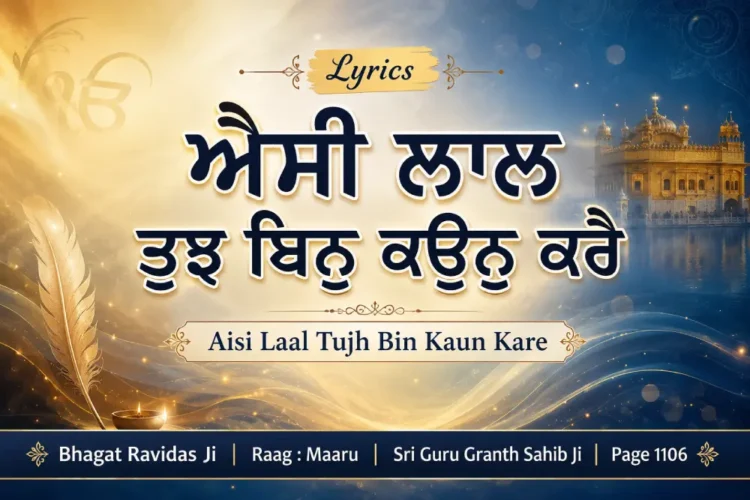
"Aisi Laal Tujh Bin Kaun Kare" is a shabad composed by Bhagat Ravidas Ji, recorded in Raag Maaru in the Guru Granth Sahib on Ang (page) 1106. The shabad is Ravidas Ji's personal hymn of gratitude and surrender to God, whom he addresses as "Laal" (Beloved).
It declares that only God can lift up the lowly and the outcast — Ravidas Ji, born into a community considered "untouchable" by the social norms of his time, testifies that God's grace erased that stigma and placed a royal canopy of honour over his head.
He names other Bhagats — Namdev, Kabir, Trilochan, Sadhna, and Sain — as fellow devotees from humble backgrounds who crossed over the world-ocean through devotion, affirming that through the Lord alone, everything is accomplished. It is recited to invoke humility, equality, and trust in divine grace, especially in gatherings honouring Bhagat Ravidas Ji.
02
of 08Full Lyrics (Gurmukhi)
ਰਾਗੁ ਮਾਰੂ ਬਾਣੀ ਰਵਿਦਾਸ ਜੀਉ ਕੀ
ੴ ਸਤਿਗੁਰ ਪ੍ਰਸਾਦਿ ॥
ਐਸੀ ਲਾਲ ਤੁਝ ਬਿਨੁ ਕਉਨੁ ਕਰੈ ॥
ਗਰੀਬ ਨਿਵਾਜੁ ਗੁਸਈਆ ਮੇਰਾ ਮਾਥੈ ਛਤ੍ਰੁ ਧਰੈ ॥੧॥ ਰਹਾਉ ॥
ਜਾ ਕੀ ਛੋਤਿ ਜਗਤ ਕਉ ਲਾਗੈ ਤਾ ਪਰ ਤੁਹੀਂ ਢਰੈ ॥
ਨੀਚਹ ਊਚ ਕਰੈ ਮੇਰਾ ਗੋਬਿੰਦੁ ਕਾਹੂ ਤੇ ਨ ਡਰੈ ॥੧॥
ਨਾਮਦੇਵ ਕਬੀਰੁ ਤਿਲੋਚਨੁ ਸਧਨਾ ਸੈਨੁ ਤਰੈ ॥
ਕਹਿ ਰਵਿਦਾਸੁ ਸੁਨਹੁ ਰੇ ਸੰਤਹੁ ਹਰਿ ਜੀਉ ਤੇ ਸਭੈ ਸਰੈ ॥੨॥੧॥
03
of 08Translation in Punjabi
ਇੱਕ ਅਕਾਲ ਪੁਰਖ ਵਾਹਿਗੁਰੂ, ਜੋ ਸੱਚੇ ਗੁਰੂ ਦੀ ਕਿਰਪਾ ਨਾਲ ਪ੍ਰਾਪਤ ਹੁੰਦਾ ਹੈ।
ਹੇ ਮੇਰੇ ਪ੍ਰੀਤਮ ਪ੍ਰਭੂ! ਤੇਰੇ ਤੋਂ ਬਿਨਾਂ ਅਜਿਹਾ ਵੱਡਾ ਉਪਕਾਰ ਹੋਰ ਕੌਣ ਕਰ ਸਕਦਾ ਹੈ? ਮੇਰਾ ਮਾਲਕ ਗੋਬਿੰਦ ਗਰੀਬਾਂ ਨੂੰ ਮਾਣ-ਸਤਿਕਾਰ ਦੇਣ ਵਾਲਾ ਹੈ; ਉਸ ਨੇ ਮੇਰੇ ਵਰਗੇ ਨਿਮਾਣੇ ਦੇ ਸਿਰ ਉੱਤੇ ਵੀ ਛੱਤਰ ਝੁਲਾ ਦਿੱਤਾ ਹੈ (ਮੈਨੂੰ ਆਤਮਿਕ ਰਾਜਾ ਬਣਾ ਦਿੱਤਾ ਹੈ)।
ਜਿਸ ਮਨੁੱਖ ਦੇ ਛੂਹਣ ਨਾਲ ਹੀ ਸਾਰਾ ਸੰਸਾਰ ਆਪਣੇ ਆਪ ਨੂੰ ਅਪਵਿੱਤਰ ਸਮਝਦਾ ਸੀ, ਹੇ ਪ੍ਰਭੂ! ਤੂੰ ਉਸੇ ਉੱਤੇ ਹੀ ਆਪਣੀ ਮਿਹਰ ਦੀ ਨਜ਼ਰ ਕੀਤੀ ਹੈ।ਮੇਰਾ ਪ੍ਰਭੂ ਨੀਵਿਆਂ ਨੂੰ ਉੱਚੀ ਪਦਵੀ ਬਖਸ਼ਣ ਵਾਲਾ ਹੈ, ਅਤੇ ਉਹ ਅਜਿਹਾ ਕਰਦਿਆਂ ਕਿਸੇ ਤੋਂ ਨਹੀਂ ਡਰਦਾ।
(ਪ੍ਰਭੂ ਦੀ ਇਸੇ ਬਖਸ਼ਿਸ਼ ਨਾਲ ਹੀ) ਨਾਮਦੇਵ ਜੀ, ਕਬੀਰ ਜੀ, ਤ੍ਰਿਲੋਚਨ ਜੀ, ਸਧਨਾ ਜੀ ਅਤੇ ਸੈਣ ਜੀ ਵਰਗੇ ਭਗਤ ਇਸ ਸੰਸਾਰ-ਸਮੁੰਦਰ ਤੋਂ ਪਾਰ ਲੰਘ ਗਏ। ਰਵਿਦਾਸ ਜੀ ਆਖਦੇ ਹਨ— ਹੇ ਸੰਤ ਜਨੋ! ਸੁਣੋ, ਉਸ ਪ੍ਰਭੂ ਦੀ ਕਿਰਪਾ ਨਾਲ ਸਭ ਕੁੱਝ ਸੰਭਵ ਹੋ ਜਾਂਦਾ ਹੈ।
04
of 08Transliteration in English
Raag Maaroo Baanee Ravidaas Jee-o Kee
Ik Onkaar Satgur Parsaad ||
Aisee Laal Tujh Bin Ka-un Karai ||
Gareeb Nivaaj Gusa-eeaa Mayraa Maathai Chhatar Dharai ||1|| Rahaa-o ||
Jaa Kee Chhot Jagat Ka-o Laagai Taa Par Tuheen Dharai ||
Neechah Ooch Karai Mayraa Gobind Kaahoo Tay Na Darai ||1||
Naamdayv Kabeer Tilochan Sadhnaa Sain Tarai ||
Kahi Ravidaas Sunhu Ray Santahu Har Jee-o Tay Sabhai Sarai ||2||1||
05
of 08English Translation
Raag Maaru Baani Ravidas Jiu Ki Ik onkar satgur prasad (Aisi Lal Tujh Bin Koun Karai...)
"By the Grace of the Lord-Sublime, Truth personified & attainable through the Guru's guidance."
O my dear Lord! Who else could be so helpful except You? My Lord is the only protector of the poor and meek, who has made me greater than everybody else. (Who has placed a canopy of status over my head). (Pause - 1)
O Lord! The person, who was considered untouchable and the whole world showed him disrespect, has been blessed with Your Grace. My Lord does not fear anyone, who makes even the down-trodden and poor people (like me) greater with status, deserving everyone's respect. (1)
O Ravidas! Namdev, Kabir, Trilochan Sadhna and Sain have all attained salvation. O Saints! Listen to me, the Lord is capable of doing everything and anything is possible with Him. (2 - 1)
ਰਾਗੁ ਮਾਰੂ ਬਾਣੀ ਰਵਿਦਾਸ ਜੀਉ ਕੀ — Raag Maaru, the sacred word of Bhagat Ravidas Ji.
ੴ ਸਤਿਗੁਰ ਪ੍ਰਸਾਦਿ ॥ — There is One Universal Creator; this is realized by the Grace of the True Guru.
ਐਸੀ ਲਾਲ ਤੁਝ ਬਿਨੁ ਕਉਨੁ ਕਰੈ ॥ — O my Beloved (Laal), who else but You could do such a thing? Ravidas Ji is marvelling at an act of grace so great that only God Himself could be its author.
ਗਰੀਬ ਨਿਵਾਜੁ ਗੁਸਈਆ ਮੇਰਾ ਮਾਥੈ ਛਤ੍ਰੁ ਧਰੈ ॥੧॥ ਰਹਾਉ ॥ — You are the Cherisher and Protector of the poor and humble, my Master — You have placed a royal canopy of honour over my head. (Rahaao — this is the central refrain of the shabad.)
ਜਾ ਕੀ ਛੋਤਿ ਜਗਤ ਕਉ ਲਾਗੈ ਤਾ ਪਰ ਤੁਹੀਂ ਢਰੈ ॥ — The one whose very touch the world considers polluting or "untouchable" — upon that very person, You showered Your mercy.
ਨੀਚਹ ਊਚ ਕਰੈ ਮੇਰਾ ਗੋਬਿੰਦੁ ਕਾਹੂ ਤੇ ਨ ਡਰੈ ॥੧॥ — My Lord of the Universe (Gobind) raises the lowly to greatness, and He fears no one — no social convention, hierarchy, or worldly authority restrains His grace.
ਨਾਮਦੇਵ ਕਬੀਰੁ ਤਿਲੋਚਨੁ ਸਧਨਾ ਸੈਨੁ ਤਰੈ ॥ — Namdev, Kabir, Trilochan, Sadhna, and Sain — all of them, coming from humble or low-caste occupations, crossed over the world-ocean through devotion to the One Lord.
ਕਹਿ ਰਵਿਦਾਸੁ ਸੁਨਹੁ ਰੇ ਸੰਤਹੁ ਹਰਿ ਜੀਉ ਤੇ ਸਭੈ ਸਰੈ ॥੨॥੧॥ — Says Ravidas: listen, O Saints — through the Dear Lord alone, everything is accomplished.
06
of 08Hindi Translation
राग मारू बाणी रविदास जीउ की
ੴ सतिगुर प्रसादि ॥
ऐसी लाल तुझ बिन कौन करै ॥
गरीब निवाज गुसईआं मेरा, माथै छत्र धरै ॥१॥ रहाउ ॥
हे मेरे स्वामी (प्रभु)! आपके बिना ऐसा (कृपा-पूर्ण कार्य) कौन कर सकता है? आप गरीबों और दीनों पर दया करने वाले हैं, आपने मुझ जैसे अनाथ के सिर पर छत्र (सम्मान का मुकुट) रख दिया है।
जा की छोत जगत कौ लागै ता पर तुहीं ढरै ॥
नीचह ऊच करै मेरा गोबिंद काहू ते न डरै ॥१॥
जिसकी छुआछूत से यह संसार बचता है (जिसे दुनिया अछूत मानती है), उस पर भी आप ही पिघलते हैं (अपनी कृपा करते हैं)। मेरा गोविंद नीच को भी ऊँचा बना देता है और वह किसी से भी नहीं डरता।
नामदेव कबीर तिलोचन सधना सैन तरै ॥
कह रविदास सुनहु रे संतहु हरि जीउ ते सभै सरै ॥२॥१॥
नामदेव, कबीर, त्रिलोचन, साधना और सैन जैसे (साधारण पृष्ठभूमि के) संत प्रभु की भक्ति से संसार-सागर से तर गए। रविदास जी कहते हैं — हे संतो! सुनो, उस प्रभु से सब कुछ संभव और पूर्ण हो जाता है।
07
of 08Context
Bhagat Ravidas Ji (also spelled Raidas) was a 15th–16th century mystic and poet-saint from Varanasi, born into a family of leather-workers, a community subjected to severe social exclusion under the caste system of the time. Despite this, he became one of the most revered Bhagats of the Bhakti movement, teaching that devotion to God, not birth or occupation, determines a person's spiritual worth. Forty-one of his hymns are enshrined in the Guru Granth Sahib, placed there by the Sikh Gurus alongside their own compositions to affirm the equality of all human beings before God.
"Aisi Laal Tujh Bin Kaun Kare" is one of Ravidas Ji's most personal and moving compositions. In it, he speaks directly from his own lived experience of social rejection, marvelling that God's grace alone could lift someone considered "untouchable" to a place of honour. By naming fellow Bhagats — Namdev (a calico-printer), Kabir (a weaver), Trilochan, Sadhna (a butcher), and Sain (a barber) — he affirms a shared truth: liberation comes through devotion, not social status.
This shabad is recited on Ravidas Jayanti, in gatherings that honour the Bhagats of the Guru Granth Sahib, and in kirtan settings reflecting on humility, equality, and surrender to divine grace.
08
of 08Frequently Asked Questions
Q1: Who wrote the shabad "Aisi Laal Tujh Bin Kaun Kare"?
It was composed by Bhagat Ravidas Ji, a 15th–16th century mystic-poet from Varanasi. His bani is included in the Guru Granth Sahib, the central scripture of Sikhism, alongside the compositions of the Sikh Gurus and other Bhagats, reflecting the Sikh belief in the equality and spiritual authority of devotees regardless of caste or background.
Q2: What raag is this shabad set in?
"Aisi Laal Tujh Bin Kaun Kare" is set in Raag Maaru, a raag traditionally associated with themes of valour, surrender, and steadfast devotion. It appears within the Raag Maaru section of the Guru Granth Sahib, specifically among the compositions attributed to Bhagat Ravidas Ji in this raag.
Q3: What does the shabad mean?
The shabad expresses Ravidas Ji's awe at God's grace, which lifted him — a man born into a socially excluded community — to a place of spiritual honour. It teaches that God favours the humble and lowly, is unafraid of worldly convention, and that liberation is available to anyone through sincere devotion, regardless of birth or status.
Q4: When is this shabad traditionally sung or recited?
It is commonly recited on Ravidas Jayanti (the birth anniversary of Bhagat Ravidas Ji), during kirtan programs honouring the Bhagats of the Guru Granth Sahib, and in devotional settings focused on humility, equality, and surrender to God's grace.
Q5: Where does this shabad appear in the Guru Granth Sahib?
It appears on Ang (page) 1106 of the Guru Granth Sahib, in the Raag Maaru section, under the heading "Raag Maaru, Baani of Ravidas Ji." It is the first of Ravidas Ji's compositions in this raag.
Q6: Who are Namdev, Kabir, Trilochan, Sadhna, and Sain, mentioned in the shabad?
They are fellow Bhagats from the Bhakti tradition, whose hymns are also included in the Guru Granth Sahib. Like Ravidas Ji, most came from humble or socially marginalized occupations — a calico-printer, weaver, butcher, and barber, respectively — and are cited here as examples of souls who attained liberation through devotion alone.