

Table of Contents
01
of 06The 1964 Paonta Sahib Massacre
The importance of Paonta Sahib is historical and spiritual as Guru Gobind Singh Ji stayed there for four years from 1685 to 1689. This holy place located on the bank of River Yamuna was a crucial place for composing Dasam Granth, martial training and Battle of Bhangani in 1687 AD. The 1964 massacre, or Saka, is a modern version of the Sikh movement for the protection of their sacred Gurdwaras from corruption from within and aggression by the state.
02
of 06Sikh Philosophy of ਮਰਉ ਤ ਹਰਿ ਕੈ ਦੁਆਰ
The sanctity of the Gurdwara is considered to be the most powerful source of the Sikh nation and for this reason, it is necessary to have absolute devotion for the protection of the Gurdwara. The essence of this devotion is the commitment to be present at the Guru's doorstep even in death, the philosophical foundation of which is embodied in this devotion.
In Sikh theology, the Gurdwara is a source of strength in the community--spiritual and temporal. The example of Maharaja Ranjit Singh reminds us that we must not allow any interference in the Guru's sovereign space by the state. The motto of the martyrs of 1964 was the Biblical command:
ਮਰਉ ਤ ਹਰਿ ਕੈ ਦੁਆਰ
Mara'u ta hari kai du'āra.
"If I am to die, let it be at the door of the Lord".
The principle was reflected in the massacre of 1964 when Nihung Singhs were not ready to leave behind the Akhand Paath (uninterrupted scriptural reading) even in the face of active police fire. Preserving the Maryada (code of conduct) and the physical protection of the Saroop (physical volume) of Guru Granth Sahib is more important than survival.
03
of 06History of Paonta Sahib and mismanagement by Mahant Gurdial Singh
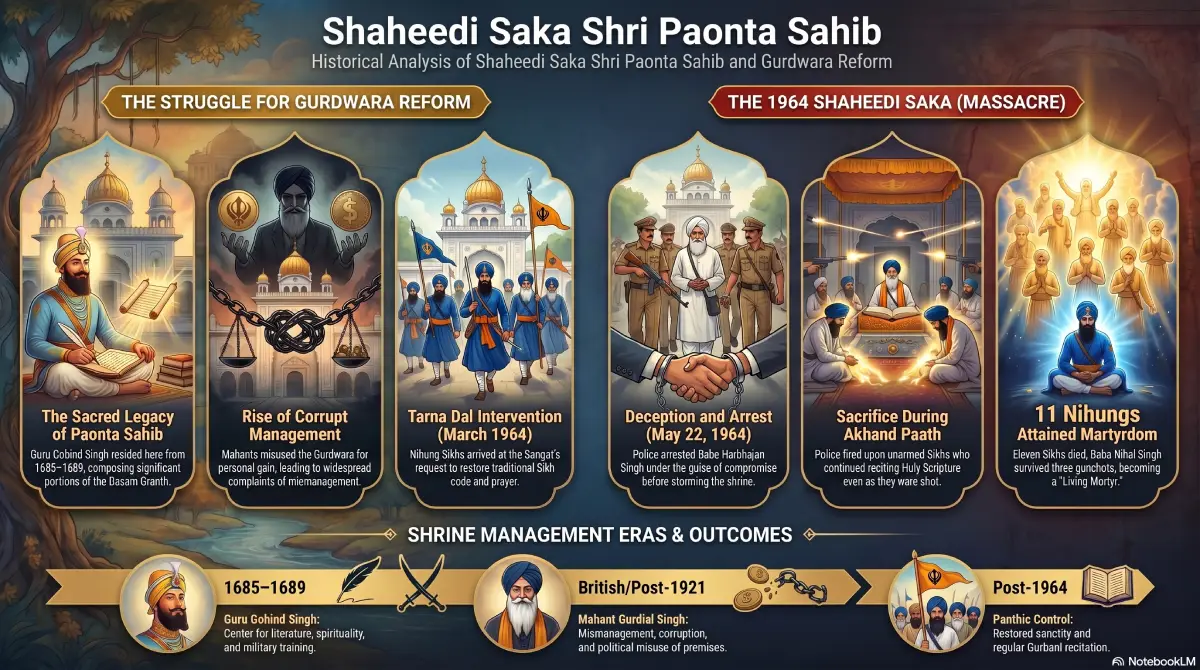
Paonta Sahib was established in 1685 when invited by Raja Medni Prakash of Nahan, it became the centre where 52 court poets worked and considerable literary activity was carried out. This historic site was turned over to a corrupt Mahant Gurdial Singh who was opposed to the return of traditional Sikh rituals and the massacre occurred in 1964.
Following Guru Gobind Singh Ji's departure to Anandpur Sahib, the management of Paonta Sahib eventually fell into the hands of Nirmalas and Udasis. At the beginning it was run by religious people such as devout Mahant Lehna Singh, who was revered for having survived the Jallianwala Bagh massacre, but eventually, it fell into the hands of his son, Gurdial Singh. There was a general complaint among the local Sikhs about the corruption that was going on, such as some activities going on in the Gurdwara premises that were sacrilegious, and misuse of the funds.
On March 10, 1964, at the call of local Sangat, a group of Nuhung Singhs, led by Baba Harbhajan Singh of the Tarna Dal, came to establish the Rehat Maryada. They started the chain of 101 Akhand Paaths. On the 23rd recitation, on the 22nd May, 1964, the police, under the auspices of Gurdial Singh and the leadership of the Commissioner R.K. Chandel, surrounded the Gurdwara. The police, who had arrested Baba Harbhajan Singh under the pretense of a meeting, brought the police into the shrine forcibly with boots on, firing on the unarmed Sikhs.
04
of 06Etymological Roots from History
The terminology associated with the massacre, such as Saka and Paonta, carries deep etymological roots connecting the event to broader Sikh martyrology. Understanding these terms requires a structural analysis of classical Sikh literature and historical accounts.
- Paonta (ਪਾਂਵਟਾ): The name is derived from the Punjabi word pawn (foot). According to the Gur Pratap Suraj (Ritu 1, Ansu 48) by Bhai Santokh Singh:
ਪਾਂਵ ਟਿਕਯੋ ਸਤਿਗੁਰੂ ਕੋ ਆਨੰਦਪੁਰਿ ਤੇ ਆਇ।
ਨਾਮ ਧਰ੍ਯੋ ਇਮ ਪਾਂਵਟਾ ਸਭਿ ਦੇਸ਼ਨਿ ਪ੍ਰਗਟਾਇ।
Pāṁva ṭikyō satigurū kō āna-ndapuri tē ā'i.
Nāma dharyō ima pāṁvaṭā sabhi dēśani pragaṭā'i.
"The True Guru's foot rested here after arriving from Anandpur; thus, the name 'Paonta' was established and became famous across all lands".
- Saka (ਸਾਕਾ): Historically signifies a major tragic event or massacre that results in martyrdom, often marking a turning point in Sikh history.
- Jinda Shaheed (ਜਿੰਦਾ ਸ਼ਹੀਦ): Literally translated as "Living Martyr". This title was bestowed upon Baba Nihal Singh, who survived being shot three times during the massacre while performing Chaur Sahib seva.
- Nagara (ਨਗਾਰਾ): A traditional Sikh war drum used during the massacre to alert the community of the attack; the police specifically targeted the individual beating the drum.
05
of 06Modern Relevance of Shaheedi Saka Paonta Sahib
The 1964 massacre serves as a critical case study in the persistence of oppressive state policies against religious autonomy, paralleling 18th-century Mughal tactics. It highlights the necessity of institutional transparency and the role of dedicated Jathebandis in safeguarding spiritual heritage.
The event is still significant because it reminds us that the transition to a post-colonial government did not instantly end the use of force against Sikh religious practice. The massacre is reminiscent of Saka Nankana Sahib massacre of 1921 where corrupt managers were asking the state to keep a tight grip over community wealth. The 1964 Saka highlights the importance of the Akhand Paath as a method of Non-violence which the Paathis (readers) continued to recite despite being shot at, with one of the readers being wounded, but continued until the gun was fired and the man fell on the Saroop.
06
of 06Factual Record of the 1964 Massacre
- Total Martyrs: 11 Nihung Singhs from the Tarna Dal were martyred.
- Key Survivors: Baba Nihal Singh (then 21 years old) and an 11-year-old child who hid behind the Nagara.
- Artifacts Seized: The police removed the Saroops of Guru Granth Sahib and Dasam Granth, along with historical weapons belonging to Guru Gobind Singh Ji.
- Physical Evidence: The Gurdwara walls retained approximately 47 visible bullet marks even after police attempted to cover them with cement.
- Casualties Inside the Darbar: Eight Sikhs were martyred directly inside the Gurdwara premises, their bodies reportedly loaded into trucks and disposed of in a forest.