
Table of Contents
01
of 11Who was Bhai Gurdas?
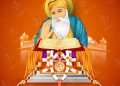
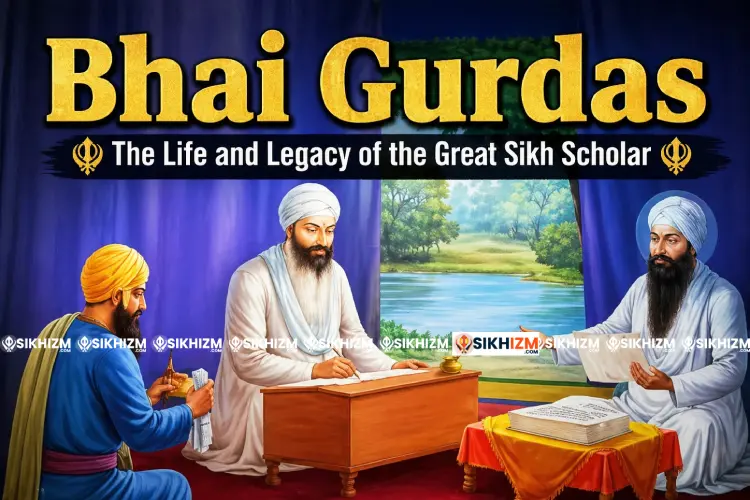
Bhai Gurdas stands as one of the most influential and revered figures in Sikh history, often described as the first great Sikh theologian and scholar. His life spanned the eras of four Sikh Gurus, from Guru Amar Das to Guru Hargobind, and he played a pivotal role in the consolidation and interpretation of Sikh doctrine.
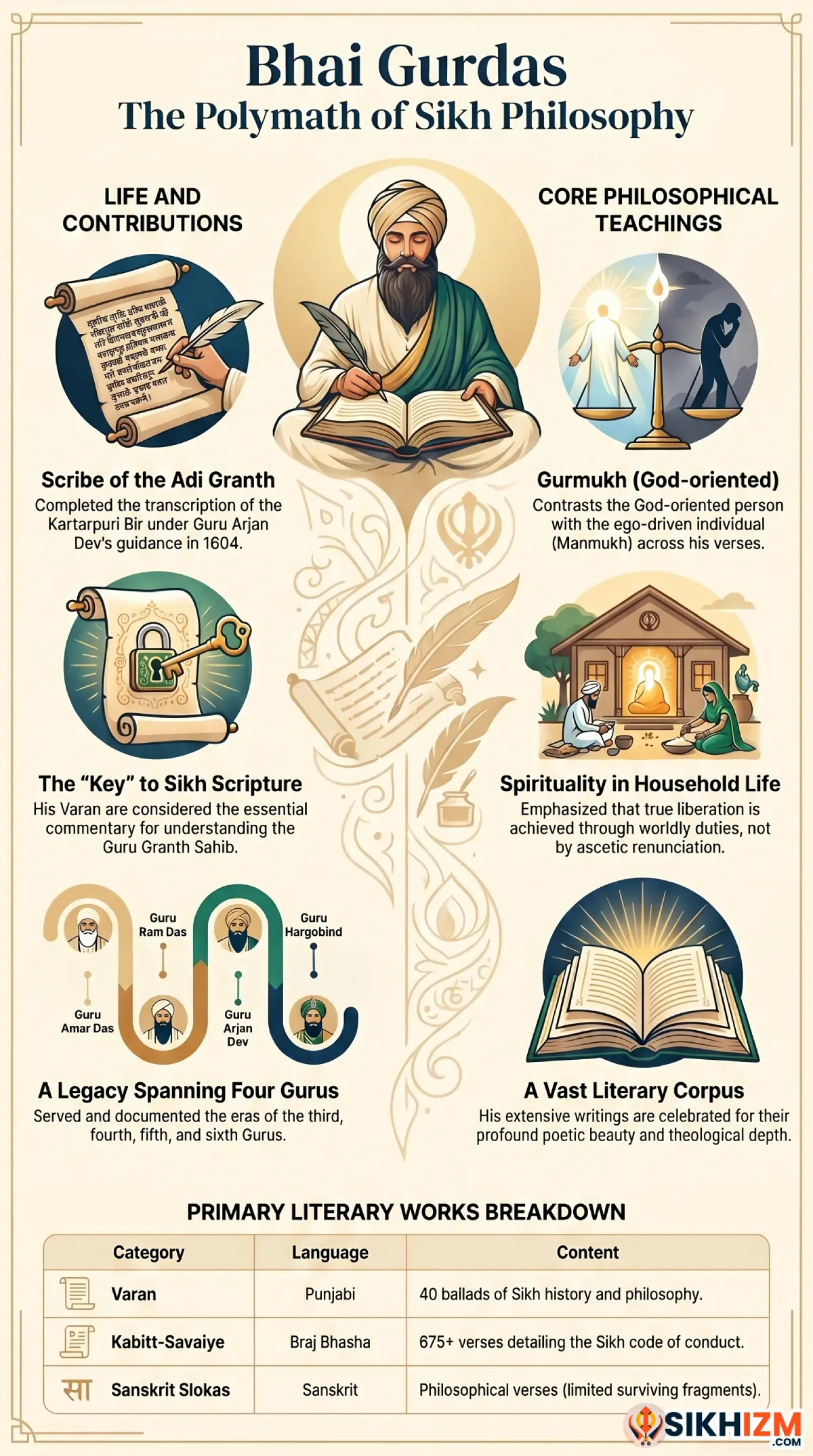
Beyond his administrative and missionary duties, he is immortalised for his two monumental contributions: acting as the primary scribe for the Adi Granth under the supervision of Guru Arjan Dev, and composing his own poetry, which is traditionally regarded as the "key" to understanding the Holy Scripture. Through his writings and his life of selfless service (Seva), Bhai Gurdas defined what it means to be a Gurmukh—a person oriented toward the Guru.
02
of 11Early Life of Bhai Gurdas
Birthplace and Family Background
Bhai Gurdas was born into a Bhalla Khatri family. His father was Bhai Ishar Das, who was a first cousin of the third Sikh Guru, Guru Amar Das. This close familial bond meant that Bhai Gurdas was a nephew to Guru Amar Das and a venerable relative to the subsequent Gurus. He was born in the town of Goindwal, which had been founded in 1546 AD. While many scholars, including Dr. Ganda Singh and Prof. Sahib Singh, place his birth in 1551 AD, other sources vary, with dates such as 1543 AD, 1553 AD, or 1558 AD being suggested by different historians.
Historical Context and Childhood
His childhood was marked by early loss; he lost his mother, Jivani, when he was only three years old, and his father passed away when he was twelve. Following the death of his parents, he came under the tutelage of his uncle, Guru Amar Das. Growing up in Goindwal and Sultanpur Lodhi, Bhai Gurdas was at the heart of the developing Sikh community. Goindwal was a major religious centre situated on the Delhi-Lahore road, allowing the young Gurdas to listen to many spiritually attained men and scholars who passed through the town.
Education and Intellectual Growth
Bhai Gurdas was an exceptionally learned individual who mastered multiple languages, including Punjabi, Sanskrit, Braj Bhasha, Persian, and Arabic. He travelled to Varanasi to study Sanskrit and Hindu scriptures, gaining a deep understanding of the Vedas, Upanishads, and the six systems of Indian philosophy. This vast education allowed him to later perform comparative studies between Sikhism and other religious traditions, establishing the unique and infallible nature of the Guru's message.
03
of 11Relationship with Sikh Gurus
The life of Bhai Gurdas is inextricably linked with the lives of four Sikh Gurus, whom he served with unwavering devotion.
Connection with Guru Amar Das
As the nephew of the third Guru, Bhai Gurdas spent his formative years under the direct influence of Guru Amar Das. It was during this time that he became a fervent disciple of the Sikh faith and began his profound study of the life and ideals of Guru Nanak Dev.
Role with Guru Ram Das and Guru Arjan Dev
After Guru Amar Das passed away in 1574 AD, Bhai Gurdas attended on the fourth Guru, Guru Ram Das. Recognizing his learning and zeal, Guru Ram Das sent him as a Sikh missionary to areas such as Agra, Lucknow, and Rajasthan. Upon the death of Guru Ram Das in 1581 AD, he returned to Punjab to pay obeisance to the fifth Guru, Guru Arjan Dev.
The association between Bhai Gurdas and Guru Arjan Dev was one of immense mutual respect. Guru Arjan Dev chose him as his principal helper and scribe for the compilation of the Adi Granth. He also appointed Bhai Gurdas to expound on Gurbani at the Harimandir Sahib, a role that cemented his status as a premier interpreter of Sikh doctrine.
Association with Guru Hargobind
Following the martyrdom of Guru Arjan Dev in 1606 AD, Bhai Gurdas continued to serve the sixth master, Guru Hargobind. He was entrusted with significant responsibilities, including:
- Construction of Akal Takht: He and Baba Buddha were chosen by the Guru to lead the construction of the Akal Takht in front of the Harimandir Sahib.
- Administrative Duties: When Guru Hargobind was detained in the Gwalior Fort, Bhai Gurdas managed the affairs of the Sikh community and led batches of Sikhs to the fort to offer support.
- Teacher to the Household: He was appointed to teach the young (Guru) Tegh Bahadur the ancient classics.
04
of 11Bhai Gurdas as Scribe of Adi Granth
One of the most significant chapters in Sikh history is the compilation of the Adi Granth, a task in which Bhai Gurdas played a fundamental role.
Historical Significance and Compilation
Around 1603-1604 AD, Guru Arjan Dev decided to compile a holy volume containing the hymns of the Sikh Gurus as well as those of various saints and Sufis. The Guru established a camp at Ramsar, on the outskirts of Amritsar, for this meticulous work. Bhai Gurdas was chosen as the amanuensis (scribe) for this monumental project.
The Role of Amanuensis
Bhai Gurdas worked closely with Guru Arjan Dev to sift through and scan a bulk of material collected from different parts of India. He took down the dictation of the Guru and meticulously inscribed the entire text in the Gurmukhi script. His scribing style followed the practice of ancient scripts where words in a verse were written together without spaces, a format that can be seen in the original volume preserved at Kartarpur, known as the "Kartarpur Wali Bir".
Trust and Authority
The fact that Guru Arjan Dev chose Bhai Gurdas for this task speaks to the absolute trust the Guru placed in his learning and piety. Although Bhai Gurdas was a poet himself, he did not include his own compositions in the Adi Granth. Sources suggest he may have considered it out of humility, or that the Guru specifically designated his work to serve a different purpose—to act as the interpretive "key" to the scripture.
05
of 11Literary Works of Bhai Gurdas
The writings of Bhai Gurdas are considered a treasure house of Sikh principles and are the only approved non-scriptural writings (along with those of Bhai Nand Lal) that can be recited during Kirtan in holy congregations.
Vaaran Bhai Gurdas
His most popular and important work consists of 40 Vars (panegyrics in ballad style) written in Punjabi. These Vars contain 913 Pauris (stanzas), each focusing on a complete idea or philosophical concept.
- Var 1: Provides a short biography of Guru Nanak Dev and describes the world situation before his advent.
- Content: The Vars cover topics such as the nature of God, the role of the Guru, the characteristics of a Gurmukh (Guru-ward person) versus a Manmukh (self-willed person), and the Sikh way of life.
- Status: They are widely known as the "Key to Gurbani" because they offer a facile elucidation of Sikh philosophy.
Kabitt Sawaiyye
Bhai Gurdas also composed 675 Kabitts and Sawaiyyes written in Braj Bhasha. These works are often considered more difficult to comprehend than the Vars due to their literary and doctrinal depth. They are loaded with devotion and delineate the deep mysteries of Gurmat (Sikh doctrine).
Below are several of the most significant and frequently cited hymns from his works, presented with the original text (as found in the sources) and their English translations.
1. The Power of a Single Step (Kabitt 111)
This is one of the most famous verses by Bhai Gurdas Ji, emphasizing the Guru's boundless grace in response to a disciple's sincere effort.
- Original Text: ਚਰਨ ਸਰਨ ਗੁਰੁ ਏਕ ਪੈਂਡਾ ਜਾਇ ਚਲ, ਸਤਿਗੁਰੁ ਕੋਟਿ ਪੈਂਡਾ ਆਗੇ ਹੋਇ ਲੇਤ ਹੈ। ਏਕ ਬਾਰ ਸਤਿਗੁਰ ਮੰਤ੍ਰ ਸਿਮਰਨ ਮਾਤ੍ਰ, ਸਿਮਰਨ ਤਾਹਿ ਬਾਰੰਬਾਰ ਗੁਰ ਹੇਤ ਹੈ।
- English Translation: If a disciple takes even one step toward the Guru’s sanctuary, the True Guru takes millions of steps to welcome him. By remembering the Guru’s mantra just once, the Guru remembers that disciple many times over with love.
2. Practice Over Mere Words (Kabitt 542)
This hymn uses domestic examples to teach that spiritual growth requires internal practice and direct experience rather than just verbal expression.
- Original Text: ਜੈਸੇ ਖਾਂਡ ਖਾਂਡ ਕਹੈ ਮੁਖਿ ਨਹੀ ਮੀਠਾ ਹੋਇ, ਜਬ ਲਗ ਜੀਭ ਸੁਆਦ ਖਾਂਡ ਨਹੀ ਖਾਈਐ। ਜੈਸੇ ਰਾਤ ਅੰਧੇਰੀ ਮੇਂ ਦੀਪਕ ਦੀਪਕ ਕਹੈ, ਤਿਮਰ ਨ ਜਾਈ ਜਬ ਲਗ ਨ ਜਰਾਈਐ ।
- English Translation: By merely uttering the word "sugar," the mouth does not become sweet; it only happens when the tongue actually tastes the sugar. By merely repeating the word "lamp" in a dark night, the darkness does not vanish; it only goes when the lamp is actually lit.Similarly, just talking about knowledge or meditation is useless until one actually realizes and experiences the Guru's presence.
3. The Invocation (Var 1, Pauri 1)
This stanza opens the first Var and serves as a foundational salute to the mission of Guru Nanak Dev.
- Original Text: ਨਮਸਕਾਰੁ ਗੁਰਦੇਵ ਕੋ ਸਤਿ ਨਾਮੁ ਜਿਸੁ ਮੰਤ੍ਰੁ ਸੁਣਾਇਆ। ਭਵਜਲ ਵਿਚੋਂ ਕਢਿ ਕੈ ਮੁਕਤਿ ਪਦਾਰਥ ਮਾਹਿ ਸਮਾਇਆ।
- English Translation: I bow before the Guru (Guru Nanak Dev) who recited the True Name (Satinamu) mantra for the world. Pulling the creatures out of the world-ocean, he merged them into the state of liberation.
4. The Daily Discipline of a Gursikh (Var 6, Pauri 3)
Bhai Gurdas Ji outlines the daily routine of a dedicated Sikh, focusing on early rising and meditation.
- Original Text: ਗੁਰਸਿਖ ਭਲਕੇ ਉਠਿ ਕਰਿ ਅੰਮ੍ਰਿਤ ਵੇਲੇ ਸਰੁ ਨਾਵੰਦਾ। ਸਹਜ ਸਮਾਧਿ ਅਗਾਧਿ ਵਿਚਿ ਇਕ ਮਨਿ ਹੋਇ ਗੁਰ ਜਾਪੁ ਜਪੰਦਾ।
- English Translation: Getting up at the ambrosial hour of the morning, the Sikhs bathe in the river.By putting their mind in unfathomable deep concentration, they remember Guru, the God, by reciting Japu (Ji). Afterwards, they go to the congregation (Sadh Sangat) to sing and listen to the Guru's hymns with intense love.
5. The Nature of a Gurmukh (Var 13, Pauri 3)
This hymn describes the character of a "Guru-ward" person, emphasizing humility and self-control.
- Original Text: ਮਧੁਰ ਬਚਨ ਅਲਾਉ, ਹਉਮੈ ਤਿਆਗੁ ਹੈ। ਸਤਿਗੁਰ ਮਤਿ ਪਰਥਾਉ, ਸਦਾ ਅਨੁਰਾਗੁ ਹੈ।
- English Translation: A Gurmukh utters sweet words and has renounced their ego. By following the True Guru’s instructions, they remain forever imbued with divine love. They remain detached in the world of mammon, like a lotus flower in water.
6. The Advent of Guru Nanak (Var 1, Pauri 27)
Though long, this stanza is vital as it describes the spiritual transformation of the world upon Guru Nanak’s arrival.
- Original Text: ਸਤਿਗੁਰ ਨਾਨਕ ਪ੍ਰਗਟਿਆ ਮਿਟੀ ਧੁੰਧੁ ਜਗਿ ਚਾਨਣੁ ਹੋਆ। ਜਿਉ ਕਰਿ ਸੂਰਜੁ ਨਿਕਲਿਆ ਤਾਰੇ ਛਪਿ ਅੰਧੇਰੁ ਪਲੋਆ। ਸਿੰਘੁ ਬੁਕੇ ਮਿਰਗਾਵਲੀ ਭੰਨੀ ਜਾਇ ਨ ਧੀਰਿ ਧਰੋਆ। ਜਿਥੇ ਬਾਬਾ ਪੈਰੁ ਧਰਿ ਪੂਜਾ ਆਸਣੁ ਥਾਪਣਿ ਸੋਆ। ਸਿਧਾਸਣਿ ਸਭਿ ਜਗਤਿ ਦੇ ਨਾਨਕ ਆਦਿ ਮਤੇ ਜੇ ਕੋਆ। ਘਰਿ ਘਰਿ ਅੰਦਰਿ ਧਰਮਸਾਲ ਹੋਵੈ ਕੀਰਤਨੁ ਸਦਾ ਵਿਸੋਆ। ਬਾਬੇ ਤਾਰੇ ਚਾਰਿ ਚਕਿ ਨਉ ਖੰਡਿ ਪ੍ਰਿਥਵੀ ਸਚਾ ਢੋਆ। ਗੁਰਮੁਖਿ ਕਲਿ ਵਿਚਿ ਪਰਗਟੁ ਹੋਆ ॥੨੭॥
- English Translation (Summary): With the emergence of the True Guru Nanak, the mist of ignorance cleared and light filled the world. Just as the stars disappear and darkness vanishes when the sun rises, so too did the "flocks of escaping deer" (representing ignorance or false beliefs) flee before the "roar of the lion" (the Guru's word). Wherever the Guru set his foot, a religious centre was established, and every home became a place of worship where hymns were sung in perpetual celebration.
Other Compositions
In addition to his Punjabi and Braj works, he wrote 6 Sanskrit Slokas that were produced during his preaching tours, notably in Varanasi (Kanshi). These slokas were intended to enhance the prominence of the name "Waheguru" among the learned Pundits.
06
of 11Philosophy and Teachings
The philosophy of Bhai Gurdas is a direct reflection of the teachings of the Sikh Gurus, presented through accessible domestic similes and metaphors.
Spirituality and the Guru
He emphasized that the Guru is the material embodiment of God on earth. His writings repeatedly stress that liberation is only possible through the True Word (Shabad) and the instruction of the Guru.
Ethics and the Concept of Gurmukh
A central theme in his work is the distinction between the Gurmukh and the Manmukh.
- A Gurmukh is one who listens to the Guru's hymns with understanding, earns through honest labour, and lives with humility and service.
- A Manmukh is self-centred, ego-driven, and remains entangled in the fire of egotism and worldly illusions.
Humility and Selfless Service
Bhai Gurdas used examples from nature to teach humility. He pointed to the earth, which remains under everyone's feet; water, which always flows downward; and trees, which give fruit even when pelted with stones. He taught that a Sikh must "efface his self" to receive recognition at God’s Abode.
Wisdom and Sikh Principles
His writings address the Sikh way of life in a practical sense. He advocated for:
- Kirat Karni: Honest labour and righteous living.
- Vand Chakna: Sharing one's earnings with the needy.
- Naam Simran: Loving remembrance of God at all times.
- Sadh Sangat: The importance of the holy congregation as a place of spiritual transformation.
07
of 11Contribution to Sikhism
Intellectual Influence and Interpretation
Bhai Gurdas was the first Sikh theologian to systematically expound on the concepts of Gurbani for the masses. He established a tradition of rationalizing Sikh history and society through the lens of Gurmat. His exposition of Sikh tenets remains unparalleled and acts as a "guiding star" for interpreting the Guru Granth Sahib.
Community Leadership
As a missionary, he travelled extensively to spread the message of the Gurus, reaching as far as Kabul in the west and Varanasi in the east. He was highly respected within the congregation, considered second only to Baba Buddha in terms of veneration. He served as the first Sevadar of the Akal Takht and helped manage the Guru’s household during times of crisis.
Historical Legacy
He successfully salvaged the Sikh community from internal threats, such as the activities of the "Minas" (followers of Prithi Chand) who attempted to mix their own compositions with Gurbani. His efforts in standardizing the Sikh scripture and doctrine ensured the purity of the faith for future generations.
08
of 11Language and Style
Use of Vernaculars
Bhai Gurdas consciously chose to write in the language of the common people. While he was proficient in Sanskrit (the language of the priests), he argued that Gurbani should be accessible to everyone, regardless of caste. His Punjabi in the Vars is noted for being chaste, distinctive, and remarkably close to modern Punjabi.
Poetic Style and Symbolism
His poetry is valued for its "racy style" and vivid use of domestic similes. He often used imagery from everyday life—moons, mirrors, cows, and trees—to explain profound spiritual truths. His verses are so concise and potent that many have become proverbs and local sayings in the Punjabi language.
09
of 11Bhai Gurdas in Modern Relevance
Today, Bhai Gurdas is remembered as the "Veda of Sikhism" and the "St. Paul of the Sikhs". Scholars and readers view his work as indispensable for a correct understanding of the Guru Granth Sahib. His life of humility, ethics, and wisdom continues to serve as a model for Sikh practitioners worldwide. Professor Puran Singh noted that his verse is like "sermons in stones or books in running brooks," offering a light that can shine on the path of any seeker.
10
of 11Summary Table of Key Facts
| Fact | Details |
|---|---|
| Full Name | Bhai Gurdas Ji |
| Birth Date | 1551 AD (Sources vary: 1543-1558) |
| Birthplace | Goindwal, Punjab |
| Father | Bhai Ishar Das (Cousin of Guru Amar Das) |
| Mother | Mata Jivani |
| Death Date | 1636 AD (Sources vary: 1629 or 1637) |
| Major Works | 40 Vars (Punjabi), 675 Kabitts (Braj), 6 Slokas (Sanskrit) |
| Primary Role | Scribe of the Adi Granth; Missionary; Theologian |
| Legacy Title | "Key to Gurbani" |
The life of Bhai Gurdas was a perfect embodiment of the Sikh ideals of Seva (service) and Simran (meditation). As a scholar, he bridged the gap between complex theological concepts and the understanding of the common man; as a missionary, he spread the message of universal brotherhood across vast distances; and as a scribe, he helped preserve the divine word for eternity. His literary works, particularly the Vaaran Bhai Gurdas, remain a cornerstone of Sikh learning, continuing to serve as the essential "key" for all who seek to unlock the spiritual treasures of the Guru’s teachings. His legacy is that of a "Gurmukh" who lived and died in total devotion to the Guru's path.
11
of 11Frequently Asked Questions
1. Why is Bhai Gurdas called the "Key to Gurbani"?
Guru Arjan Dev designated his work as the "key" because his poetry offers a facile and simplified elucidation of the profound and complex thoughts found in the hymns of the Guru Granth Sahib.
2. What was Bhai Gurdas's role in the compilation of the Adi Granth?
He served as the primary amanuensis (scribe). He manually inscribed the entire scripture in Gurmukhi script as dictated by Guru Arjan Dev between 1603 and 1604 AD.
3. Did Bhai Gurdas include his own poetry in the Guru Granth Sahib?
No. Although he was a prolific and gifted poet, he did not include his own verses in the Adi Granth, acting instead as a humble helper and scribe.
4. What are the "Vars" of Bhai Gurdas?
The Vars are 40 compositions (ballads) written in Punjabi that explain Sikh ethics, spirituality, and the lives of the first six Gurus. They are highly regarded for their use of everyday examples to teach spiritual lessons.
5. How was Bhai Gurdas related to the Sikh Gurus?
He was the nephew of the third Guru, Guru Amar Das. Because of this, the subsequent Gurus (Guru Ram Das, Guru Arjan, and Guru Hargobind) viewed him as an elder and venerable relative.
6. Where can the original copy of the Adi Granth written by Bhai Gurdas be found?
The original volume, written in his hand and approved by Guru Arjan Dev, is preserved by the family of the Guru's descendants at Kartarpur in the Jalandhar district of Punjab.