
| Field | Value |
|---|---|
| Shabad | Vin Tudh Hor Je Mangna |
| Raag | Ramkali |
| Mehla | 5 (Guru Arjan Dev Ji) |
| Bani | Ramkali Ki Vaar |
| Ang (Page) | 958 |
| Source | Sri Guru Granth Sahib Ji |
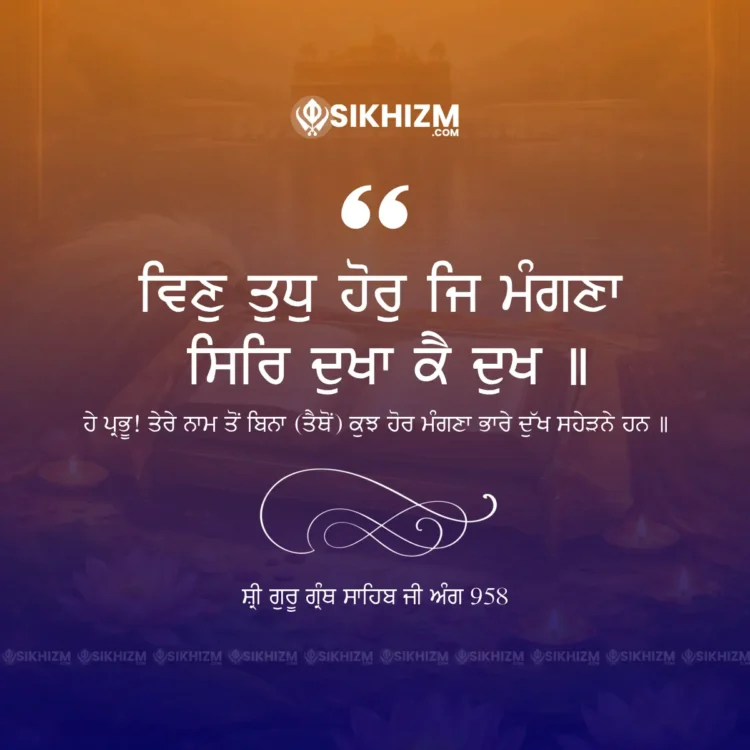
ਵਿਣੁ ਤੁਧੁ ਹੋਰੁ ਜਿ ਮੰਗਣਾ ਸਿਰਿ ਦੁਖਾ ਕੈ ਦੁਖ ॥
Table of Contents
01
of 06Original Gurbani Lyrics (Gurmukhi)
ਮ꞉ ੫ ॥
ਵਿਣੁ ਤੁਧੁ ਹੋਰੁ ਜਿ ਮੰਗਣਾ ਸਿਰਿ ਦੁਖਾ ਕੈ ਦੁਖ ॥
ਦੇਹਿ ਨਾਮੁ ਸੰਤੋਖੀਆ ਉਤਰੈ ਮਨ ਕੀ ਭੁਖ ॥
ਗੁਰਿ ਵਣੁ ਤਿਣੁ ਹਰਿਆ ਕੀਤਿਆ ਨਾਨਕ ਕਿਆ ਮਨੁਖ ॥੨॥
02
of 06Punjabi (Simple Arth / ਅਰਥ)
ਹੇ ਪ੍ਰਭੂ!
ਤੇਰੇ ਤੋਂ ਬਿਨਾ ਹੋਰ ਕੁਝ ਮੰਗਣਾ ਸਭ ਤੋਂ ਵੱਡਾ ਦੁੱਖ ਹੈ।
ਹੇ ਪ੍ਰਭੂ!
ਮੈਨੂੰ ਆਪਣਾ ਨਾਮ ਬਖ਼ਸ਼, ਤਾਂ ਜੋ ਮੈਨੂੰ ਸੰਤੋਖ ਮਿਲੇ
ਅਤੇ ਮੇਰੇ ਮਨ ਦੀ ਤ੍ਰਿਸ਼ਨਾ ਦੂਰ ਹੋ ਜਾਵੇ।
ਹੇ ਨਾਨਕ!
ਜਿਸ ਗੁਰੂ ਨੇ ਜੰਗਲ ਅਤੇ ਸੁੱਕੇ ਘਾਹ ਨੂੰ ਹਰਾ ਕਰ ਦਿੱਤਾ,
ਉਸ ਲਈ ਮਨੁੱਖ ਨੂੰ ਹਰਾ-ਭਰਾ (ਆਤਮਕ) ਕਰਨਾ ਕਿਹੜੀ ਵੱਡੀ ਗੱਲ ਹੈ? ॥੨॥
03
of 06Roman English Transliteration
Mehla 5
Vinn Tudh Hor Je Mangna, Sir Dukha Kai Dukh
Dehi Naam Santokhia, Utrai Man Ki Bhukh
Gur Vann Tinn Haria Keetia, Nanak Kya Manukh ||2||
04
of 06Hindi Transliteration (देवनागरी)
ਮੈਲਾ ५ ॥
विण तुध होर जे मँगणा, सिर दुखां कै दुख
देहि नाम संतोखिआ, उतरै मन की भुख
गुर वण तिण हरिआ कीतिआ, नानक क्या मनुख ॥२॥
05
of 06Hindi Translation (सरल अर्थ)
हे प्रभु!
तेरे बिना किसी और से कुछ माँगना
सब दुखों से भी बड़ा दुख है।
हे प्रभु!
मुझे अपना नाम प्रदान कर,
जिससे संतोष मिले और मन की भूख मिट जाए।
हे नानक!
जिस गुरु ने सूखे जंगल और घास को हरा-भरा कर दिया,
उसके लिए मनुष्य को आत्मिक रूप से संपन्न करना कौन-सी बड़ी बात है? ॥२॥
06
of 06English Translation (Literal Meaning)
To ask for anything other than You, O Lord,
is the greatest of all sufferings.
Bless me with Your Name,
so that I may be content
and the hunger of my mind may be removed.
The Guru has made forests and dry vegetation green again;
O Nanak, what wonder is it if He spiritually blesses a human being? ||2||

Shabad Summary (Short & Simple)
This Shabad teaches that true peace does not come from asking for worldly things, but from receiving Naam. When the mind connects with Naam, contentment naturally arises, and inner restlessness ends.
FAQs – Shabad Lyrics Related
1. Who wrote “vin tudh hor je mangna”?
This Shabad was revealed by Guru Arjan Dev Ji (Mehla 5).
2. Where is this Shabad found?
In Sri Guru Granth Sahib Ji, Ang 958, Raag Ramkali.
3. What is the main message of this Shabad?
Asking for anything other than Waheguru leads to suffering; Naam brings contentment.
4. Is this Shabad commonly sung in Kirtan?
Yes, it is often sung in Raag Gujri during Kirtan and Simran programs.
5. What does “Naam” mean here?
Naam refers to remembrance and connection with Waheguru.
6. Is this Shabad suitable for daily paath or contemplation?
Yes, it is ideal for daily reflection and Simran.