
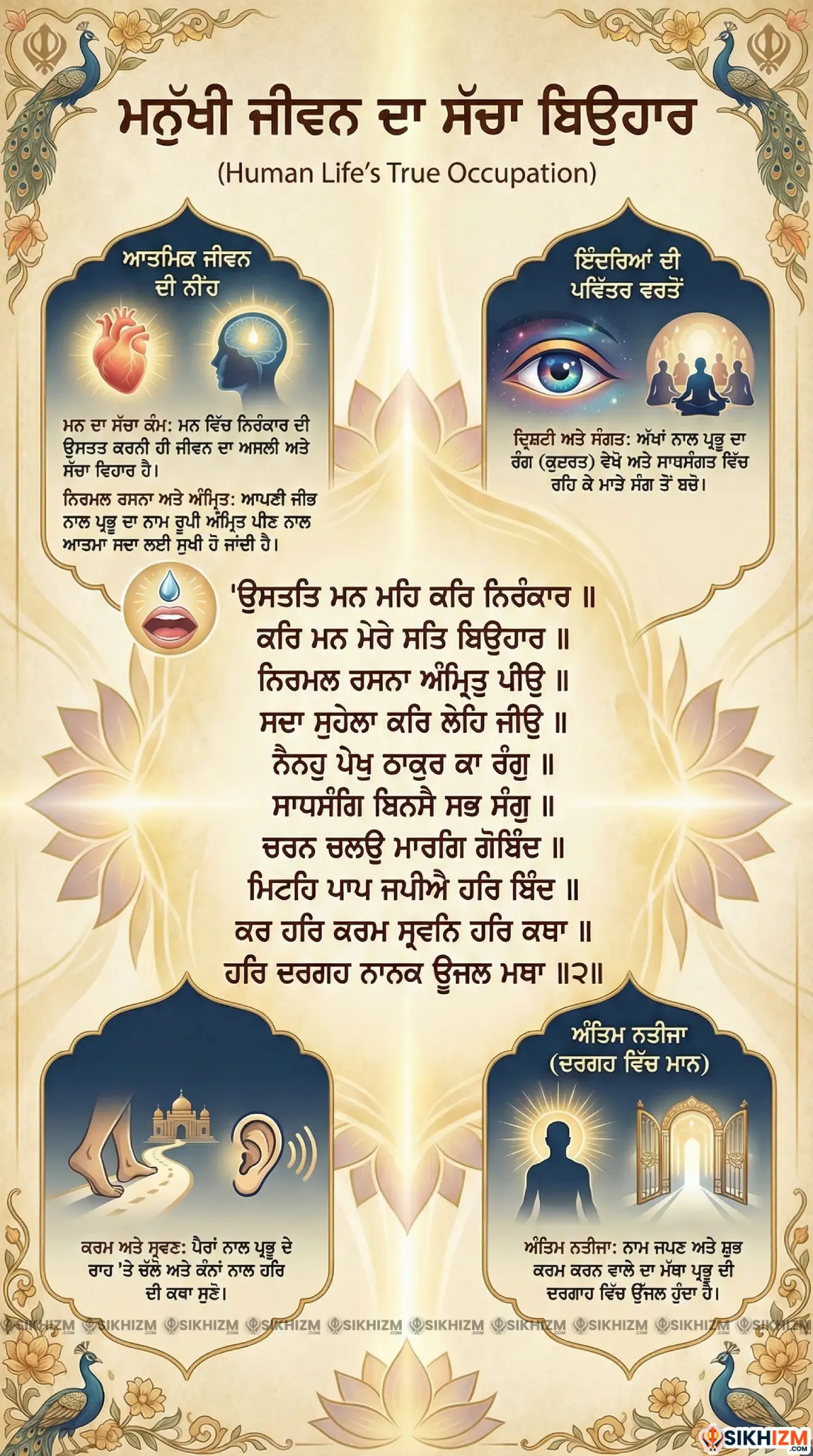
1 Ustat Man Meh Kar Nirankar
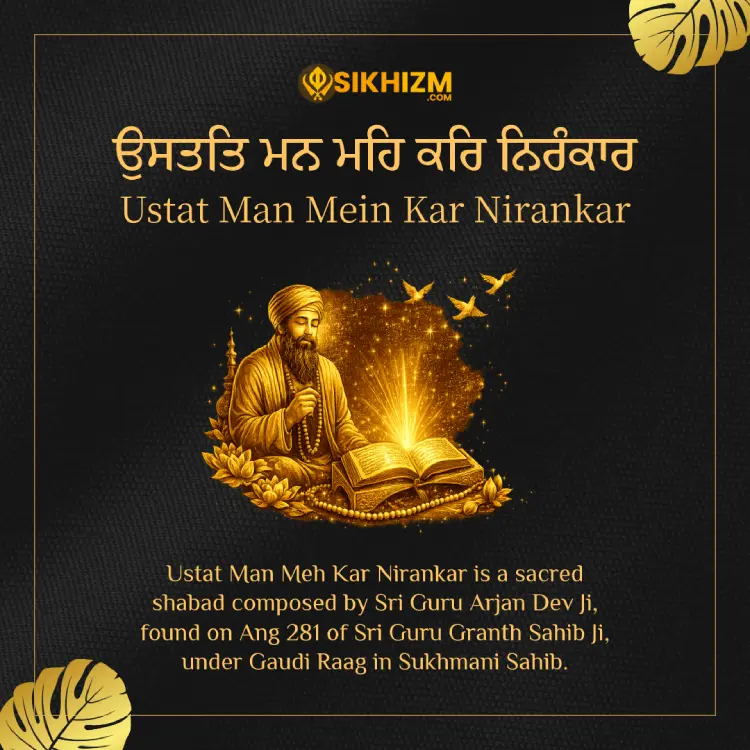
Ustat Man Mein Kar Nirankar, Kar Man Mere Sat Biohaar; is Shabad from Sri Guru Granth Sahib Page 281 under the composition of Sri Guru Arjan Dev Ji, Sukhmani Sahib Raag Gauri Mahala 5th.
Shabad Title:
Ustat Man Mein Kar Nirankar
Composer (Bani Author):
Sri Guru Arjan Dev Ji
Scripture Source:
Sri Guru Granth Sahib Ji
Ang (Page) Number:
Ang 281
Raag / Bani:
Gaudi – Sukhmani Sahib
Language / Script:
Gurmukhi
Translations Available:
- English Translation
- Hindi Translation
- Punjabi Translation
Transliterations Available:
- Roman English Transliteration
- Devanagari Transliteration
Original Text in Gurmukhi
ਉਸਤਤਿ ਮਨ ਮਹਿ ਕਰਿ ਨਿਰੰਕਾਰ ॥
ਕਰਿ ਮਨ ਮੇਰੇ ਸਤਿ ਬਿਉਹਾਰ ॥
ਨਿਰਮਲ ਰਸਨਾ ਅੰਮ੍ਰਿਤੁ ਪੀਉ ॥
ਸਦਾ ਸੁਹੇਲਾ ਕਰਿ ਲੇਹਿ ਜੀਉ ॥
ਨੈਨਹੁ ਪੇਖੁ ਠਾਕੁਰ ਕਾ ਰੰਗੁ ॥
ਸਾਧਸੰਗਿ ਬਿਨਸੈ ਸਭ ਸੰਗੁ ॥
ਚਰਨ ਚਲਉ ਮਾਰਗਿ ਗੋਬਿੰਦ ॥
ਮਿਟਹਿ ਪਾਪ ਜਪੀਐ ਹਰਿ ਬਿੰਦ ॥
ਕਰ ਹਰਿ ਕਰਮ ਸ੍ਰਵਨਿ ਹਰਿ ਕਥਾ ॥
ਹਰਿ ਦਰਗਹ ਨਾਨਕ ਊਜਲ ਮਥਾ ॥੨॥
2 Punjabi Translation (Gurmukhi – Arth)
ਮਨ ਅੰਦਰ ਨਿਰੰਕਾਰ ਦੀ ਸਿਫ਼ਤ ਕਰ।
ਹੇ ਮੇਰੇ ਮਨ, ਸੱਚਾ ਵਤੀਰਾ ਅਪਣਾ।
ਪਵਿੱਤਰ ਜੀਭ ਨਾਲ ਨਾਮ ਅੰਮ੍ਰਿਤ ਪੀ।
ਇਸ ਤਰ੍ਹਾਂ ਜੀਵਨ ਸਦਾ ਸੁਖੀ ਰਹੇਗਾ।
ਅੱਖਾਂ ਨਾਲ ਪ੍ਰਭੂ ਦੀ ਰੌਣਕ ਵੇਖ।
ਸਾਧ ਸੰਗਤ ਵਿੱਚ ਸਾਰੇ ਮੋਹ ਮਿਟ ਜਾਂਦੇ ਹਨ।
ਪਰਮਾਤਮਾ ਦੇ ਰਾਹ ਉੱਤੇ ਤੁਰ।
ਹਰਿ ਨਾਮ ਦੇ ਜਾਪ ਨਾਲ ਪਾਪ ਮਿਟ ਜਾਂਦੇ ਹਨ।
ਪ੍ਰਭੂ ਦੇ ਕਰਮ ਕਰ, ਪ੍ਰਭੂ ਦੀ ਕਥਾ ਸੁਣ।
ਨਾਨਕ, ਪ੍ਰਭੂ ਦੀ ਦਰਗਾਹ ਵਿੱਚ ਮੱਥਾ ਰੌਸ਼ਨ ਹੁੰਦਾ ਹੈ।
3 Lyrics in English (Meaningful Translation)
Ustat man meh kar Nirankar
Praise the Formless One within your mind
Kar man mere sat beyohar
O my mind, live a life of truthful conduct
Nirmal rasna amrit pio
Let your pure tongue drink the nectar of Naam
Sada suhela kar leh jeeo
Thus your soul shall remain forever joyful
Nainahu pekh Thakur ka rang
With your eyes, behold the Divine Presence
Sadhsang binsai sabh sang
In holy company, all false attachments dissolve
Charan chalau marg Gobind
Walk the sacred path of the Lord
Miteh paap japeai Har bind
Sins vanish by chanting even a drop of His Name
Kar Har karam sravan Har katha
Perform divine deeds, listen to the Lord’s discourse
Har dargeh Nanak ujal matha
In God’s court, O Nanak, one’s forehead shines bright
4 Lyrics in Hindi (भावानुवाद)
ऊस्तत मन मह कर निरंकार
अपने मन में निराकार प्रभु की स्तुति कर
कर मन मेरे सत्त ब्योहार
हे मेरे मन, सच्चा आचरण अपना
निर्मल रसना अमृत पीओ
पवित्र वाणी से नाम-अमृत का पान कर
सदा सुहेला कर लेहि जीव
तब तेरा जीवन सदा आनंदित रहेगा
नैनहुँ पेखु ठाकुर का रंग
नेत्रों से प्रभु की लीला का दर्शन कर
साधसंगि बिनसै सभ संग
सत्संग में सारे बंधन मिट जाते हैं
चरण चलो मारग गोबिंद
गोविंद के मार्ग पर चल
मिटहि पाप जपीऐ हरि बिंद
हरि नाम के एक कण से पाप नष्ट हो जाते हैं
कर हरि करम स्रवणि हरि कथा
ईश्वर कर्म कर, हरि कथा सुन
हरि दरगह नानक उज्जल माथा
प्रभु की दरगाह में नानक का मस्तक उज्ज्वल होता है
5 Music Video of Shabad Kirtan
6 Difficult Word Meanings
| Word | Meaning |
|---|---|
| ਉਸਤਤਿ (Ustat) | Praise, glorification |
| ਨਿਰੰਕਾਰ (Nirankar) | The Formless Divine |
| ਸਤਿ ਬਿਉਹਾਰ (Sat Beyohar) | Truthful living, righteous conduct |
| ਅੰਮ੍ਰਿਤੁ (Amrit) | Nectar, Divine Naam |
| ਸਾਧਸੰਗਿ (Sadhsang) | Holy company, congregation of the wise |
| ਸੰਗੁ (Sang) | Worldly attachments |
| ਗੋਬਿੰਦ (Gobind) | Sustainer of the universe (God) |
| ਹਰਿ ਬਿੰਦ (Har Bind) | A drop of the Divine Name |
| ਦਰਗਹ (Dargeh) | Divine court |
7 The Story of Devotional Courage: Prahlaad
The essence of this Shabad—to make God’s praise one's "True Occupation" (Sat Bi-uhār)—is best exemplified by the ancient story of Prahlaad, which is frequently referenced in the sources.
Prahlaad was the son of a powerful demon king who demanded that the entire kingdom worship him instead of God. However, Prahlaad, even as a young child, refused to "read in duality" or succumb to his father's ego. He made the chanting of the Lord’s Name his only occupation, fulfilling the instruction to "Praise the Formless Lord in your mind".
Despite facing "millions of sins" and cruel attempts by his father to kill him, Prahlaad remained "lovingly attuned to the Name of the Lord". The sources describe how he was saved from the "ocean of poison" and the "deep, dark pit" of his father's cruelty because he sought the "Sanctuary of God's Feet". Ultimately, his unwavering devotion meant that his "face was radiant" (Ūjal Mathā) in the Lord's Court, proving that when one commits to the Lord's work, all "suffering is eradicated" and "doubt runs away".