
Explore the wisdom of 23 Sikh Scholars and their Works You Should Read in Your Lifetime in this in-depth guide. Each featured scholar—ranging from Bhai Gurdas and Bhai Mani Singh to modern thinkers—has shaped Sikh history, literature and spirituality through their writings. Dive in to discover essential Sikh books and scriptures, and enrich your understanding of Sikh heritage. Read on to start your journey into these recommended Sikh readings.
Table of Contents
01
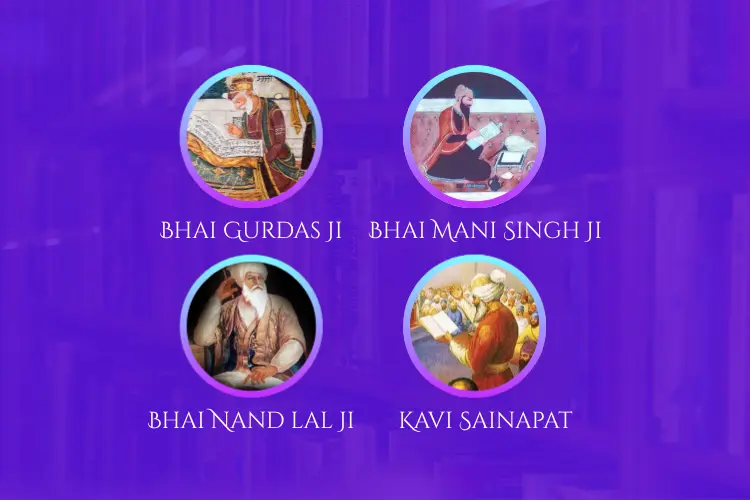
of 23Bhai Gurdas
Bhai Gurdas was the first major scholar of the Sikh tradition and a close companion to several Gurus. He was the primary scribe of the original Adi Granth and played a vital role in organizing the early Sikh community. His poetry is revered as the "Key" to understanding the Guru Granth Sahib.
Essential Works:
Vaaran Bhai Gurdas, Kabitt Savaiye.
02
of 23Bhai Mani Singh
A legendary scholar-martyr of the 18th century, Bhai Mani Singh was a childhood companion of Guru Gobind Singh. He is credited with preserving the integrity of Sikh literature during a time of intense persecution and served as the Head Granthi at the Golden Temple.
Essential Works:
Gyan Ratnavali, Bhagat Ratnavali.
03
of 23Bhai Nand Lal
The most celebrated poet in the court of Guru Gobind Singh, Bhai Nand Lal wrote primarily in Persian. His work is deeply mystical, focusing on the intense love for the Guru and the spiritual beauty of the Sikh path.
Essential Works:
Zindaginama, Ganjnama, Jot Bikas. (Download Now)
04
of 23Bhai Chaupa Singh
Bhai Chaupa Singh was a member of the Guru’s household and is most famous for documenting the early codes of conduct for the Khalsa. His work provides a historical window into the disciplined lifestyle expected of a Sikh during the formative years of the Khalsa.
Essential Works:
Rahitnama Bhai Chaupa Singh.
05
of 23Sainapati
Sainapati was one of the 52 court poets of Guru Gobind Singh. His historical account is one of the most important contemporary sources for the events leading up to the creation of the Khalsa and the battles of the tenth Guru.
Essential Works:
Sri Gur Sobha, Chanakya Niti (Translation).
06
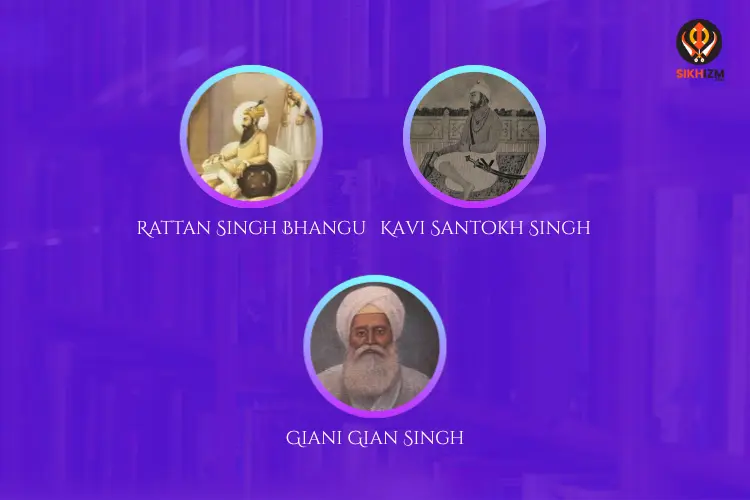
of 23Ratan Singh Bhangu
Writing in the early 19th century, Bhangu was a soldier-historian who sought to document the "why" and "how" of the Sikh rise to power. His work is a raw, powerful account of the bravery and sacrifice of the Sikh Misls.
Essential Works:
Prachin Panth Prakash.
07
of 23Kavi Santokh Singh
A giant of Sikh literature, Santokh Singh spent his life crafting a massive epic history of the ten Gurus. While his style is traditional and poetic, the sheer volume of information he preserved is unparalleled.
Essential Works:
Sri Gur Pratap Suraj Granth (Suraj Prakash), Nanak Prakash.
08
of 23Giani Gian Singh
Giani Gian Singh was a 19th-century historian who traveled extensively across the Indian subcontinent to visit Gurdwaras and verify oral histories. He aimed to provide a comprehensive history of the Sikh nation from the Gurus to the colonial period.
Essential Works:
Twarikh Guru Khalsa, Panth Prakash.
09
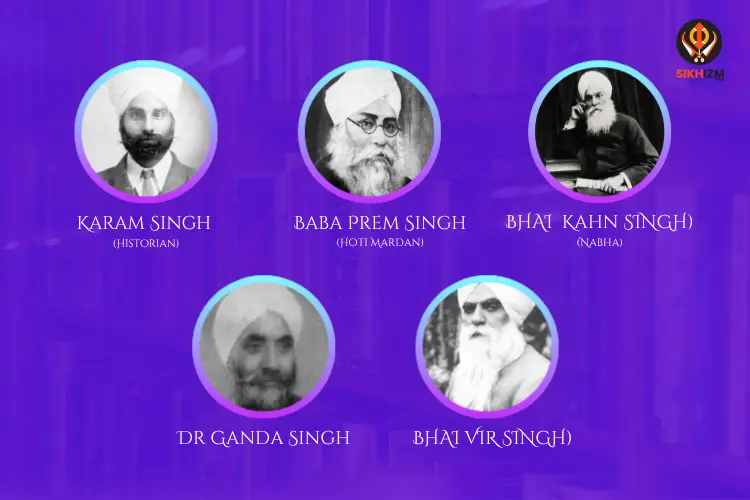
of 23Karam Singh Historian
Karam Singh revolutionized Sikh studies by introducing the modern historical method. He was the first to challenge long-held myths by using logic, old manuscripts, and contemporary evidence, earning him the title "Historian."
Essential Works:
Kattak ke Visakh, Gurpurb Nirnay, Jiwan Sardar Hari Singh Nalwa.
10
of 23Baba Prem Singh Hoti Mardan
A dedicated biographer and member of the religious royalty of Hoti Mardan, he focused on restoring the history of the Sikh Empire. He meticulously researched the lives of the great generals and kings to inspire a sense of pride in the community.
Essential Works:
Jiwan Birtant Maharaja Ranjit Singh, Sardar Hari Singh Nalwa, Kanwar Nau Nihal Singh.
11
of 23Dr. Ganda Singh
The doyen of modern Sikh history, Dr. Ganda Singh pioneered the use of Persian and archival sources to create a factual, scholarly narrative of the Sikh past. He was instrumental in establishing the Punjab Historical Society.
Essential Works:
Ahmad Shah Durrani, The Sikh People, Banda Singh Bahadur.
12
of 23Bhai Vir Singh
The central figure of the Singh Sabha movement, Bhai Vir Singh is often called the "Sixth River of Punjab." He modernized Punjabi literature and provided deep, spiritual commentaries that brought the Gurus' teachings to the modern masses.
Essential Works:
Guru Nanak Chamatkar, Kalgidhar Chamatkar, Santhya Sri Guru Granth Sahib.
13
of 23Bhai Kahn Singh Nabha
A polymath and scholar, Bhai Kahn Singh Nabha’s contribution is foundational. He created the definitive encyclopedia of Sikhism and was a major voice in clarifying the distinct identity of the Sikh faith.
Essential Works:
Mahan Kosh (Encyclopedia of Sikh Literature), Ham Hindu Nahin, Gurmat Prabhakar.
14
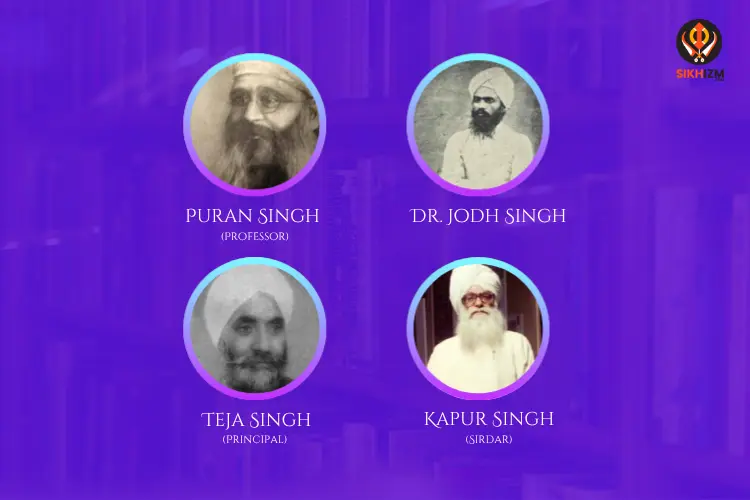
of 23Professor Puran Singh
A scientist by training and a mystic by heart, Puran Singh’s writing is characterized by its explosive, lyrical energy. He interpreted Sikhism as a religion of freedom, beauty, and cosmic consciousness.
Essential Works:
The Spirit Born People, Sisters of the Spinning Wheel, The Book of the Ten Masters.
15
of 23Bhai Jodh Singh
A leading theologian and academic, Bhai Jodh Singh was the first Vice-Chancellor of Punjabi University. He was known for his calm, logical defense of Sikh principles in the face of philosophical challenges.
Essential Works:
Gurmat Nirnay, Gospel of the Guru Granth Sahib.
16
of 23Principal Teja Singh
A brilliant scholar and translator, Teja Singh was instrumental in standardizing the Sikh Code of Conduct (Rehat Maryada). He helped bridge the gap between traditional Giani learning and Western academic rigor.
Essential Works:
A Short History of the Sikhs, Sikhism: Its Ideals and Institutions, Asa-di-Var (Translation).
17
of 23Sirdar Kapur Singh
A philosopher-statesman and National Professor of Sikhism, Kapur Singh was a fierce intellectual who defined the political and theological sovereignty of the Khalsa in the modern world.
Essential Works:
Parasharprasna (The Baisakhi of Guru Gobind Singh), Sachi Sakhi, Hashish.
18
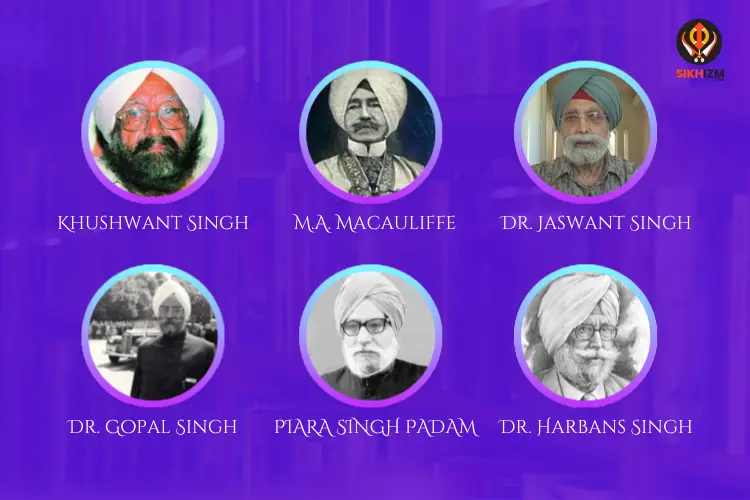
of 23Khushwant Singh
Though often controversial, Khushwant Singh did more to introduce Sikh history to the global English-speaking world than any other 20th-century writer. His historical narrative remains a standard academic reference.
Essential Works:
A History of the Sikhs (Vol 1 & 2), The Sikhs Today, Translation of Japji.
19
of 23Max Arthur Macauliffe
A British administrator who resigned his post to dedicate his life to studying Sikhism. Working with traditional Sikh scholars, he produced the first major English-language work that respected Sikh traditions and theology.
Essential Works:
The Sikh Religion (6 Volumes).
20
of 23Dr. Gopal Singh
A distinguished diplomat and man of letters, Dr. Gopal Singh was the first person to produce a complete, poetic translation of the Guru Granth Sahib in English, making the scripture accessible to a worldwide audience.
Essential Works:
Sri Guru Granth Sahib (English Translation), The Religion of the Sikhs, A History of the Sikh People.
21
of 23Dr. Harbans Singh
As the Editor-in-Chief of the Encyclopedia of Sikhism, Dr. Harbans Singh spent decades organizing the vast knowledge of the Sikh faith into a structured, academic format that remains the gold standard today.
Essential Works:
The Heritage of the Sikhs, Guru Nanak and Origins of the Sikh Faith, Encyclopedia of Sikhism.
22
of 23Piara Singh Padam
A tireless researcher and editor, Padam specialized in finding and publishing old manuscripts. He brought to light many hidden works of the Guru period, particularly the various Rahitnamas.
Essential Works:
Rehitnamay, Sikh Terminology, Guru Gobind Singh ji de Darbari Ratan.
23
of 23Dr. Jaswant Singh Neki
A world-renowned psychiatrist and a deeply spiritual poet, Dr. Neki explored the psychological and metaphysical depths of the Sikh faith, blending modern science with ancient wisdom.
Essential Works:
Ardaas: Darshan Roop te Abhias, Achchete di Ibadat, Vismai Shakh.
Who are some notable Sikh scholars and authors featured in this guide?
The list includes early theologians like Bhai Gurdas and Bhai Mani Singh, classic historians like Kavi Santokh Singh (author of Suraj Prakash) and Rattan Singh Bhangu (Prachin Panth Parkash), and modern scholars like Bhai Vir Singh and Dr. Harbans Singh. Their works span Sikh history, poetry, and theology.
What are the Vaars of Bhai Gurdas?
The Vaars of Bhai Gurdas are 40 heroic ballads (verses) written by Bhai Gurdas (1551–1636) as commentary on the Gurus’ teachings
. They explain Sikh doctrine and the Guru Granth Sahib through poetic narrative.
What is the Suraj Prakash Granth and why is it important?
The Suraj Prakash Granth is a monumental Punjabi scripture by Santokh Singh. It narrates the lives of the Sikh Gurus in epic verse. As a classic work of Sikh literature, it provides detailed historical and spiritual insights into the Gurus’ teachings.
What does Prachin Panth Parkash cover?
Prachin Panth Parkash is an early Sikh historical text by Rattan Singh Bhangu (18th–19th c.). It recounts the lives of the Gurus and key events up to the mid-18th century. It is valued for its detailed chronicle of the early Sikh community.
Why is Mahan Kosh considered a key Sikh reference?
Mahan Kosh (full title Guru Shabad Ratnakar Mahan Kosh) is a comprehensive Sikh encyclopedia compiled by Bhai Kahn Singh Nabha in 1930
. It defines Sikh terms, scriptural references, and biographies, making it an indispensable reference for Sikh scholars and readers.
Who compiled the Guru Granth Sahib and the Dasam Granth?
The Adi Granth (now Guru Granth Sahib) was compiled by Guru Arjan Dev (1604), with Bhai Gurdas serving as scribe. The Dasam Granth (works of Guru Gobind Singh) was organized after 1708 under Mata Sundari’s guidance, traditionally by Bhai Mani Singh. These codifications preserved the Gurus’ sacred writings.
What are some recommended books for learning Sikh history and literature?
Essential reads include Suraj Prakash Granth and Prachin Panth Parkash for classical history, and modern histories like Giani Gian Singh’s Panth Prakash. Introductory overviews (e.g. Khushwant Singh’s A History of the Sikhs) and translated scriptures (e.g. works by Gopal Singh) are also highly recommended.
Which Sikh poet-scholar led the literary revival of modern Sikhism?
Bhai Vir Singh (1872–1957) is considered the father of modern Punjabi literature. His Punjabi novels, poems, and essays (such as Khalsa Jiwan, Sundarī, and Rana Surat Singh) revitalized Sikh literary culture and shaped 20th-century Sikh thought.
Who are notable Sikh encyclopedists and translators?
Besides Bhai Kahn Singh Nabha (Mahan Kosh), Dr. Harbans Singh edited the English Encyclopaedia of Sikhism. Dr. Gopal Singh produced the first full poetic English translation of the Guru Granth Sahib, and Piara Singh Padam cataloged rare Sikh manuscripts.
How should a newcomer start exploring Sikh literature and history?
Beginners can start with the Sikh scripture (Guru Granth Sahib) or selected hymn collections, along with Bhai Gurdas’s Vaars. Introductory histories and modern overviews (by authors like Khushwant Singh or W.H. McLeod) are helpful. From there, readers can progress to the listed scholars’ works.