

Table of Contents
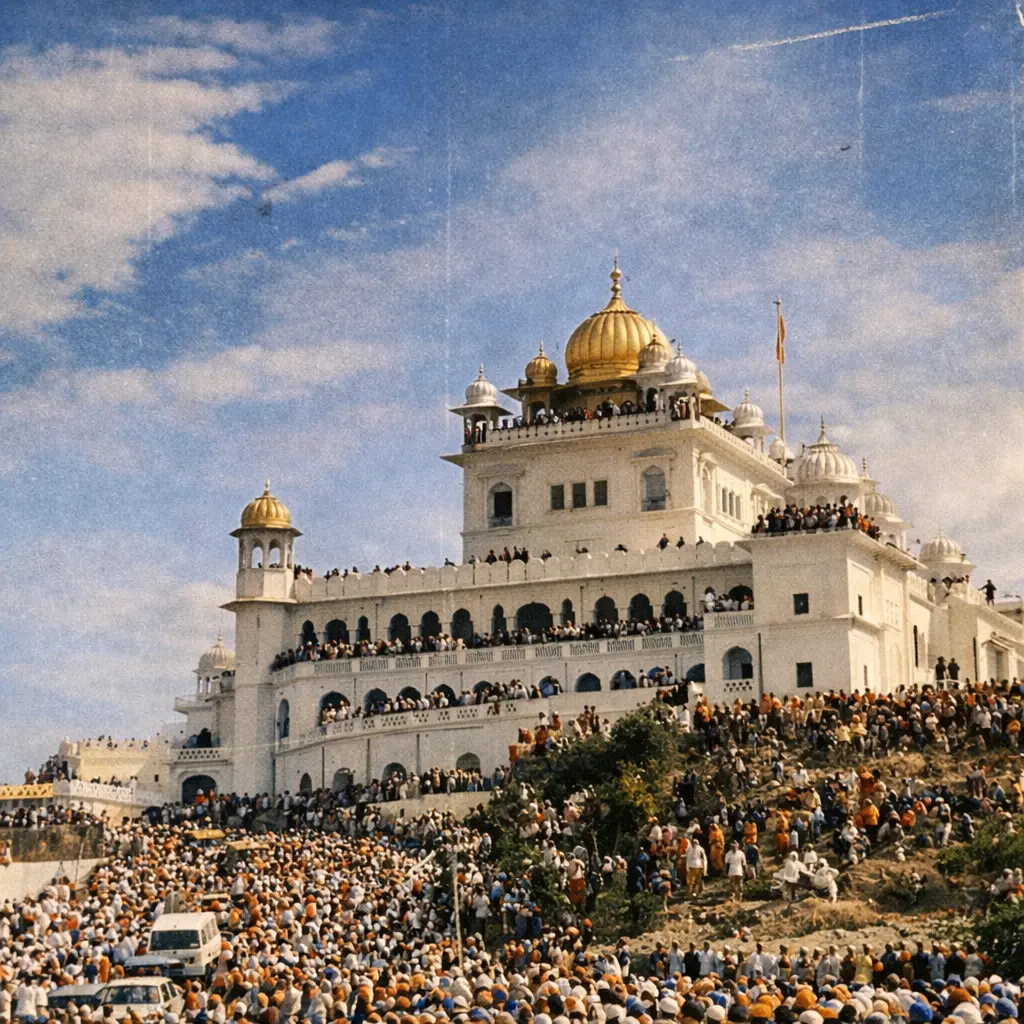
The very mention of Anandpur Sahib sends a thrill through the veins of a genuine Sikh, evoking an unexplainable moment of bliss. Known as the Puri (City) of Anand (Bliss), Anandpur Sahib stands as a towering beacon in Sikh history, commemorating the birthplace of the Khalsa and serving as a crucial religious and political capital for decades. This sacred zone, which today includes villages such as Chakk Nanaki, Sahota, and Mataur, is a land associated with the profound sacrifices and martial sovereignty defined by the tenth Guru.
01
of 11The Birth of the City: From Chakk Nanaki to Anandpur Sahib
The establishment of Anandpur Sahib was a step in a long tradition of Sikh Gurus founding important city-states, a unique phenomenon in the history of the Sikh nation where social, spiritual, economical, and political roles merged into one. While Guru Tegh Bahadur Sahib, the Ninth Guru, is often credited with founding Anandpur Sahib in 1665, it was actually the village of Chakk Nanaki that was founded on June 19, 1665.
Before settling, Guru Tegh Bahadur Sahib had traveled extensively on a missionary tour spanning over seven years, including parts of Assam, Bengal, and Bihar. In 1665, while visiting Keeratpur Sahib, he learned of the death of Raja Deep Chand of Bilaspur State. The Dowager Rani Champa, a devoted Sikh, implored Guru Tegh Bahadur Sahib not to establish his headquarters far away, as he had initially planned to settle in Dhamtan. Rani Champa promised to donate land for a new Sikh Centre in her State, but the Guru insisted on purchasing the land, declaring he would not establish a Sikh City on donated land. Rani Champa agreed to accept the price and planned to spend the money on the welfare of her poor subjects.
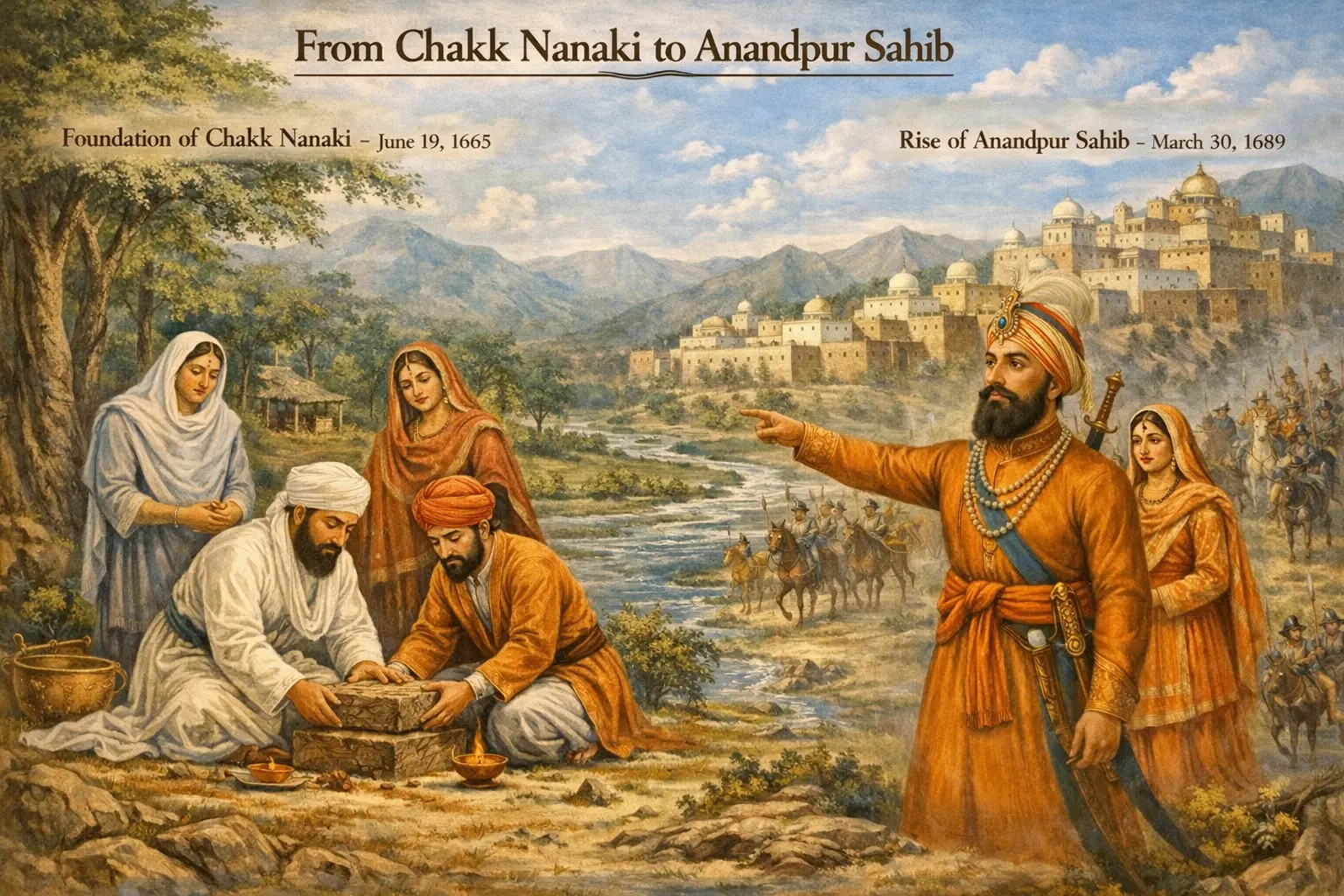 Guru Tegh Bahadur Sahib selected an area of great strategic importance, carved out from the territories of Sahota, Mianpur, and Laudipur, which was peaceful and safe from military encroachment, having experienced Moghul invasions previously. On June 19, 1665, Bhai Gurditta laid the foundation stone of the new town at the present site of Guru De Mahal. The town was named Chakk Nanaki after Guru Tegh Bahadur Sahib's mother, Mata Nanaki, who had been instrumental in convincing the Guru to settle in Bilaspur State. The new center soon flourished, drawing thousands of Sikhs, and changing the map of the Hathaut area, which had previously been a dense forest.
It was Guru Gobind Singh Sahib who later laid the foundation stone of the expanded city of Anandpur Sahib on March 30, 1689, built on the ruins of the village of Makhowal. This expansion followed a request from Rani Champa (now Dowager Rani) and Prince Bhim Chand, who sought the Guru’s patronage and defense against Moghul invaders.
02
of 11The Seed of Sovereignty: Sacrifice and Armed Readiness
Chakk Nanaki served as the center for the Sikh faith during a time of immense political pressure from the Moghul Empire. On May 25, 1675, a large group of Kashmiri Brahmins, led by Bhai Kirpa Ram Dutt, arrived at Chakk Nanaki seeking refuge from the campaign of forcible conversion launched by the Muslim Governor of Kashmir, who had the backing of Emperor Aurangzeb.
Guru Tegh Bahadur Sahib paused after stating that a prominent person must make the ultimate sacrifice to achieve religious freedom for Hindus and non-Muslims. Hearing this, Guru Gobind Singh Sahib, then about 14 years old, declared that there was no one more prominent than the Guru himself to make that sacrifice. This decision cemented the city’s destiny as the hub of resistance. On July 8, 1675, in the presence of prominent Sikhs at Takht Damdama Sahib in Chakk Nanaki, Guru Tegh Bahadur Sahib installed Guru Gobind Singh Sahib as the Tenth Nanak before leaving for Delhi.
After suffering horrific torture in Delhi, Guru Tegh Bahadur Sahib was martyred on November 11, 1675. In an incredible act of bravery, Bhai Jaita, Bhai Nanu Ram Dilwali, and Bhai Uda Rathore carried the Guru Sahib's severed head all the way back to Chakk Nanaki, presenting it to Guru Gobind Singh Sahib. The head was cremated outside the village boundary on November 17, 1675, the site now marked by Gurdwara Sis Ganj. At Gurdwara Akal Bunga, Guru Gobind Singh Sahib addressed the congregation, urging them to prepare for a long struggle against the terrorist regime, emphasizing the need to annihilate injustice without seeking revenge.
Following this defining event, Guru Gobind Singh Sahib began to transform the city into a martial state. He institutionalized Daswandh (tithe) and organized Sikhs into well-knit units. In 1680, a Nagara (drum), a symbol of national sovereignty, was mounted and beaten daily after prayers. Sikhs began flocking to Chakk Nanaki, bringing fine weapons, books, and horses as presents. The city rapidly became a capital for political and military affairs, while also serving as a vibrant center for arts and literature, hosting over 52 poets in daily symposia.
03
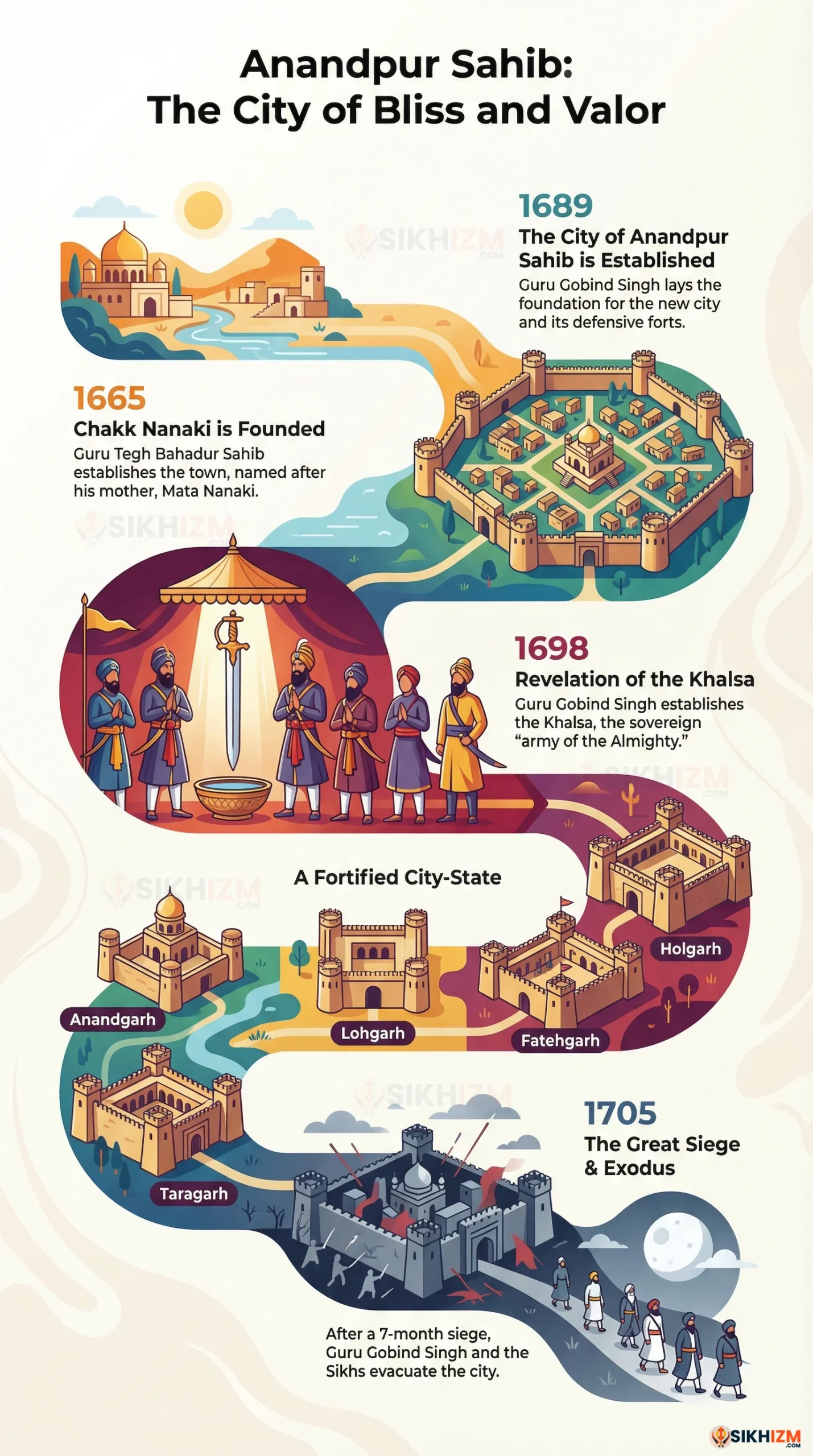
of 11Infographic: Anandpur Sahib - the City of Bliss and Valor
04
of 11The Fortified City and the Invention of Hola Mahalla
Upon returning to Chakk Nanaki in 1688 after the victory in the Battle of Bhangani, Guru Gobind Singh Sahib responded to the request of Rani Champa to build fortifications for defense. On March 29, 1689, Guru Sahib laid the foundation of the new city, Anandpur Sahib, having purchased the land of Makhowal and several surrounding villages.
The next day, the foundation stone was laid for the fort of Anandgarh, which became the main cantonment. Four additional forts were built soon after: Taragarh, Lohgarh, Holgarh/Agamgarh, and Fatehgarh. These forts provided protection to the burgeoning Sikh City State, utilizing the natural defense provided by the Charan Ganga rivulet, the Satluj River (which flowed nearby at the time), and the surrounding hills.
The creation of the forts was paralleled by the creation of unique Sikh festivals. In 1683, observing that the Hindu festival of Holi often involved nonsense customs, spoiled clothing, and incidents of hooliganism, Guru Gobind Singh Sahib introduced a new festival. This festival, named Hola Mahalia, was first celebrated on March 4, 1683, and featured wrestling competitions, horse races, fencing, war maneuvering games, and other martial activities. The intention was to foster a spirit of martial and recreational moods among the Sikhs. It remains one of the most prominent fairs of the Punjab.
05
of 11The Revelation of the Khalsa
Before the most momentous event in the city’s history—the revelation of the Khalsa—Guru Gobind Singh Sahib addressed significant internal issues, including the pervasive corruption within the system of Masands (area chiefs). Originally designed to link the Guru with the Sikhs and channel economic support, many Masands had become debauch, collected forced donations, and acted as sub-Gurus. In February 1698, after being alerted through a satirical skit, Guru Sahib disbanded the entire institution, punishing the corrupt and honoring the honest, and declared that henceforth, no Sikh should send offerings through any Masand.
Guru Gobind Singh Sahib then issued a Hukamnama for a special congregation on March 29, 1698 or 1699, the day widely accepted as the revelation date. The Guru chose the first of Visakh for this gathering not for any auspiciousness, but because it was a well-known date on the Bikrami calendar, which the common folk relied upon.
On the day of the congregation at Kesgarh Sahib, more than twenty thousand Sikhs were present. Guru Gobind Singh Sahib stood, drew his sword (*Kirpaan*), and demanded a Sikh ready to sacrifice his life for the nation. After repeating the call three times, Bhai Daya Ram Sobti volunteered, followed by Bhai Muhkam Chand, Bhai Sahib Chand, Bhai Dharam Chand Jawanda, and Bhai Himmat Chand, who were all taken into a tent, one by one, with the sound of a thud and the sight of fresh blood dripping from the Guru's sword.
When Guru Sahib finally emerged with the five Sikhs, now known as the Punj Piaray (five chosen beloved ones), they were dressed in blue and looked like "God's chosen beloved one's". Guru Sahib then prepared Khandey Di Pahul (the nectar of the double-edged sword), stirring water in an iron vessel (*Bata*) with a Khanda while the Punj Piaray read five hymns. Mata Jito (later Jeet Kaur) added Patasas (sugar candy) to the water.
Upon initiation, Guru Sahib declared, "From now onwards you are Khalsa (sovereign beings) of the Supreme Sovereign (the Almighty)". They were given new names (Daya Singh, Muhkam Singh, etc.) and mandated to wear the five articles of faith (Kakaars): Kes (unshorn hair), Kangha (comb), Kirpaan (sword), Kachhehra (shorts), and Kara (steel/iron bracelet). Guru Gobind Singh Sahib then himself received Khandey Di Pahul from the Punj Piaray*. Guru Sahib declared the Khalsa to be the "army of the Almighty".
06
of 11The Great Siege and the Final Exodus
The rapid growth of the Khalsa alarmed both the Moghul and the hill rulers, who grew jealous of Anandpur Sahib's political and military importance. Following continuous attacks, Ajmer Chand, the inimical ruler of Bilaspur, tried several times to seize the city.
In a famous incident on September 1, 1700, during an attack on Lohgarh fortwhich housed the arms factory run by Bhai Ram Singh Sikligar—Ajmer Chand ordered a drunken elephant with iron plates tied to its forehead to break open the strong gate. Guru Sahib assigned Bhai Bachitar Singh the task of repelling it. Bhai Bachitar Singh rushed forward and struck the elephant with the Naagani spear (a she-serpent shaped spear, a relic now preserved at Kesgarh Sahib), piercing the iron plates and entering deep into its forehead. The grievously wounded elephant beat a hasty retreat, killing and wounding many hill soldiers in the process.
After years of relentless skirmishes, Ajmer Chand and the Moghul forces decided to impose a long-term siege on the Greater Anandpur Sahib. Starting May 3, 1705, the city was completely cut off, preventing entry or exit of people, food, or arms. Despite the Sikhs holding out for seven months, the shortage of food was dire, leading to the death of the valuable Parsadi elephant (a gift from the ruler of Tripura) due to hunger.
Finally, after receiving a letter (allegedly pasted in a volume of the Quran) from Aurangzeb promising safe passage, and under intense pressure from the Sikhs and Mata Gujari, Guru Gobind Singh Sahib agreed to evacuate Anandpur Sahib.
On the midnight of December 5 and 6, 1705, Guru Sahib and approximately 500 Sikhs, Mata Gujari, and the four Sahibzadas left the Anandgarh fort. Guru Sahib visited Gurdwara Sis Ganj for the last time, appointing Bhai Gurbakhsh Rai as the caretaker of the shrines. As they moved toward the Sarsa stream, the hill army broke their oaths and pursued them.
This pursuit led to a disastrous, unequal fight at the Sarsa stream, Jhakkhian, and Shahi Tibbi, scattering the Guru’s family and leading to the martyrdom of many brave Sikhs, including Bhai Jiwan Singh and Bhai Udey Singh. The sad scene of Guru Sahib, Mata Gujari, four Sahibzadas, forty liberated ones, and about five hundred Sikhs leaving Anandpur Sahib is remembered as a moment of deep despondency.
07
of 11Sacred Geography: Gurdwaras and Forts
The entire zone of Anandpur Sahib is considered a sacred zone, having been the home of Guru Tegh Bahadur Sahib and Guru Gobind Singh Sahib for about eight decades (1626 to 1705).
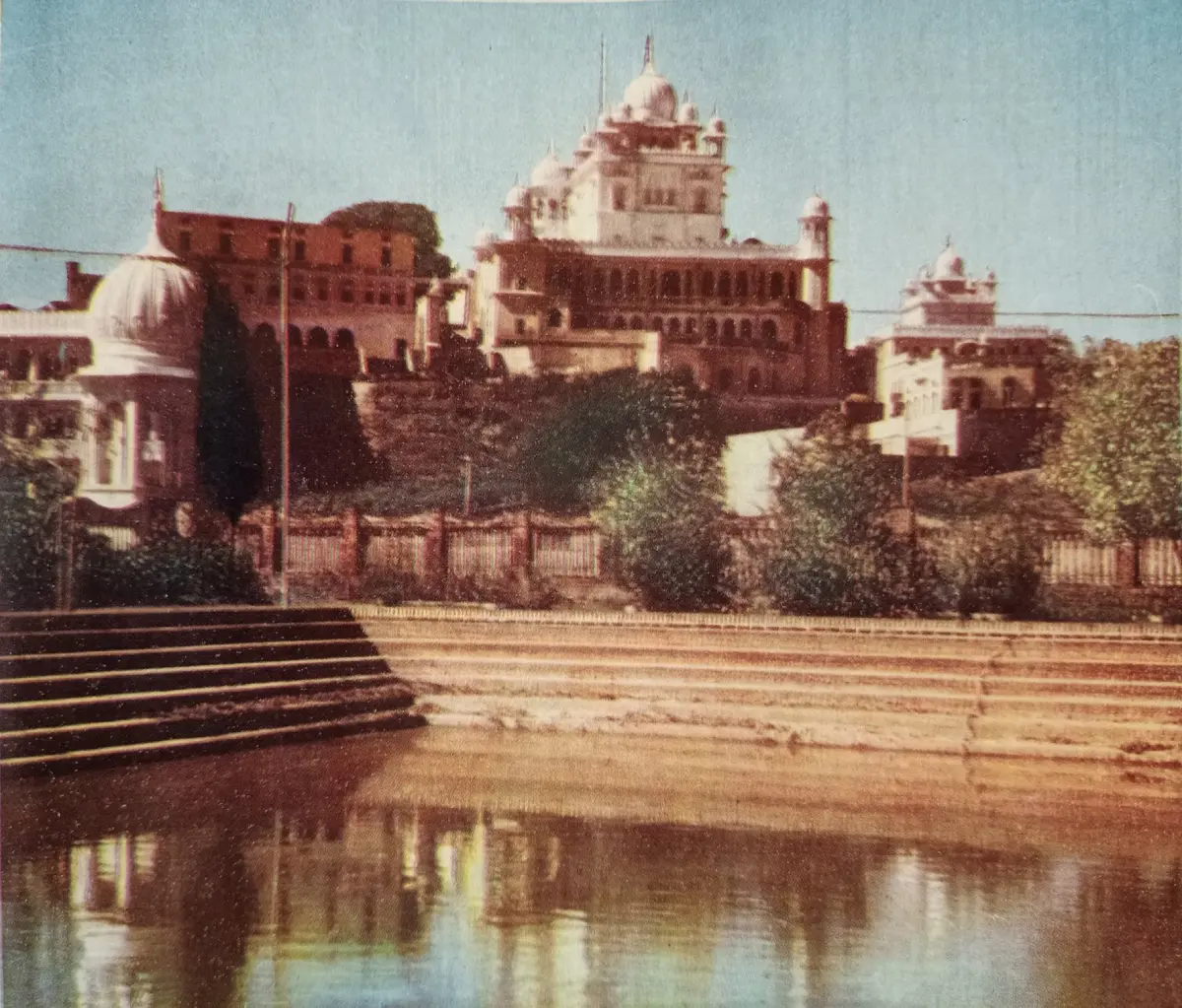
Takht Sri Kesgarh Sahib: Built on a hill, Kesgarh Sahib was the main congregation site and the location of the revelation of the Khalsa. It holds several historic relics, including the original Khanda used to prepare Amrit and the Naagani Barchha used by Bhai Bachitar Singh.
Gurdwara Sis Ganj Sahib: Marks the site where the severed head of Guru Tegh Bahadur Sahib was cremated in 1675.
Gurdwara Damdama Sahib (Chakk Nanaki): This was the seat of Akal Takht Sahib from 1664 to 1698, Guru Tegh Bahadur Sahib's Diwan-e-Khas (special court), and where Guru Gobind Singh Sahib was installed as the Tenth Nanak.
The Five Forts (Qilas): The remains or current Gurdwaras marking the sites of the five forts—Anandgarh, Lohgarh, Fatehgarh, Taragarh, and Holgarh/Agamgarh—remind visitors of the city’s military importance. Lohgarh was the arms manufacturing center, and Anandgarh was the primary headquarters.
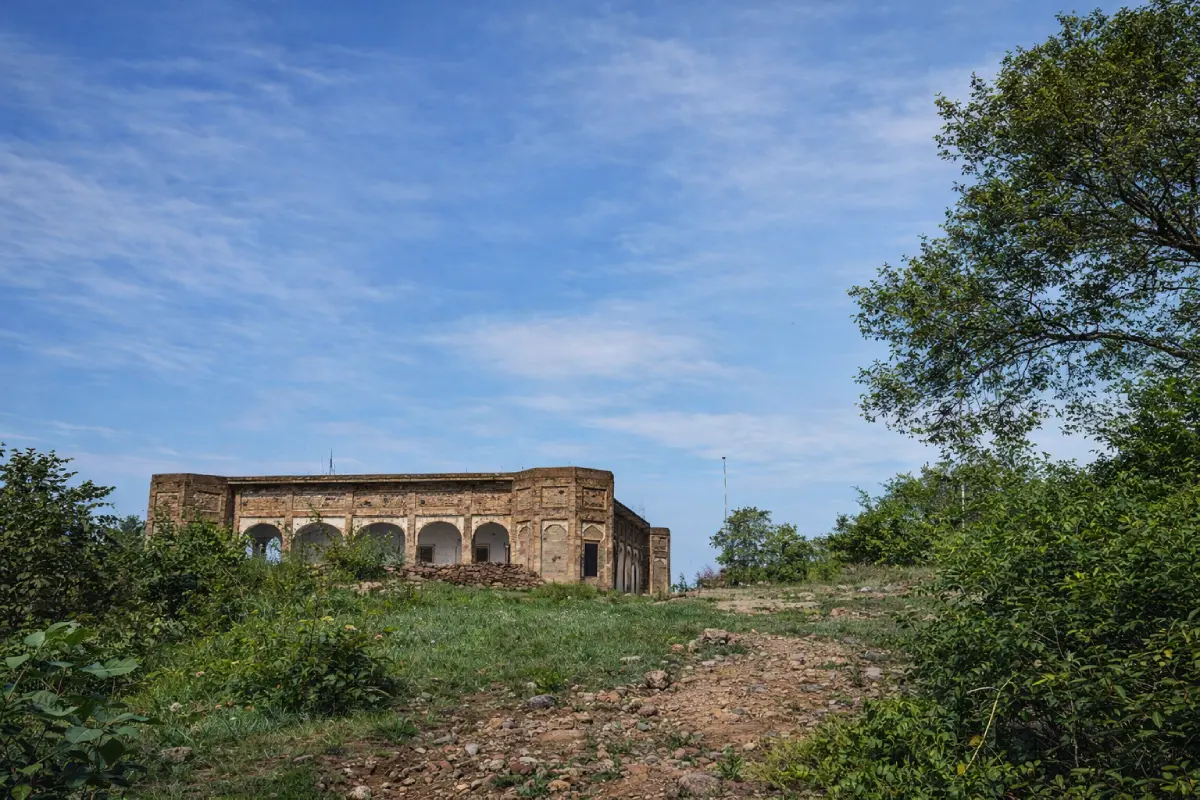
Guru Da Lahore: Located 11 km from Anandpur Sahib, this village was established by Guru Gobind Singh Sahib to honor the wish of his first father-in-law, Bhai Harijas Subhikkhi, to have the marriage performed in Lahore. Guru Sahib’s marriage to Mata Jeeto (Jeet Kaur) was solemnized here on June 21, 1677.
08
of 11A World Heritage of Commitment
Anandpur Sahib remains eternally significant, symbolizing the right of self-determination and the protection of the weak and oppressed. The city is not merely a collection of shrines, but a testament to the commitment of the Guru's house: "Neither fear nor frighten anyone".
Though Guru Gobind Singh Sahib had to leave, the spirit of the Khalsa, forged here through immense sacrifice, has endured. In fact, the very family (Ajmer Chand's) that sought to expel the Guru from his land has vanished, while the Sikhs, the successors to Guru Sahib, have spread throughout the world. Every Sikh today regards Anandpur Sahib as their spiritual home.
The commitment of Anandpur Sahib is clear: annihilation of injustice, cruelty, and inhumanism. Visiting this city provides a vital connection to the history of the Sikh nation, urging visitors to ask themselves: "Am I a Khalsa? Am I a subject of Anandpur Sahib?".
09
of 11History of Sri Anandpur Sahib Explained in Video (Punjabi & English)
10
of 11Chronology of Events relevant to Anandpur Sahib
| Date | Event |
|---|---|
| 1522 | Guru Nanak Sahib founded Kartarpur Sahib, the first town established by a Guru. |
| 1624 | Baba Sri Chand laid the foundation of Keeratpur Sahib. |
| May 1635 | Guru Hargobind Sahib moved to Keeratpur Sahib, which served as the headquarters of the Sikh faith until 1664. |
| 1656 | Guru Tegh Bahadur Sahib left for a missionary tour of the eastern zone (Assam, Bengal, Bihar) that lasted over seven years. |
| December 18, 1661 | Guru Gobind Das (Singh) was born during Guru Tegh Bahadur Sahib's stay in Patna. |
| August 11, 1664 | Guru Tegh Bahadur Sahib was installed as the Ninth Nanak at Bakala. |
| Middle of April 1665 | Guru Tegh Bahadur Sahib visited Talwandi Sabo and laid the foundation of the Gurusar Sarovar (tank). |
| May 10, 1665 | Guru Tegh Bahadur Sahib went to Bilaspur to participate in the last prayers for Raja Deep Chand. |
| June 19, 1665 | Bhai Gurditta laid the foundation stone of the new town, Chakk Nanaki (named after Mata Nanaki), at the present site of Guru De Mahal. |
| Last quarter of 1665 | Guru Tegh Bahadur Sahib departed for another long missionary journey. |
| January 1666 to March 1670 | Guru Tegh Bahadur Sahib spent this period in Assam, Bengal, and Bihar. |
| Middle of 1670 | Guru Tegh Bahadur Sahib returned to Bakala. |
| March 1672 | Guru Tegh Bahadur Sahib and his family moved to Chakk Nanaki. |
| May 12, 1673 | The betrothal ceremony of (Guru) Gobind Das (Singh) with Bibi Jeeto (Jeet Kaur) was performed at Chakk Nanaki. |
| May 25, 1675 | A large group of Kashmiri Brahmins, including 16 led by Bhai Kirpa Ram Dutt, arrived at Chakk Nanaki seeking refuge from forcible conversion. |
| July 8, 1675 | Guru Tegh Bahadur Sahib installed Guru Gobind Singh Sahib as the Tenth Nanak at Takht Damdama Sahib in Chakk Nanaki before leaving for Delhi. |
| July 10, 1675 | Guru Tegh Bahadur Sahib departed Chakk Nanaki for Delhi. |
| July 12, 1675 | Guru Tegh Bahadur Sahib was arrested at village Malikpur. |
| November 4, 1675 | Guru Tegh Bahadur Sahib and his three companions reached Delhi (after being transferred from the Bassi Pathanan fort prison). |
| November 11, 1675 | Guru Tegh Bahadur Sahib was martyred at Delhi, following the torturous deaths of Bhai Dial Das, Bhai Mati Das, and Bhai Sati Das. |
| November 17, 1675 | The severed head of Guru Tegh Bahadur Sahib, brought by Bhai Jaita (Jiwan Singh), Bhai Nanu Ram Dilwali, and Bhai Uda Rathore, was cremated outside the village boundary of Chakk Nanaki (the site of Gurdwara Sis Ganj). |
| June 21, 1677 | The marriage ceremony of Guru Gobind Singh Sahib and Bibi Jito Ji was performed at Guru Da Lahore. |
| 1678 | Guru Gobind Singh Sahib asked Bhai Mani Ram (Singh) to prepare a volume of Adi Granth (the final compilation, later Guru Granth Sahib). |
| February 1680 | Guru Sahib obtained a Nagara (drum). |
| March 15, 1680 | The Sikhs began beating the Nagara daily after evening prayers as a symbol of national sovereignty. |
| October 12, 1680 | Raja Ratan Rai, the ruler of Tripura and Jentia, visited Chakk Nanaki and presented gifts, including the Parsadi elephant. |
| March 1682 | Bhai Nand Lal, a great poet and scholar, arrived at Anandpur Sahib. |
| March 4, 1683 | The first Hola Mahalla festival was celebrated by Guru Gobind Singh Sahib to replace the Hindu Holi festival with martial sports and activities. |
| April 4, 1684 | The second marriage of Guru Sahib with (Mata) Sundari (Sunder Kaur) took place at Chakk Nanaki. |
| April 14, 1685 | Guru Sahib visited Nahan state following an invitation from Raja Medani Parkash. |
| April 29, 1685 | Bhai Ram Kanwar laid the foundation stone of the new town, Paonta Sahib, established by Guru Gobind Singh Sahib. |
| September 18, 1688 | The Battle of Bhangani occurred, where the Sikhs defeated Fateh Shah's army. |
| October 28, 1688 | Guru Sahib left Paonta Sahib to return to Chakk Nanaki. |
| Middle of November 1688 | Guru Sahib reached Chakk Nanaki. |
| March 29, 1689 | Guru Sahib laid the foundation of the expanded city of Anandpur Sahib (on the ruins of Makhowal). |
| March 30, 1689 | The foundation stone of the fort of Anandgarh was laid. |
| March 19, 1691 | Sikh soldiers, under the command of Guru Sahib, reached Nadaun to fight the Moghul army led by Alif Khan. |
| March 20, 1691 | The Battle of Nadaun was fought, resulting in the defeat of Alif Khan's army. |
| March 28, 1691 | Guru Sahib and the victorious soldiers returned to Anandpur Sahib. |
| May 12, 1691 | Dowager Rani Champa of Bilaspur died. |
| May 27, 1691 | The final prayer for Rani Champa was held. |
| March 29, 1692 | Guru Sahib presided over a conference of hill rulers at Rawalsar to grant them protection against Moghul invasions, conditional on their unity and refusal of subordination. |
| September 16, 1692 | Raja Bhim Chand died. |
| October 3, 1692 | Final prayers for Raja Bhim Chand were held. |
| April 1693 | Guru Sahib left Anandpur Sahib for a missionary tour of the Malwa and Baangar zones of the Punjab. |
| March 29, 1695 | Guru Sahib commanded all Sikhs to keep unshorn hair and wear a steel/iron Kara (bracelet). |
| August 19, 1695 | Rustam Khan (son of the Governor of Lahore) retreated from an attack on Anandpur Sahib after floodwater swelled the nearby rivulet (Himaiti Naala). |
| February 1696 | Hussain Khan (Moghul chief of Kangra) was despatched by Dilawar Khan (Governor of Lahore) to collect revenue from hill States. |
| February 20, 1696 | Hussain Khan laid siege to Guler, leading to a battle where Guru Sahib sent Sikh soldiers for defense. |
| February 1698 | Guru Sahib disbanded the entire institution of Masands due to pervasive corruption. |
| March 29, 1698/1699 | Guru Gobind Singh Sahib revealed the Khalsa at Takht Kesgarh Sahib, initiating the Punj Piaray with Khandey Di Pahul. |
| Last week of April 1698 | Guru Sahib sent Bhai Mani Singh to manage the shrine and affairs of Guru Da Chakk (Amritsar). |
| July 12, 1698 | Guru Sahib was attacked by Katoch feudals (Aalam Chand and Balia Chand) while hunting in the hill forests. |
| April 15, 1700 | The formal marriage ceremony of Guru Sahib and (Mata) Sahib Kaur was performed (without marital relations, as agreed). |
| July 26, 1700 | A Moghul battalion under Painda Khan and Dina Beg attacked Anandpur Sahib and was defeated. |
| August 29, 1700 | Ajmer Chand attacked the fort of Taragarh. |
| August 30, 1700 | Ajmer Chand attacked Fatehgarh fort. |
| August 31, 1700 | Ajmer Chand attacked Agamgarh fort (Holgarh). |
| September 1, 1700 | Ajmer Chand attacked Lohgarh fort with a drunken elephant; Bhai Bachitar Singh repelled the elephant, and Bhai Udey Singh chopped off the head of Kesri Chand. |
| October 4, 1700 | Guru Sahib left Anandpur Sahib to temporarily relocate to Nirmohgarh hill, agreeing to Ajmer Chand’s deceptive request to vacate the city. |
| October 8, 1700 | Ajmer Chand broke his oath (sworn by the cow) and attacked Guru Sahib at Nirmoh village. |
| October 13, 1700 | Moghul forces led by Rustam Khan and Nahar Khan attacked Nirmohgarh; both leaders were killed by Guru Sahib and Bhai Udey Singh. |
| October 15, 1700 | Guru Sahib left Nirmohgarh and reached Basali, accepting the invitation of Raja Salahi Chand. |
| October 30, 1700 | Guru Sahib and the Sikhs returned to Anandpur Sahib after Raja Salahi Chand mediated a compromise with Ajmer Chand. |
| December 5, 1700 | Mata Jeet Kaur, the first wife of Guru Gobind Singh Sahib, died. |
| December 6, 1700 | Mata Jeet Kaur was cremated near the Charan Ganga rivulet. |
| March 17, 1701 | Sahibzada Ajit Singh and Bhai Udey Singh led 100 Sikhs to punish the terrorist robbers of Bajrur village. |
| October 25, 1702 | Raja Salahi Chand of Basali died, ending the mediated compromise. |
| January 13, 1703 | Guru Sahib was attacked by a Moghul army unit near Chamkaur while returning to **Anandpur Sahib**. |
| March 1703 | Sahibzada Ajit Singh and Bhai Udey Singh led 100 Sikhs to Bassi Kalan to rescue the wife of Devki Das Brahmin from Jabar Jang Khan. |
| January 16, 1704 | Ajmer Chand launched a full-fledged attack on Anandpur Sahib; during the battle, Guru Sahib introduced the *Farra* (flag in turban) concept. |
| January 15, 1705 | The marriage of Sahibzada Ajit Singh and Bibi Tara Kaur was solemnised. |
| May 3, 1705 | The joint forces of Ajmer Chand and other hill rulers completely besieged **Anandpur Sahib**, cutting it off from the outside world. |
| Midnight of December 5 and 6, 1705 | Guru Gobind Singh Sahib, under intense pressure and shortage of supplies, evacuated the Anandgarh fort with his family and Sikhs. |
| December 6, 1705 | The hill army broke its oath and pursued the Sikhs, leading to unequal fights at the Sarsa stream and Jhakkhian, and the martyrdom of Bhai Jiwan Singh and Bhai Udey Singh. The hill army subsequently occupied and ransacked Anandpur Sahib and its forts. |
| December 8, 1705 | Bhai Bachitar Singh, seriously wounded at Malikpur Ranghran on December 6, died at Kotla Nihang. |
| October 6, 1708 | The Adi Granth was given the status of Guru Granth Sahib, the Guru-Eternal of the Sikhs. |
| October 7, 1708 | Guru Gobind Singh Sahib breathed his last at Nander. |
| December 28, 1710 | Baba Banda Singh Bahadur reached the outskirts of Bilaspur and fought the hill army (Battle of Barsana rivulet). |
| 1925 | The shrines of Anandpur Sahib and Keertpur Sahib came under the management of the Shiromani Gurdwara Parbandhak Committee (S.G.P.C.). |
| October 16-17, 1973 | Shiromani Akali Dal passed the "Anandpur Sahib Da Mata" (resolution/manifesto) advocating for a state where the Sikhs would have decision-making powers. |
| April 8-14, 1999 | More than 8 million Sikhs visited Anandpur Sahib to commemorate the 300th anniversary of the revelation of the Khalsa. |
11
of 11Download PDF Book Anandpur Sahib by Dr. Harjinder Singh Dilgeer
Download Book - Anandpur Sahib
Anandpur Sahib PDF – Harjinder Singh Dilgeer
Download Anandpur Sahib PDF by Harjinder Singh Dilgeer. A comprehensive historical book covering the birth of Anandpur Sahib, Khalsa revelation,...
Read moreDetails