

Table of Contents
01
of 13Introduction to the Jaito Da Morcha
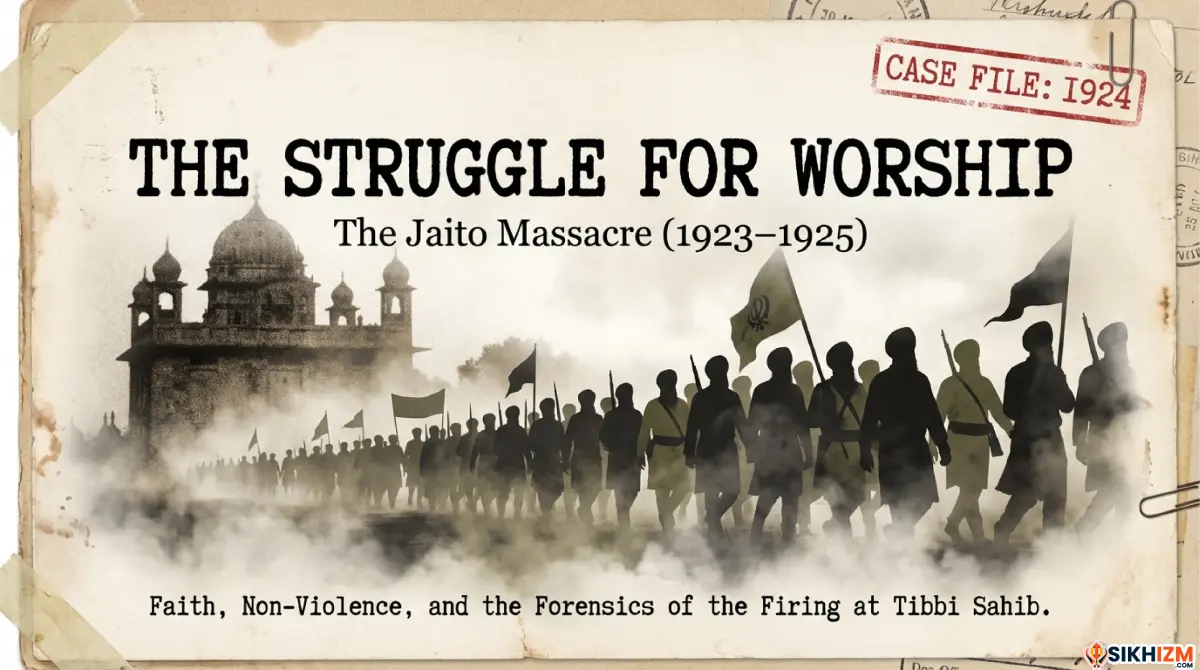
The Jaito Da Morcha (1923–1925) stands as one of the most significant landmarks in the Gurdwara Reform Movement and the broader struggle for Indian independence. It was not merely a local agitation but a profound demonstration of the Sikh community’s resolve to protect their religious sanctity (Suatantrata) and dignity against the overbearing interference of the British Raj. The Morcha (front/struggle) was triggered by two primary factors: the forced abdication of the pro-Akali Maharaja Ripudaman Singh of Nabha and the subsequent interruption of a continuous religious recitation, the Akhand Path, at the Gangsar Gurdwara in Jaito.
02
of 13The Prelude: Maharaja Ripudaman Singh and the Nabha State
To understand the Jaito Da Morcha, one must look at the character of Maharaja Ripudaman Singh. Born in 1883 and ascending the throne in 1912, he was a ruler deeply rooted in Sikhi values. Unlike many of his contemporary princes who functioned as British puppets, the Maharaja possessed a revolutionary spirit. Even before his coronation, as a member of the Viceroy’s Council (1906–1908), he championed the Anand Marriage Act to give legal recognition to Sikh marriage rites, a move that highlighted his commitment to a distinct Sikh identity (Niyara Panth).
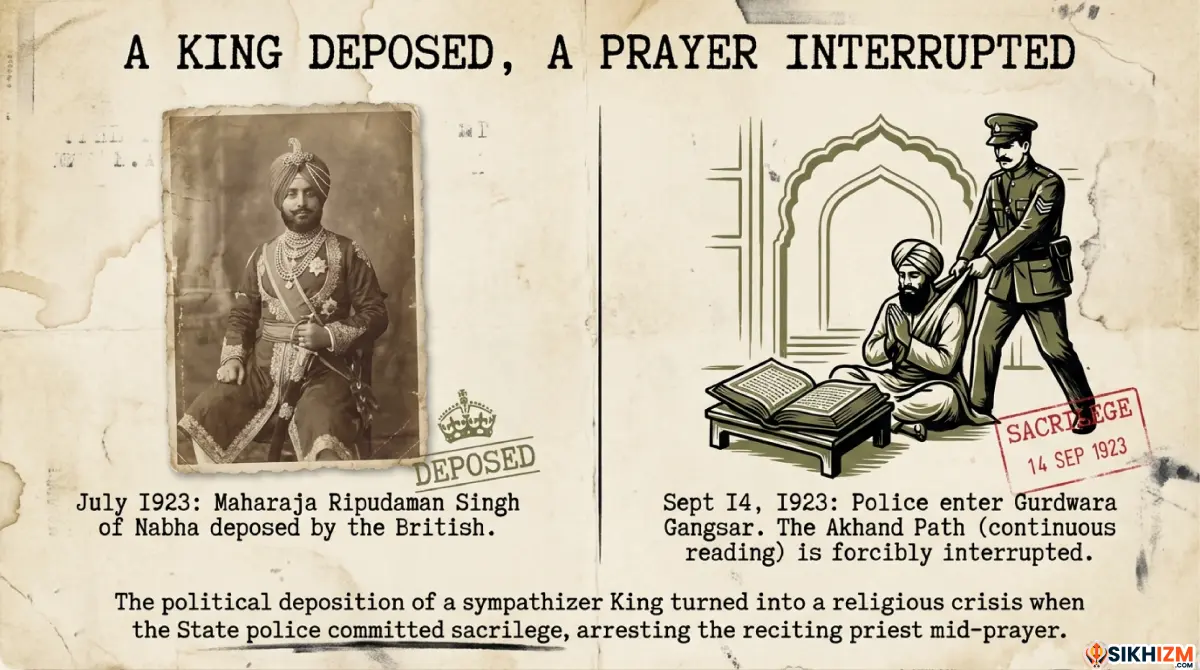
His defiance of the British was evident in his refusal to be invested with powers by a British political officer; instead, he wore his own sword in the presence of the Guru Granth Sahib and the Sangat. He openly sympathised with the Akali movement and mourned the martyrs of the Nanakana Sahib massacre by wearing a black turban. This independence troubled the British authorities, who sought an excuse to remove him. They found it in a dispute between the states of Nabha and Patiala. On July 9, 1923, the British forced him to abdicate, an act the Sikh community viewed as a direct attack on their political and religious organisation.
03
of 13The Spark: The Sacrilege at Gangsar
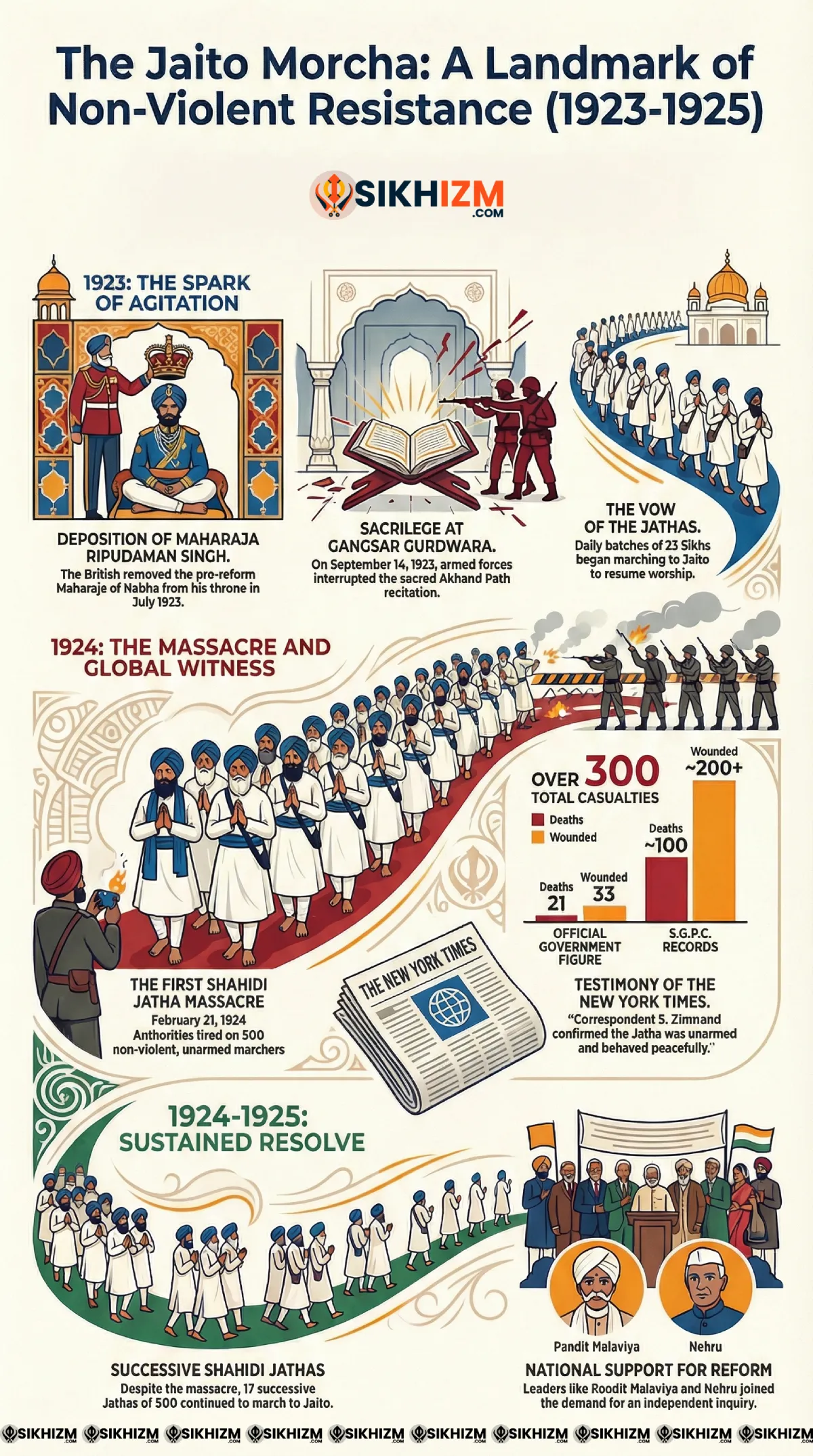
The Shiromani Gurdwara Parbandhak Committee (SGPC) began protesting the Maharaja's deposition, calling for "Nabha Day" on September 9, 1923. At a Diwan (religious assembly) in Jaito, the assembled Sikhs began an Akhand Path to pray for the Maharaja. On September 14, 1923, British-led forces entered the Gurdwara during the recitation. In an act of unprecedented sacrilege (Be-adbi), they dragged away the Granthi (priest) who was actively reciting the scriptures.
The interruption of an Akhand Path is a grave violation of Sikh religious code (Maryada). This news spread like wildfire, transforming a political protest into a purely religious Morcha for the right to unrestricted worship. The SGPC resolved that the interrupted path must be resumed and completed at all costs.
04
of 13The Strategy of Non-Violent Resistance
From September 15, 1923, daily Jathas (bands) of 25 Sikhs began marching toward Jaito after taking a vow of non-violence at the Akal Takht Sahib in Amritsar. Their objective was to resume the path and establish the Sikh birthright of free worship. The British response was brutal: these volunteers were arrested, beaten, and often left in remote areas hundreds of miles away without food or money.
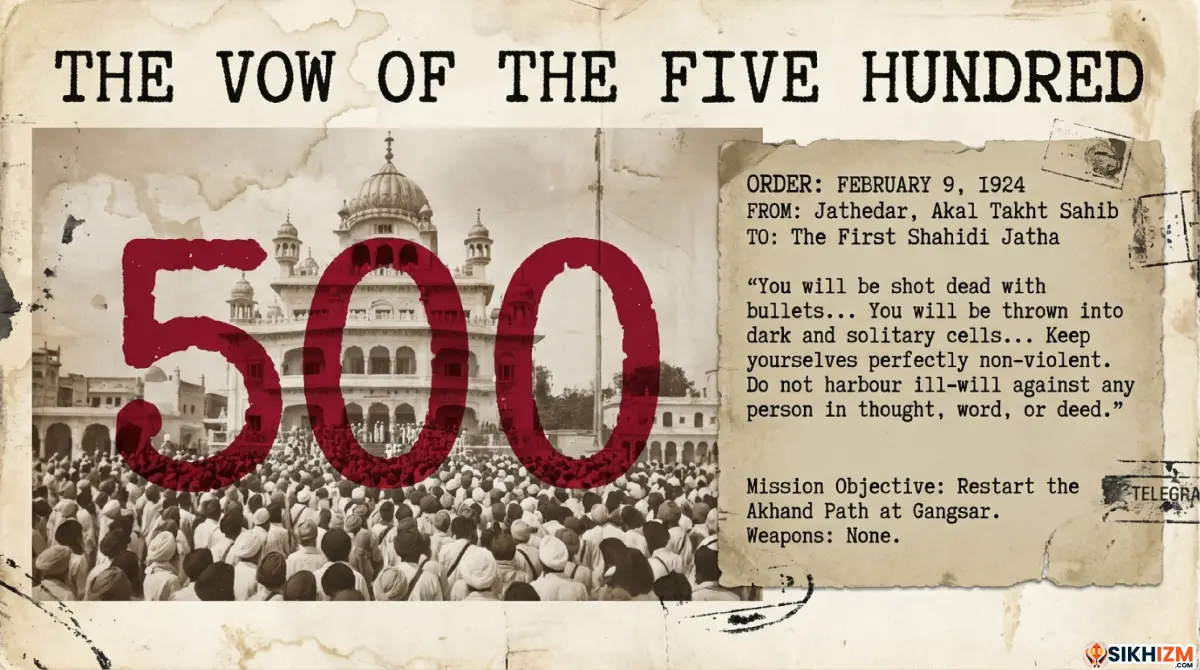
Despite these hardships, the spirit of the Panth remained undeterred. When the daily small Jathas failed to move the government, the SGPC decided to send larger Shahidi Jathas (Martyr Bands) of 500 volunteers, pledged to remain non-violent even in the face of death.
05
of 13The First Shahidi Jatha and the Massacre of February 21
The First Shahidi Jatha departed from Amritsar on February 9, 1924, on foot. As they marched through the Punjab countryside, they were greeted with immense Chardi Kala (high spirits) and devotion by thousands of villagers. By the time they approached Jaito on February 21, 1924, they were accompanied by a large Sangat (congregation) of spectators and devotees.
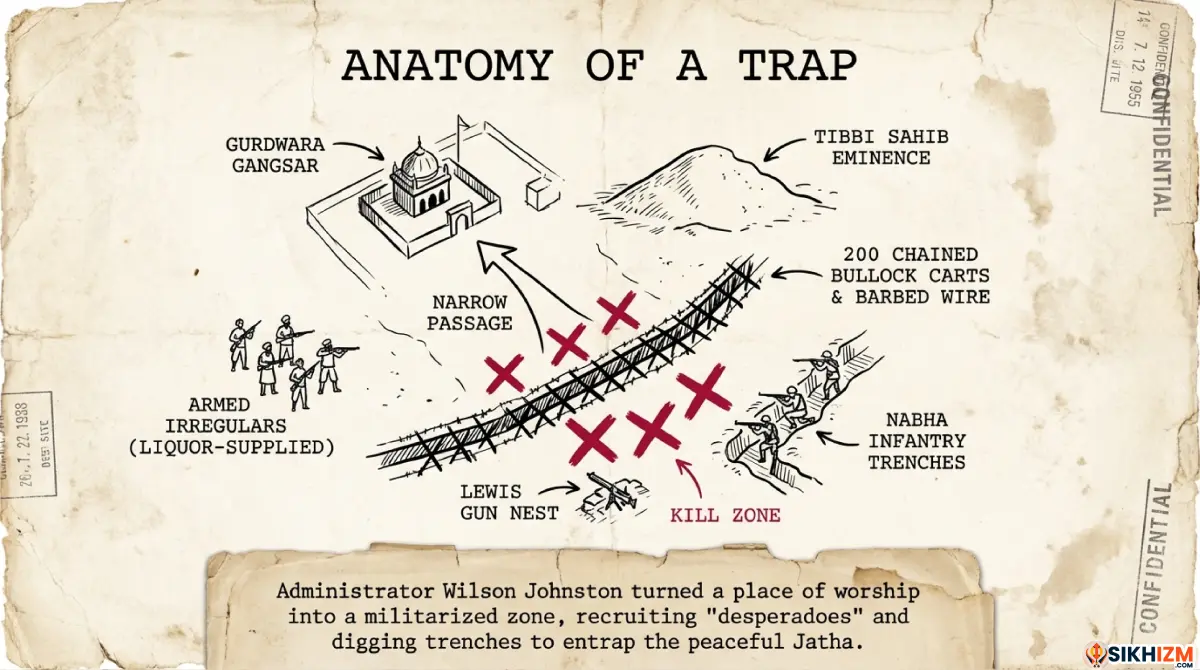
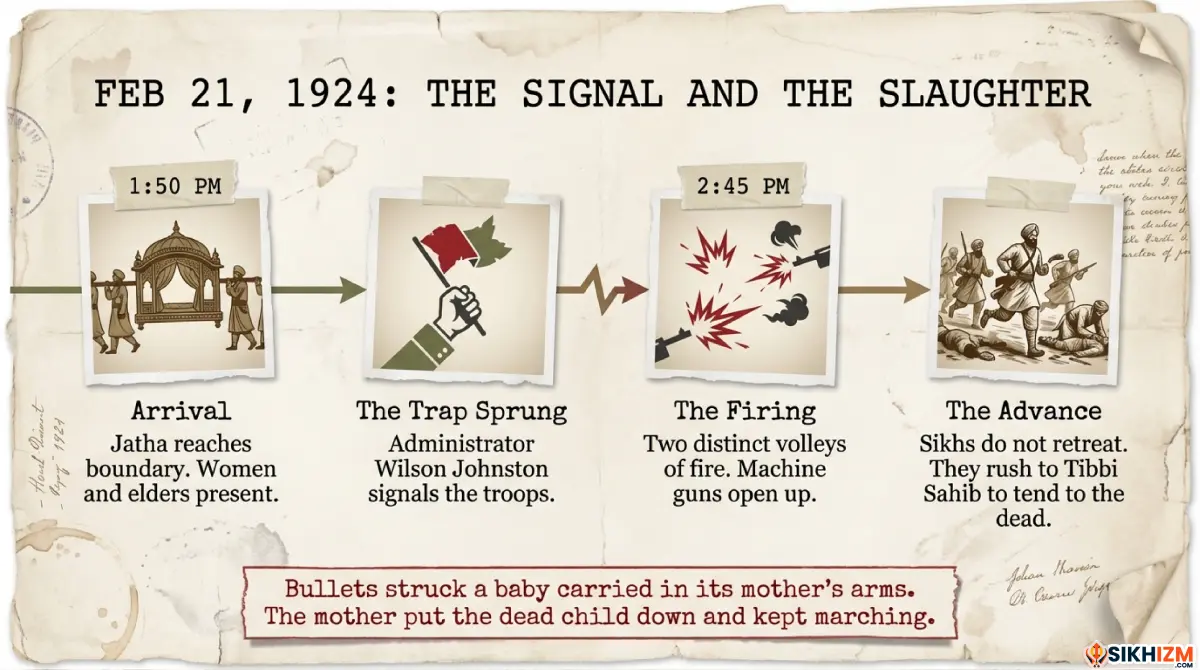
The British Administrator of Nabha, Wilson Johnston, had made elaborate military preparations. He narrowed the passage to the Gurdwara with barbed wire and stationed drunk villagers and police armed with lathis (sticks) and firearms. When the Jatha reached the boundary, Johnston ordered them to stop. When the non-violent procession continued to move toward their shrine, he gave the signal to fire.
What followed was a scene of unparalleled courage. The Sikhs, singing hymns, marched forward under a shower of bullets. A mother, whose baby was struck and killed by a bullet, calmly laid the child on the ground and continued to march with the Jatha. Another Sikh, his bowels spilling out from a wound, thanked the Guru for accepting his "impure body" for the service of the faith.
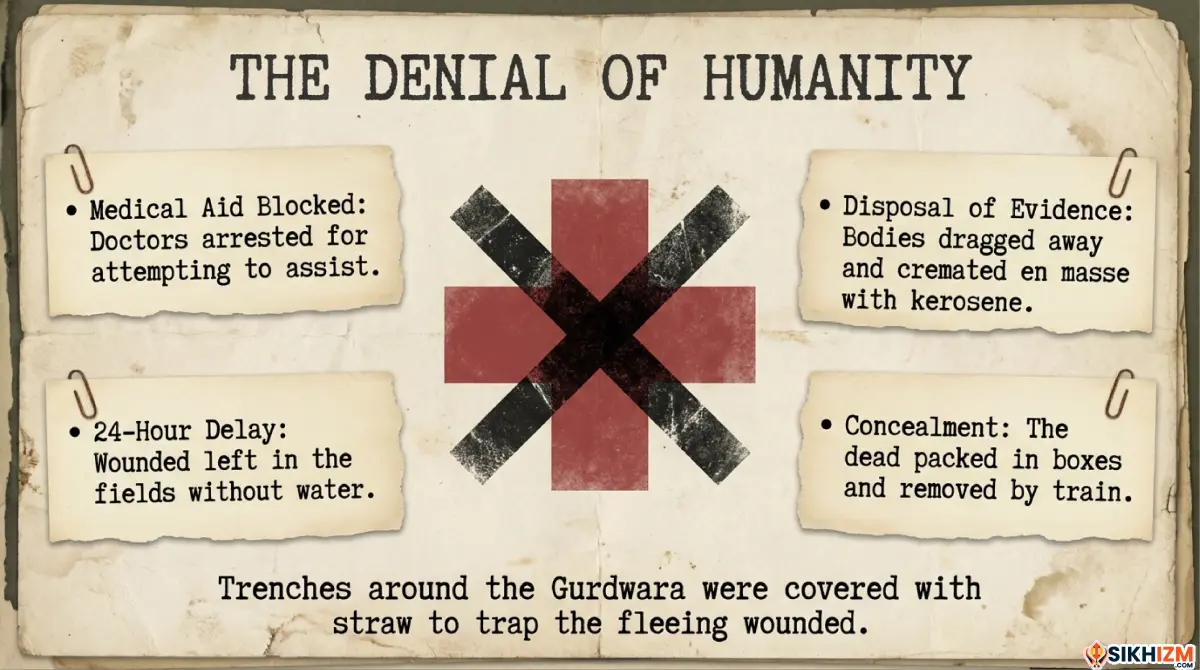
The firing lasted for about five minutes, utilizing military rifles and Lewis guns. The SGPC estimated over 300 casualties, including about 100 deaths. The British attempt to portray the Akalis as the aggressors was later debunked by independent witnesses.
06
of 13The Testimony of S. Zimand and National Support
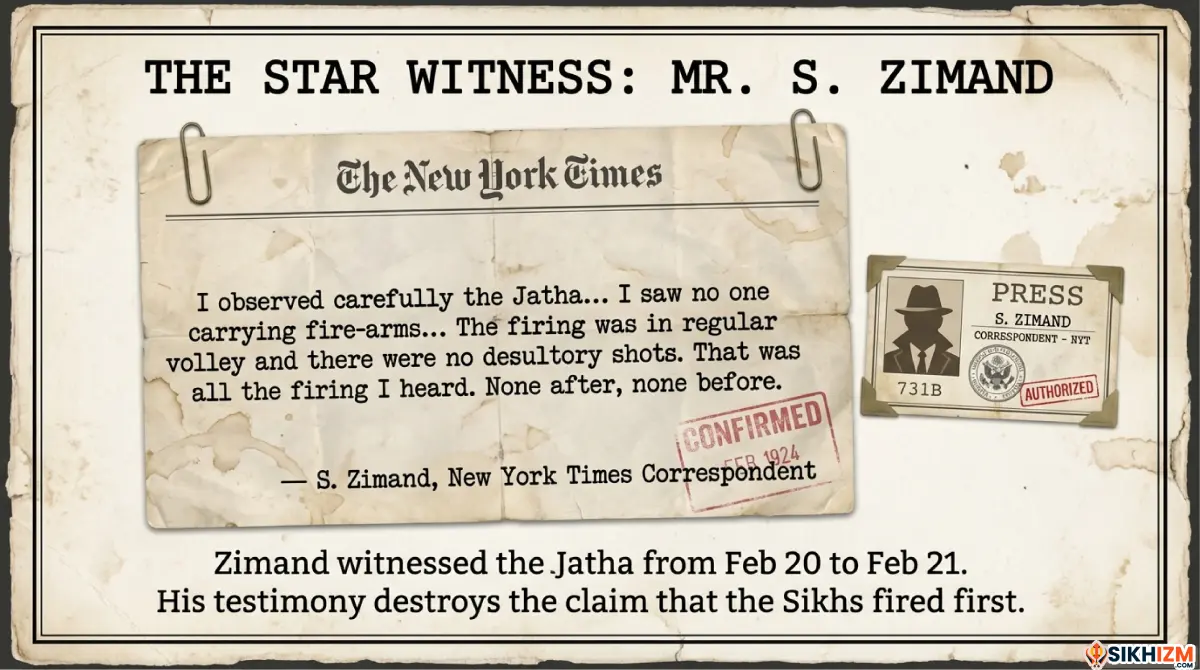
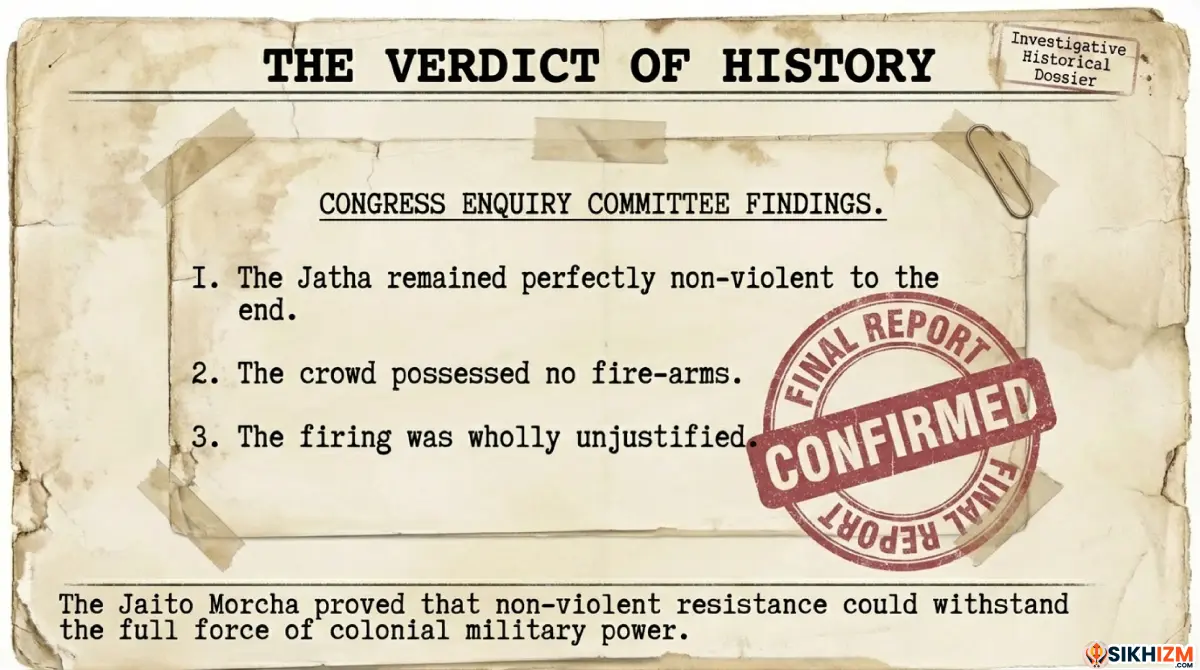
The Jaito massacre drew international attention. S. Zimand, a correspondent for the New York Times, was present and provided a crucial eyewitness account that contradicted the official British version. Zimand testified that the Jatha and the accompanying crowd were entirely unarmed and behaved in an orderly, peaceful manner.
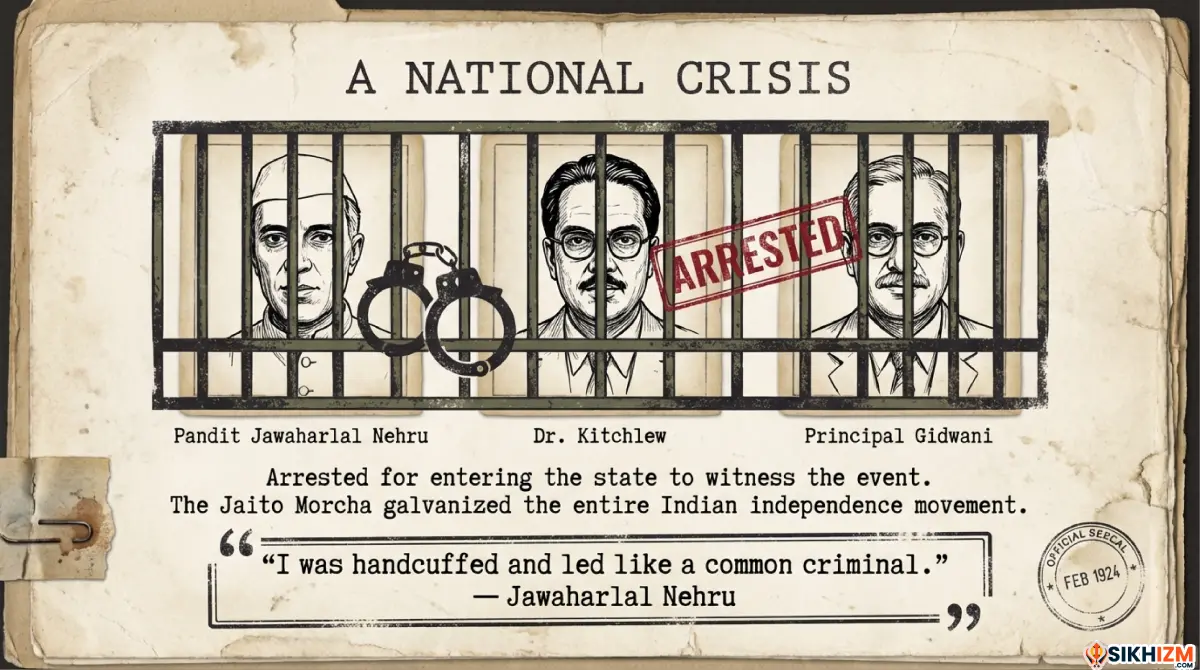
National leaders like Pandit Madan Mohan Malaviya, Dr. Saifuddin Kitchlew, and Principal Gidwani rushed to Jaito. Kitchlew and Gidwani were arrested by the Nabha authorities and subjected to humiliating treatment in prison. Pandit Jawaharlal Nehru also visited Nabha, where he was arrested and imprisoned, an experience he later noted as significant in his political journey. The Indian National Congress expressed deep sympathy for the Akalis, recognizing their struggle as a vital part of the national movement for freedom.
07
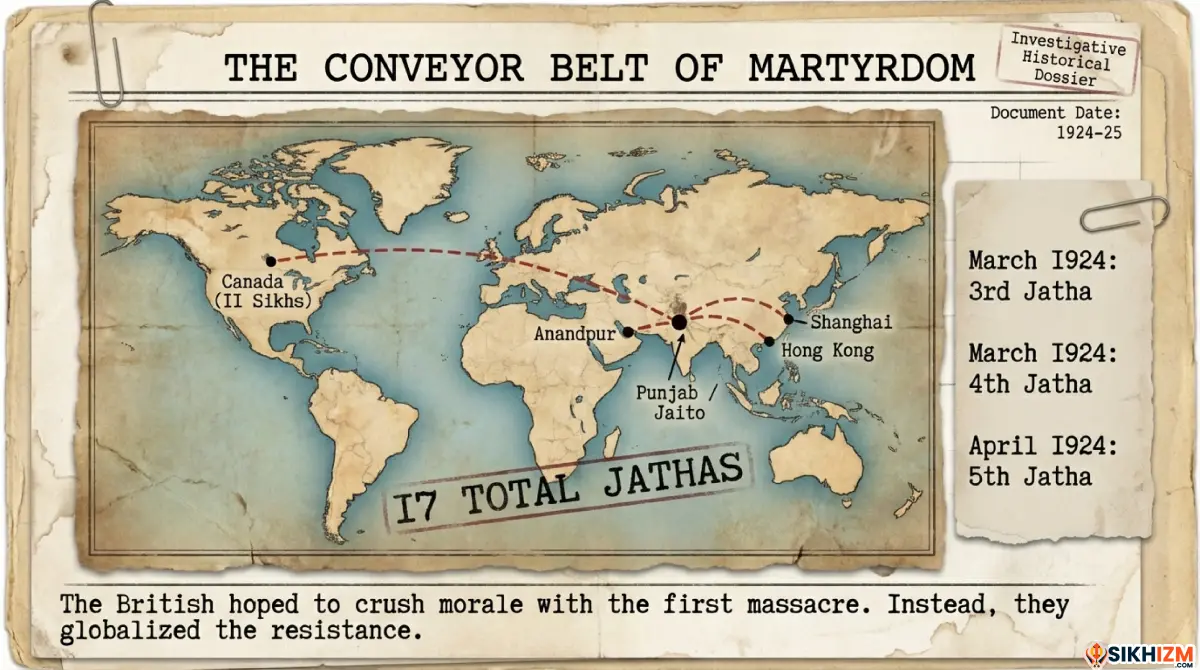
of 13Successive Shahidi Jathas: A River of Sacrifice
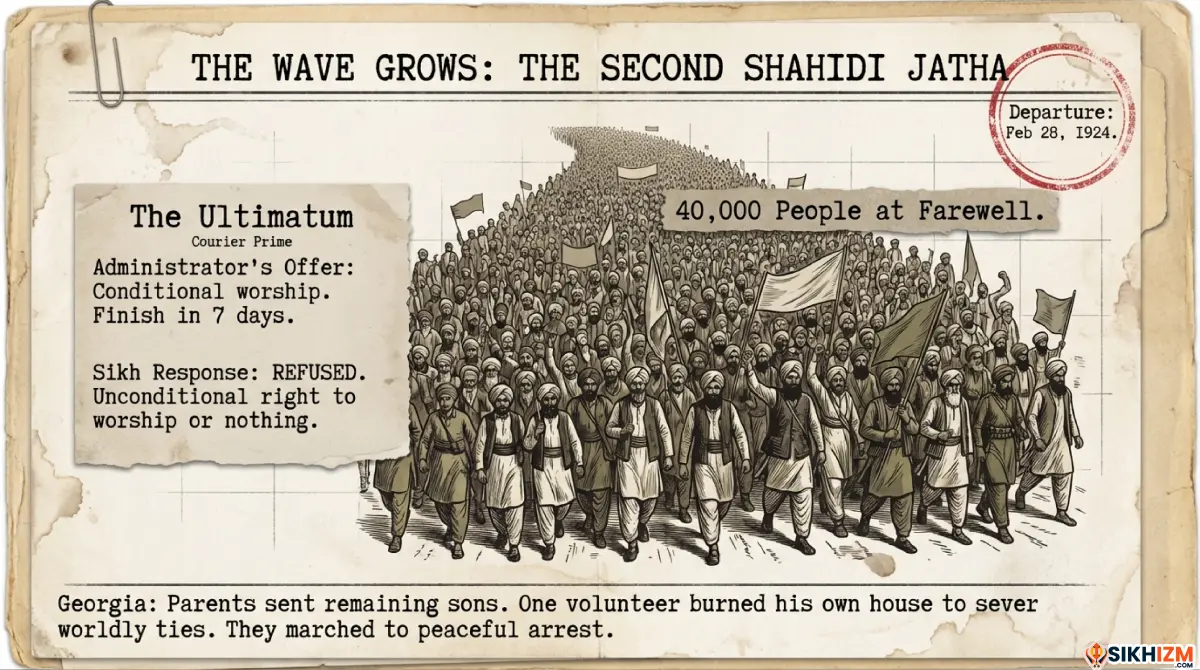
The massacre did not break the Sikhs; it only strengthened their resolve. A Second Shahidi Jatha of 500 volunteers left Amritsar on February 28, 1924. The enthusiasm was so high that families vied for the honour of sending a member to the Jatha. One mother, having lost her first son in the first Jatha, blessed her second son to follow in his brother’s footsteps.
The Third Shahidi Jatha started on March 22, 1924, receiving a grand send-off from leaders like Lala Lajpat Rai and Deep Narayan Singh. By the time they reached Jaito, they were surrounded by the military and arrested peacefully, though some individuals were kicked and beaten by soldiers.
Further Jathas followed:
- The Fourth Jatha from Anandpur Sahib (March 27).
- The Fifth Jatha from Lyallpur (April 12), which faced a "reign of terror" as authorities searched Gurdwaras and threatened villagers with land confiscation to prevent them from providing Langar (community food).
- The Sixth Jatha included 22 young boys (ages 12-16).
08
of 13The Ordeal of the 12th Jatha: The Suffering of Children
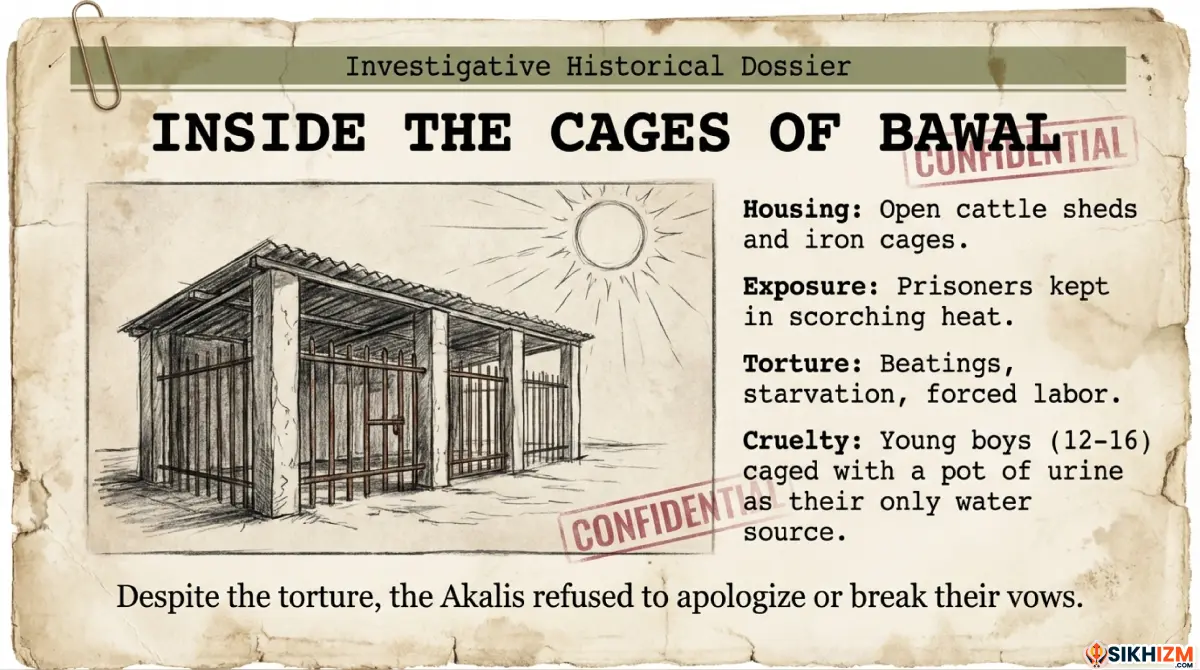
One of the most heart-wrenching episodes involved the youth of the 12th Jatha. After their arrest on June 19, these 22 boys were kept in a small iron cage (9-10 feet) during the sweltering heat of June. They were denied water and food, and when food was finally provided, it was mixed with grit and sand. When they refused to disclose their names and addresses, they were beaten mercilessly. Despite being released and re-arrested three times, these brave children never wavered, repeatedly declaring their intent to reach the Gurdwara and complete the Akhand Path.
09
of 13The Conditions in Nabha Prisons
Sikh volunteers faced unspeakable tortures in jails like the one at Bawal (referred to as "Kar-khas"). Prisoners were often kept in insanitary stables, given half-cooked food once a day, and subjected to brutal beatings. Some were tied to trees and whipped; others had their hair and beards pulled. Many contracted diseases due to the wretched conditions, and several died in custody. Property belonging to the volunteers was often seized, and their families were harassed by the state.
10
of 13The Final Triumph and Impact
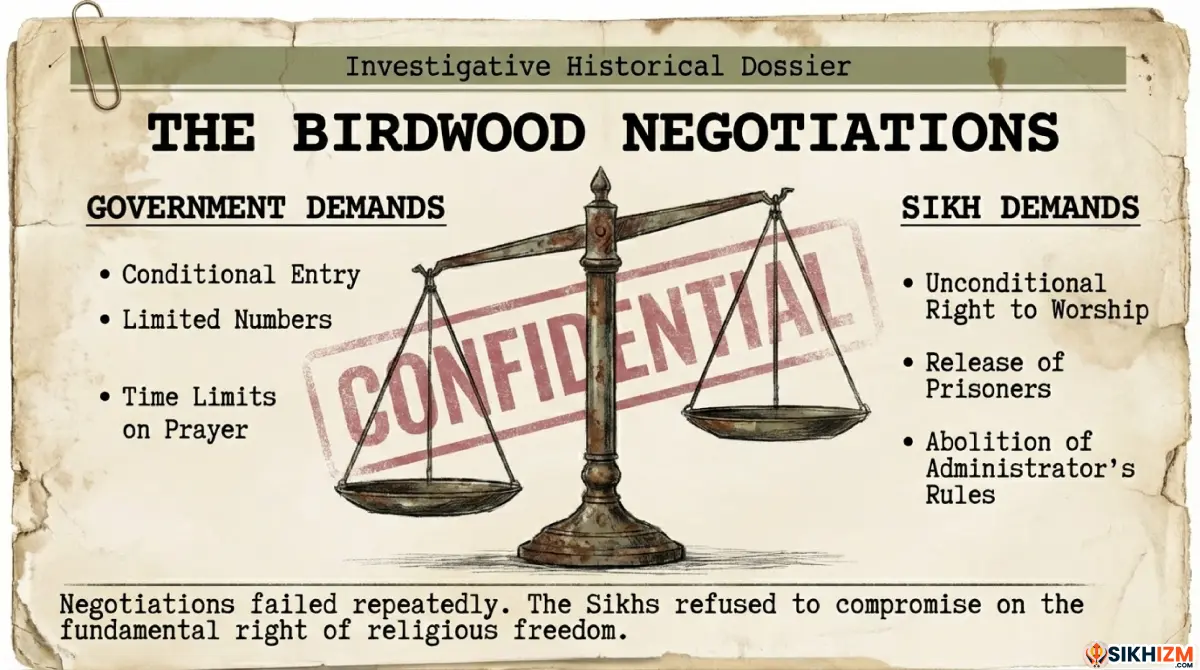
The Jaito Da Morcha continued for over a year and ten months. The sheer persistence of the Sikhs and the moral pressure from the national and international community finally forced the British to yield. The government eventually lifted the restrictions on visiting the Gangsar Gurdwara and performing the Akhand Path.
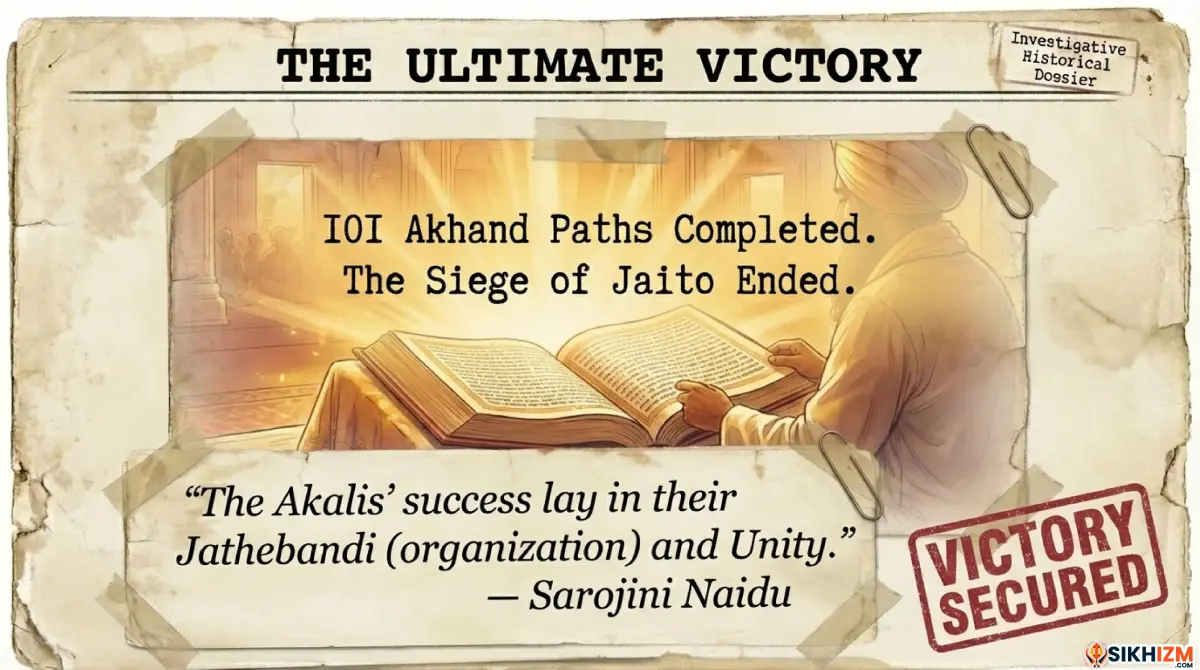
On July 21, 1925, the first of a series of 101 Akhand Paths was commenced at Gangsar, fulfilling the vow the Panth had taken nearly two years prior. This victory was not just a religious one; it was a psychological blow to British authority. The Sikhs proved that a disciplined, non-violent movement (Satyagraha) backed by unwavering faith (Bharosa) could bend the strongest empire.
11
of 13The Secret of Success: Unity and Faith
The success of the Jaito Da Morcha can be attributed to the remarkable Jathebandi (organisational strength) and unity of the Sikh community. As Sarojini Naidu remarked, "The secret of the Akalis' success lies in their organisation and unity". C.F. Andrews observed that every Sikh in the Morcha felt he was offering his life to the Guru (Vahiguru).
The Morcha produced countless martyrs (Shahids) and galvanized the Sikh spirit. It reinforced the importance of the Guru Granth Sahib as the living centre of Sikh life and demonstrated that the community would endure any sacrifice to protect its sanctity.
12
of 13History of Jaito Da Morcha in Pictures

13
of 13In Short
The Jaito Da Morcha remains a testament to the power of the human spirit and religious conviction. It is a story of how ordinary farmers, shopkeepers, and even children became "living martyrs" (Zinda Shahid) to uphold the principle of freedom of worship. For the modern generation, it serves as a reminder of the high price paid for the religious and political liberties enjoyed today. The blood spilled at Tibbi Sahib and the resilience shown in the cages of Nabha are forever etched in the history of the Khalsa Panth.
Waheguru Ji Ka Khalsa Waheguru Ji Ki Fateh!