

Table of Contents
Bhagat Namdev Ji Biography
One of the two great poets of Maharashtra, Bhagat Namdev was born in the 14th century after the Brahmin reformer Dnyandev. He gave elation to the teachings of the Vaishnava faith, that is, the joy of God and the necessity of attaining Him. Later on, when the Vaishnava movement spread through the nation, he was accorded respect and love in recognition of how much his life and poetry meant. Another important poet was Tukaram who regarded himself as a spiritual disciple of Namdev and had been guided by his works.
Pandharpur is a shrine on the banks of the Bhima River, which was the center of the mystics and poets in medieval times. The rising religion of Maharashtra could not do without Namdev’s connection with Pandharpur and Vittoba (a form of Vishnu or Krishna). There are records of inscriptions that go back to the thirteenth century which attest to the shrine’s origin. Vittoba, formerly known as Vishnu, was later associated with Krishna, the husband of Rukmini. The temple was created through the devotion of one follower named Pandalika.
Namdev was born in the Chhipa, Chhimpa, Chhimba (calico-printer) cast from Narasivamani but migrated to Pandharpur. There are many legends about the birth of Namdev with one of them suggesting that his parents, Damshet and Gona Bai, found him floating in a stream in Vittoba’s grace. Namdev became austere and unworldly notwithstanding marriage to Rajai, and having offspring. It resulted in deprivation, poverty, and dissension within his family. For instance, Namdev was helped secretly by Vittoba who provided wealth to Namdev’s household.
Namdev’s life was about going about bhajans (devotional songs) and other spiritual exercises at the Vittoba shrine. It was a significant turning point for him to come into contact with Khesar, a Vedantik ascetic opposing idolatry. Namdev found out the omnipresence of God and left behind his faith in idol worship.
Following initiation by Vishoba Khesar, Namdev went on pilgrimages to the shrines of Northern India and the Deccan. Some legends such as one, where Namdev encountered a situation of discrimination during a Saivite pilgrimage site, indicate the challenges that reformers went through during that time. However, contrary to some accounts, there is no evidence that Namdev went along with Dnyandev on his pilgrimage. He continued his pilgrimage to Eastinapur and Badrikashram, and his experience only made Namdev more devoted to the Vaishnava faith. Eventually, Namdev went back to Pandharpur and lived at the feet of her Vittoba for the rest of his life, writing devotional songs and making important contributions to the spread of the Bhakti Movement in Maharashtra.
1. Namdev's Pilgrimage and Hospitality
Namdev returned to Pandharpur after a pilgrimage and prepared to feed a large number of Brahmins and holy men. The Vittoba, the deity, is said to have helped Namdev with necessary provisions and acted as the host. However, when the Brahmins discovered that Namdev was a Sudra, they raised objections, and Namdev, revealing his divine attributes, preached about the equality of devotion regardless of caste or birth.
2. Namdev's Encounter with Mahomedan Officials
While on a pilgrimage to celebrate festivals in Bidar, Namdev and his followers faced opposition from Mahomedan officials. They were stopped, questioned, and even challenged to bring a slaughtered cow back to life. It is said that moved to tears, Namdev prayed, and Vittäl supposedly revived the cow, proving the piety and faith of Namdev's followers.
3. Namdev's Fellow-Mystics and Disciples
Namdev's poetic biography by Mahipathi mentions other lovable mystics and saints who lived around the same time and shared spiritual comradeship with Namdev. Notable figures include Jani, a child poet and mystic, and Chokamela, a Mahar saint who faced persecution for his devotion. Chokamela, a Mahar saint, faced persecution due to his low caste. He worshipped Vittoba from a distance as he couldn't enter the temple. He was eventually banished from the city but continued to pray to Vittal from across the Bhima River. After receiving a divine message, Namdev went to Mangalwedha to collect the bones of Chokamela, who died during a construction project. He identified Chokamela's bones by hearing the cry of "Vittoba, Vittoba" from that spot, and he brought them to Pandharpur.
4. Namdev's Character and Acts of Kindness
Namdev's life exemplified sincerity, faith, tenderness, and gentility. Anecdotes include Namdev's act of feeding a dog during a pilgrimage, demonstrating kindness to all beings. Another incident involves Namdev using his blood to revive a plant, showing intense spirituality.
5. Namdev's Religion and Poetry
Namdev, like Tukaram, was more a poet and mystic than a preacher of any specific creed. His poems emphasize devotion, God-love, and the need for God's grace. His teachings discourage rituals, emphasizing repentance, and the constant repetition of God's name.
6. Namdev's Poetic Themes
Namdev's poems critique idol worship, highlight the omnipotence of God, condemn fasts and pilgrimages, and emphasize the importance of cultivating pure faith and love for God. The poems often focus on the longing for God, the subjective experiences of the heart, and the simplicity of devotion. Poems highlight themes like recognizing God in all things, the interconnectedness of creation in God, the futility of material pursuits, the virtue of righteousness, and the yearning for God's grace. There's also an expression of humility and devotion in seeking God's help. Namdev's poems exhibit intense spiritual yearning, a cry for God's grace, and a deep connection to the divine. The verses convey a sense of longing, surrender, and a profound desire for union with God.
7. Comparison to Other Mystics
Namdev's charm lies in the subjective truth of his experiences and his appeal to the heart. His teachings align with the Vaishnavite faith, and his emphasis on love, devotion, and simplicity of faith is consistent with other Vaishnava mystics like Tukaram. The preciousness of Namdev's message lies in its simple sincerity, heartfelt expressions, and the call for pure faith and love for God. His life and poetry continue to inspire those seeking a deeper connection with the divine.
8. Namdev's Possible Age
References in Namdev's life to Mahomedan persecution and the destruction of idols by the Turks suggest that Namdev likely lived after the 14th century when the Mahomedans entered the Deccan. Comparing Namdev's style with Dnyandev's, it is inferred that Namdev might have flourished in the latter part of the 14th century, around 1370–1440 A.D.
9. Namdev's Closing Days
Namdev, who lived to around seventy years of age, spent his last moments at the door of the Vittoba temple at Pandharpur. A step leading to the temple is named after him.
10. Bhagat Namdev's Journey to Punjab
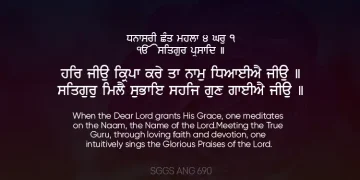
It was generally thought that Namdev was of Maharashtra origin but his influence is beyond linguistic boundaries. As stated by Sikh historiography, Ghuman village in the Punjab region is where he is noted. However, there is another recollection from Punjab, Bassi Pathana, that Namdev visited only parts of Punjab but spent most of his life and died in Pandharpur, Maharashtra. Namdev’s biography as a bridge becomes evident in the diversity of narratives across different linguistic and cultural backgrounds. Namdev was a pan-Indian phenomenon and temples and memorials dedicated to him can be found in central, western, and northern India. His relationship with Punjab is quite complex, making him one of the most important figures in the religious-literary traditions of the area, and playing an important role in Sikhism, with his songs being part of the Guru Granth Sahib, the fundamental scripture of Sikhism. The legacy of Namdev in Punjab is symbolic of the interplay between local memory and broadly Pan-Indian cultural and religious aspects.