

What Is Asa Di Vaar?
Asa Di Vaar is one of the most exalted and spiritually powerful compositions revealed by Guru Nanak Dev Ji. It is regarded as an amar kalaam—an immortal divine utterance—that not only conveys deep spiritual wisdom but also carries a distinctive historical, musical, and cultural identity within Sikh tradition.
Meaning of “Asa” (Raag Asa – Hope and Aspiration)
The word “Asa” signifies hope, longing, and inner aspiration. In the context of Gurbani, Asa is more than an emotion—it is the soul’s yearning for Truth. Sikh scholars have long held the view that Raag Asa itself is a divine gift of Guru Nanak Dev Ji. Classical Indian music treatises do not clearly list Raag Asa or Raag Majh, leading many learned Sikhs to believe that Guru Nanak Dev Ji revealed these raags as original spiritual musical frameworks. Through Raag Asa, the Guru awakened humanity to rise above despair and false hopes, and instead anchor life in Naam, truth, and divine wisdom.
Meaning of “Vaar” (Spiritual Ballad in a Warrior Spirit)
The term “Vaar” traditionally refers to a ballad recited in a heroic or martial style. Historically, vaars were sung to praise brave warriors and noble figures, often to inspire courage and moral strength. Asa Di Vaar adopts this powerful form but redirects it inward. Here, the “battle” is spiritual—the struggle against ego, hypocrisy, ritualism, and ignorance. Thus, Asa Di Vaar becomes a spiritual war-cry, calling the seeker to stand firmly on truth and righteousness.
Dhadi Tradition and the Unique Musical Dhuni
In the Indian subcontinent, alongside saints and sages, there existed a strong tradition of warriors and heroes. Dhadi singers were poet-musicians who composed their own verses, rhythms, and tunes to sing ballads praising such heroic figures. Asa Di Vaar is sung in one such traditional tune known as “Tunde Asraaje Ki Dhuni.”
This dhuni is associated with Raja Asraaj, a one-armed (tunda) yet extraordinarily brave and wise ruler whose valor and influence were celebrated far and wide. Dhadi musicians praised him in a distinctive tune, and that same heroic melody was adopted for Asa Di Vaar, giving it a powerful, commanding presence.
Within the Guru Granth Sahib, there are nine such traditional dhunis prescribed for different vaars, including Chandrahara Sohiya Ki Dhuni and Lalaan Behleeman Ki Dhuni. These melodies were so meaningful and spiritually resonant that Guru Arjan Dev Ji chose to preserve them within the Guru Granth Sahib, ensuring that the historical and musical heritage remained intact alongside the divine message.
Authorship and Placement in Guru Granth Sahib
The core verses of Asa Di Vaar were revealed by Guru Nanak Dev Ji, while the accompanying Sloks were contributed by Guru Angad Dev Ji. Asa Di Vaar appears under Raag Asa from Ang (Page) 462 to 475 in the Guru Granth Sahib. It is traditionally sung during early morning Kirtan in Gurdwaras. Its placement reflects its foundational role in Sikh thought—teaching that liberation is attained not through outward acts, but through humility, remembrance of the Divine, and living a truthful life.
It begins in Sri Guru Granth Sahib Ji as
ੴ ਸਤਿਨਾਮੁ ਕਰਤਾ ਪੁਰਖੁ ਨਿਰਭਉ ਨਿਰਵੈਰੁ ਅਕਾਲ ਮੂਰਤਿ ਅਜੂਨੀ ਸੈਭੰ ਗੁਰ ਪ੍ਰਸਾਦਿ ॥ ਆਸਾ ਮਹਲਾ ੧ ॥ ਵਾਰ ਸਲੋਕਾ ਨਾਲਿ ਸਲੋਕ ਭੀ ਮਹਲੇ ਪਹਿਲੇ ਕੇ ਲਿਖੇ; ਟੁੰਡੇ ਅਸ ਰਾਜੈ ਕੀ ਧੁਨੀ ॥ ਸਲੋਕੁ ਮਃ ੧ ॥ ਬਲਿਹਾਰੀ ਗੁਰ ਆਪਣੇ ਦਿਉਹਾੜੀ ਸਦ ਵਾਰ ॥ ਜਿਨਿ ਮਾਣਸ ਤੇ ਦੇਵਤੇ ਕੀਏ ਕਰਤ ਨ ਲਾਗੀ ਵਾਰ ॥੧॥ ਮਹਲਾ ੨ ॥ ਜੇ ਸਉ ਚੰਦਾ ਉਗਵਹਿ ਸੂਰਜ ਚੜਹਿ ਹਜਾਰ ॥ ਏਤੇ ਚਾਨਣ ਹੋਦਿਆਂ ਗੁਰ ਬਿਨੁ ਘੋਰ ਅੰਧਾਰ ॥੨॥
Who was Tunda Asraj ?
Asraj was the son of Raja Chitra Ketu, kept in an underground cellar for twelve years on the advice of astrologers to ensure he grew into a powerful and virtuous warrior. Upon his release, he faced a trial of character when his stepmother falsely accused him of misconduct after he rejected her immoral advances. Blighted by rage, the King ordered his execution; however, the executioners spared his life, severing his hand as proof of the deed and leaving him in a well. He was rescued by traders and eventually sold to a childless washerman, where he lived humbly despite his royal lineage.
Asraj’s fate shifted when a neighbouring king died without an heir, and astrologers decreed that whoever could open the locked city gates at dawn would be the next ruler. When Asraj’s stump (tund) touched the lock, the gates swung open, and he was crowned king. He eventually reconciled with his father and defeated his rival brothers in battle, a feat of bravery that inspired a famous ballad. An alternative tradition suggests he earned the name "Tunda (ਟੁੰਡਾ)" after losing his hand while slaying a ferocious lion to protect the public. Recognising his heroism, Guru Hargobind Sahib commanded that Asa Di Var be sung to the specific melody of Asraj's ballad, immortalising his legacy of integrity and courage.
Construction of Asa Di Vaar (Ballad)
The construction of the ballad is as follows:
1. Three Slokas, two of Guru Nanak and one of Guru Angad precede the 1st and 2nd pauris.
2. Two Slokas, both of Guru Nanak precede pauris: 3rd, 4th, 5th, 6th, 8th, 9th, 10, 13, 14, 16, 17, 19th and 20th,
3. Two Slokas, one of Guru Nanak and one of Guru Angad precede 7, 24th pauris
4. Three Slokas of Guru Nanak precede the 11th pauri.
5. Four Slokas, two of Guru Nanak and two of Guru Angad precede the 12th pauri.
6. Four Slokas of Guru Nanak precede the 15 pauri.
7. Three Slokas of Guru Nanak precede the 18th pauri.
8. Two Slokas of Guru Angad precede 21" and 23rd pauris.
9. Five Slokas of Guru Angad precede the 22nd pauri.
The counting of the total Slokas is summarised as follows:
1. Pauris 1, 2, 11 and 18 are preceded by three Slokas each = 12 Slokas.
2. Pauris 12 and 15 are preceded by four Slokas each 8 Slokas
3. Pauri 22 is preceded by five Slokas = 5 Slokas
4. Other 17 pauris are preceded by two Slokas each-34 Slokas
Grand total of all Slokas = 59
However, at times, many people count sloak "Dukh Daru..." which precedes pauri twelve, as two Slokas and thus counting the total number of Slokas as 60 rather than 59.
Spiritual Significance of Asa Di Vaar
 Core Teachings of Asa Di Vaar
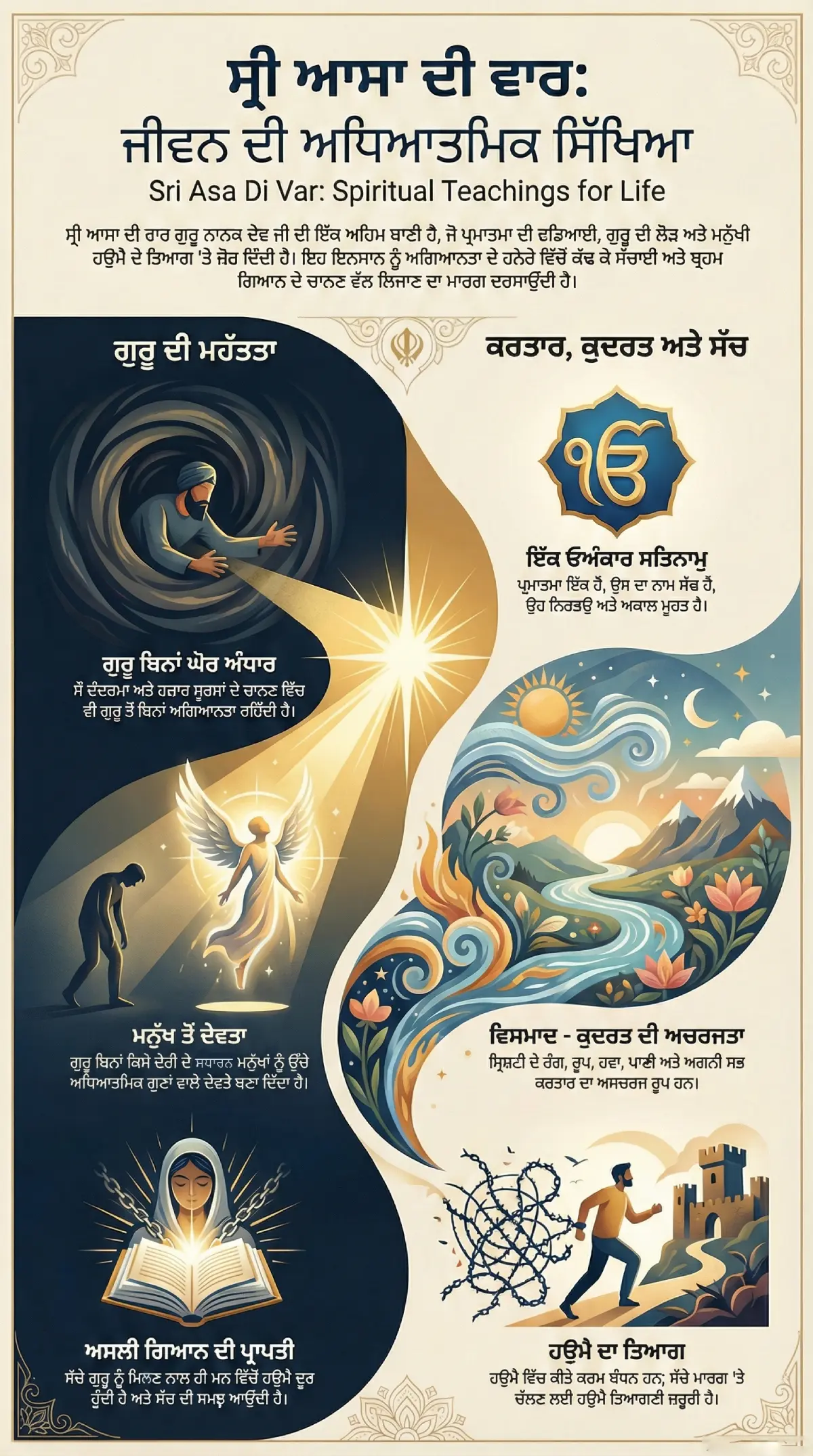 Core Teachings of Asa Di Vaar
1. Rejection of Ritualism
Asa Di Vaar firmly rejects hollow rituals, superstitions, and mechanical religious acts. It teaches that external practices—such as fasting, pilgrimages, or ceremonial purity—have no value if the heart remains filled with ego, greed, and falsehood.
- Rituals without inner change are meaningless
- True spirituality begins within the mind and conscience
- God is not pleased by show, but by sincerity
According to Professor Sahib Singh Ji, the core message of Asa Di Vaar is:
1. (ਪਉੜੀ 1, 2, 3) ਪਰਮਾਤਮਾ ਨੇ ਆਪਣੇ ਆਪ ਤੋਂ ਜਗਤ ਰਚਿਆ ਹੈ, ਇਸ ਵਿਚ ਹਰ ਥਾਂ ਬੈਠ ਕੇ ਜਗਤ-ਤਮਾਸ਼ਾ ਵੇਖ ਰਿਹਾ ਹੈ। ਜਗਤ ਵਿਚ ਮਨੁੱਖ ਪੈਦਾ ਕੀਤਾ ਹੈ ਕਿ 'ਸਚ' ਨੂੰ ਗ੍ਰਹਣ ਕਰੇ, 'ਸੱਚੇ' ਪ੍ਰਭੂ ਦੀ ਬੰਦਗੀ ਕਰੇ, ਪਰ ਦੁਨੀਆ ਵਿਚ ਲੱਗ ਕੇ ਬੰਦਾ ਬਾਜ਼ੀ ਹਾਰ ਰਿਹਾ ਹੈ।
2. (ਨੰ: 4, 5, 6) ਪ੍ਰਭੂ ਦੀ ਮਿਹਰ ਨਾਲ ਜਿਸ ਨੂੰ ਗੁਰੂ ਮਿਲਦਾ ਹੈ ਉਹ 'ਆਪਾ-ਭਾਵ' ਗਵਾ ਕੇ ਗੁਰੂ ਦਾ ਉਪਦੇਸ਼ ਸੁਣਦਾ ਹੈ ਤੇ 'ਨਾਮ' ਸਿਮਰਦਾ ਹੈ ਜਿਸ ਕਰ ਕੇ ਉਸ ਦੇ ਦੁੱਖ-ਕਲੇਸ਼ ਨਿਵਰਦੇ ਹਨ। ਗੁਰੂ ਤੋਂ ਬਿਨਾ ਇਹ ਦਾਤਿ ਨਹੀਂ ਮਿਲਦੀ, ਗੁਰੂ ਦੀ ਅੱਖ ਹੀ ਪ੍ਰਭੂ ਦਾ ਹਰ ਥਾਂ ਦੀਦਾਰ ਕਰਨ ਦੇ ਸਮਰੱਥ ਹੈ।
3. 'ਨਾਮ' ਦੀ ਕਮਾਈ ਕੀਹ ਹੈ? (7 ਤੋਂ 10) ਸੰਤੋਖ ਦਾ ਜੀਵਨ, ਆਪਣੇ ਅੰਦਰ ਹਰ ਵੇਲੇ ਪ੍ਰਭੂ ਨੂੰ ਦ੍ਰਿੜ ਕਰਨਾ, ਗੁਰਮੁਖਾਂ ਦੀ ਸੰਗਤਿ, ਨਿਰੀ ਆਪਣੀ ਨਿੱਕੀ ਜਿਹੀ ਮੱਤ ਤੇ ਟੇਕ ਰੱਖਣੀ; ਸਗੋਂ (11 ਤੋਂ 15) ਪਰਮਾਤਮਾ ਦੀ ਬਖ਼ਸ਼ਸ਼ ਤੇ ਆਸ ਰੱਖ ਕੇ ਉੱਦਮ ਕਰਨਾ, ਕਿਸੇ ਵਿੱਦਿਆ ਦੇ ਮਾਣ ਤੇ ਮੂੰਹ-ਜ਼ੋਰ ਨਾਹ ਹੋ ਜਾਣਾ, ਸਗੋਂ 'ਆਪਾ' ਗੁਰੂ ਤੋਂ ਵਾਰ ਦੇਣਾ, ਨੇਕ ਕਮਾਈ, ਨੇਕ ਅਮਲ ਅਤੇ ਪਰਮਾਤਮਾ ਦੀ ਰਜ਼ਾ ਵਿਚ ਰਾਜ਼ੀ ਰਹਿਣਾ।
4. ਦੁਨੀਆ ਦੀਆਂ ਵਡਿਆਈਆਂ ਦਾ ਮਾਣ ਕੂੜਾ ਹੈ; (16) ਪ੍ਰਭੂ ਆਪ ਹੀ ਵਡਿਆਈਆਂ ਦੇਂਦਾ ਹੈ ਪਰ ਜੇ ਖੋਹਣ ਲੱਗੇ ਤਾਂ ਰਾਜੇ ਤੋਂ ਕੰਗਾਲ ਬਣਾ ਦੇਂਦਾ ਹੈ। (17) ਰਾਜ ਮਿਲਖ ਤਖ਼ਤ ਮਹਲ ਵੇਖ ਕੇ ਮਨ-ਮੰਨੀਆਂ ਮੌਜਾਂ ਵਿਚ ਜੀਵਨ ਗਵਾ ਲੈਣਾ ਭਾਰੀ ਭੁੱਲ ਹੈ। (18) ਆਤਮਕ ਰੱਬੀ ਗੁਣ ਸਭ ਤੋਂ ਉੱਚਾ ਧਨ ਹੈ, ਇਹ ਗੁਣ ਗੁਰੂ ਤੋਂ ਮਿਲਦਾ ਹੈ। (19) ਮਮਤਾ ਵਿਚ ਫਸ ਕੇ ਕਿਸੇ ਅਹੰਕਾਰ ਵਿਚ ਆ ਕੇ ਮੰਦੇ ਪਾਸੇ ਨਾ ਤੁਰੀਏ, ਕਿਸੇ ਦਾ ਦਿਲ ਨਾਹ ਦੁਖਾਈਏ। (20) ਜੀਵਨ ਸੁਆਰੀਏ ਤੇ ਪ੍ਰਭੂ ਨੂੰ ਚੇਤੇ ਰੱਖੀਏ, ਇਥੇ ਸਦਾ ਨਹੀਂ ਰਹਿਣਾ। (21) ਆਪਣੇ ਕੀਤੇ ਅਨੁਸਾਰ ਸੁਖ ਦੁੱਖ ਮਿਲਦਾ ਹੈ, ਤਾਂ ਫਿਰ ਬੁਰੇ ਰਾਹ ਕਿਉਂ ਤੁਰੀਏ? (22) ਦੁਨੀਆ ਦੇ ਕੂੜੇ ਮਾਣ ਤੇ ਮਾਲਕ ਨਾਲ ਸ਼ਰੀਕਾ ਕੀਤਿਆਂ ਸ਼ਰਮਿੰਦਗੀ ਮਿਲਦੀ ਹੈ। (23) ਕਿਸੇ ਨੂੰ ਸੁਖ ਤੇ ਕਿਸੇ ਨੂੰ ਦੁੱਖ ਪ੍ਰਭੂ ਆਪ ਹੀ ਦੇ ਰਿਹਾ ਹੈ। (24) ਪਰਮਾਤਮਾ ਆਪ ਹੀ ਰਾਜ਼ਕ ਹੈ, ਉਸ ਤੋਂ ਬਿਨਾ ਜੀਵ ਦਾ ਹੋਰ ਕੋਈ ਆਸਰਾ ਨਹੀਂ ਹੈ।
2. Emphasis on Naam Simran
- ਨਾਉ ਤੇਰਾ ਨਿਰੰਕਾਰੁ ਹੈ ਨਾਇ ਲਇਐ ਨਰਕਿ ਨ ਜਾਈਐ ॥
ਜੀਉ ਪਿੰਡੁ ਸਭੁ ਤਿਸਦਾ ਦੇ ਖਾਜੈ ਆਖਿ ਗਵਾਈਐ ॥ - ਨਾਨਕ ਭਗਤਾ ਭੁਖ ਸਾਲਾਹਣੁ ਸਚੁ ਨਾਮੁ ਆਧਾਰੁ ॥
ਸਦਾ ਅਨੰਦਿ ਰਹਹਿ ਦਿਨੁ ਰਾਤੀ ਗੁਣਵੰਤਿਆ ਪਾ ਛਾਰੁ ॥੧॥ - ਮ꞉ ੧ ॥ ਨਾਇ ਮੰਨਿਐ ਪਤਿ ਊਪਜੈ ਸਾਲਾਹੀ ਸਚੁ ਸੂਤੁ ॥
ਦਰਗਹ ਅੰਦਰਿ ਪਾਈਐ ਤਗੁ ਨ ਤੂਟਸਿ ਪੂਤ ॥੩॥
3. Truthful Living and Humility
Asa Di Vaar repeatedly stresses that spirituality is not separate from daily life. Truth must be lived, not just spoken. A truthful person is humble, compassionate, and free from arrogance.
- ਸਲੋਕ ਮ꞉ ੧ ॥ ਹਉ ਵਿਚਿ ਆਇਆ ਹਉ ਵਿਚਿ ਗਇਆ ॥ ਹਉ ਵਿਚਿ ਜੰਮਿਆ ਹਉ ਵਿਚਿ ਮੁਆ ॥
- ਮਿਠਤੁ ਨੀਵੀ ਨਾਨਕਾ ਗੁਣ ਚੰਗਿਆਈਆ ਤਤੁ ॥
- ਗਿਆਨੁ ਨ ਗਲੀਈ ਢੂਢੀਐ ਕਥਨਾ ਕਰੜਾ ਸਾਰੁ ॥
ਕਰਮਿ ਮਿਲੈ ਤਾ ਪਾਈਐ ਹੋਰ ਹਿਕਮਤਿ ਹੁਕਮੁ ਖੁਆਰੁ ॥੨॥
Why Asa Di Vaar Is Recited in Amrit Vela
Asa Di Vaar is traditionally sung during the early hours of the morning, often starting at 4.00 a.m., as it is specifically composed in Raag Asa, a musical measure intended for the pre-dawn period.
Why this time is considered spiritually potent for this recitation:
1. The Mind is Fresh and the "Proper Season" for Growth
2. Absorption and Focus of the Mind
3. Raag Asa: A Melody of Hope and Awakening
4. Eradicating Ego at the Start of the Day
Famous Excerpts from ASA DI VAAR
ਮਹਲਾ ੨ ॥ ਜੇ ਸਉ ਚੰਦਾ ਉਗਵਹਿ ਸੂਰਜ ਚੜਹਿ ਹਜਾਰ ॥
ਏਤੇ ਚਾਨਣ ਹੋਦਿਆਂ ਗੁਰ ਬਿਨੁ ਘੋਰ ਅੰਧਾਰ ॥੨॥
ਮ꞉ ੧ ॥ ਵਾਇਨਿ ਚੇਲੇ ਨਚਨਿ ਗੁਰ ॥ ਪੈਰ ਹਲਾਇਨ੍ਰਿ੍ਹ ਫੇਰਨ੍ਰਿ੍ਹ ਸਿਰ ॥
ਉਡਿ ਉਡਿ ਰਾਵਾ ਝਾਟੈ ਪਾਇ ॥ ਵੇਖੈ ਲੋਕੁ ਹਸੈ ਘਰਿ ਜਾਇ ॥
ਰੋਟੀਆ ਕਾਰਣਿ ਪੂਰਹਿ ਤਾਲ ॥ ਆਪੁ ਪਛਾੜਹਿ ਧਰਤੀ ਨਾਲਿ ॥
ਮ꞉ ੧ ॥ ਮਿਟੀ ਮੁਸਲਮਾਨ ਕੀ ਪੇੜੈ ਪਈ ਕੁਮ੍ਰਿ੍ਹਆਰ ॥
ਘੜਿ ਭਾਂਡੇ ਇਟਾ ਕੀਆ ਜਲਦੀ ਕਰੇ ਪੁਕਾਰ ॥
ਜਲਿ ਜਲਿ ਰੋਵੈ ਬਪੁੜੀ ਝੜਿ ਝੜਿ ਪਵਹਿ ਅੰਗਿਆਰ ॥
ਨਾਨਕ ਜਿਨਿ ਕਰਤੈ ਕਾਰਣੁ ਕੀਆ ਸੋ ਜਾਣੈ ਕਰਤਾਰੁ ॥੨॥
ਸਲੋਕੁ ਮ꞉ ੧ ॥
ਦੁਖੁ ਦਾਰੂ ਸੁਖੁ ਰੋਗੁ ਭਇਆ ਜਾ ਸੁਖੁ ਤਾਮਿ ਨ ਹੋਈ ॥
ਤੂੰ ਕਰਤਾ ਕਰਣਾ ਮੈ ਨਾਹੀ ਜਾ ਹਉ ਕਰੀ ਨ ਹੋਈ ॥੧॥
ਬਲਿਹਾਰੀ ਕੁਦਰਤਿ ਵਸਿਆ ॥
ਤੇਰਾ ਅੰਤੁ ਨ ਜਾਈ ਲਖਿਆ ॥੧॥ ਰਹਾਉ ॥
ਆਸਾ ਮਹਲਾ ੪ ॥
ਜਿਨ੍ਹ੍ਹ ਮਸਤਕਿ ਧੁਰਿ ਹਰਿ ਲਿਖਿਆ ਤਿਨਾ ਸਤਿਗੁਰੁ ਮਿਲਿਆ ਰਾਮ ਰਾਜੇ ॥
ਅਗਿਆਨੁ ਅੰਧੇਰਾ ਕਟਿਆ ਗੁਰ ਗਿਆਨੁ ਘਟਿ ਬਲਿਆ ॥
ਹਰਿ ਲਧਾ ਰਤਨੁ ਪਦਾਰਥੋ ਫਿਰਿ ਬਹੁੜਿ ਨ ਚਲਿਆ ॥
ਜਨ ਨਾਨਕ ਨਾਮੁ ਆਰਾਧਿਆ ਆਰਾਧਿ ਹਰਿ ਮਿਲਿਆ ॥੧॥
ਮ꞉ ੧ ॥
ਪੜਿ ਪੁਸਤਕ ਸੰਧਿਆ ਬਾਦੰ ॥ ਸਿਲ ਪੂਜਸਿ ਬਗੁਲ ਸਮਾਧੰ ॥
ਮੁਖਿ ਝੂਠ ਬਿਭੂਖਣ ਸਾਰੰ ॥ ਤ੍ਰੈਪਾਲ ਤਿਹਾਲ ਬਿਚਾਰੰ ॥
ਗਲਿ ਮਾਲਾ ਤਿਲਕੁ ਲਿਲਾਟੰ ॥ ਦੁਇ ਧੋਤੀ ਬਸਤ੍ਰ ਕਪਾਟੰ ॥
ਜੇ ਜਾਣਸਿ ਬ੍ਰਹਮੰ ਕਰਮੰ ॥ ਸਭਿ ਫੋਕਟ ਨਿਸਚਉ ਕਰਮੰ ॥
ਕਹੁ ਨਾਨਕ ਨਿਹਚਉ ਧਿਆਵੈ ॥ ਵਿਣੁ ਸਤਿਗੁਰ ਵਾਟ ਨ ਪਾਵੈ ॥੨॥
ਮ꞉ ੧ ॥
ਭੰਡਿ ਜੰਮੀਐ ਭੰਡਿ ਨਿੰਮੀਐ ਭੰਡਿ ਮੰਗਣੁ ਵੀਆਹੁ ॥
ਭੰਡਹੁ ਹੋਵੈ ਦੋਸਤੀ ਭੰਡਹੁ ਚਲੈ ਰਾਹੁ ॥
ਭੰਡੁ ਮੁਆ ਭੰਡੁ ਭਾਲੀਐ ਭੰਡਿ ਹੋਵੈ ਬੰਧਾਨੁ ॥
ਸੋ ਕਿਉ ਮੰਦਾ ਆਖੀਐ ਜਿਤੁ ਜੰਮਹਿ ਰਾਜਾਨ ॥
Asa Di Vaar PDF (Punjabi, Hindi, English) | Mp3 Download
Download Full Path Asa Di Vaar in Punjabi Gurmukhi Script.
Download Full Path Asa Di Vaar in Hindi (Devnagari Script)
Download Romanized PDF File of Asa Di Vaar (English Language)
Download Asa Di Vaar Transliteration + Translation from Gurmukhi to English
Download Asa Di Vaar complete Kirtan Mp3 by Bhai Maninder Singh Ji (Hazuri Ragi Darbar Sahib, Amritsar)
Download Asa Di Vaar Mp3 Complete Path by Bhai Sarabjit Singh Ji