


Table of Contents
1 The Legend of Tunda Asraj (ਟੁੰਡਾ ਅਸਰਾਜ)
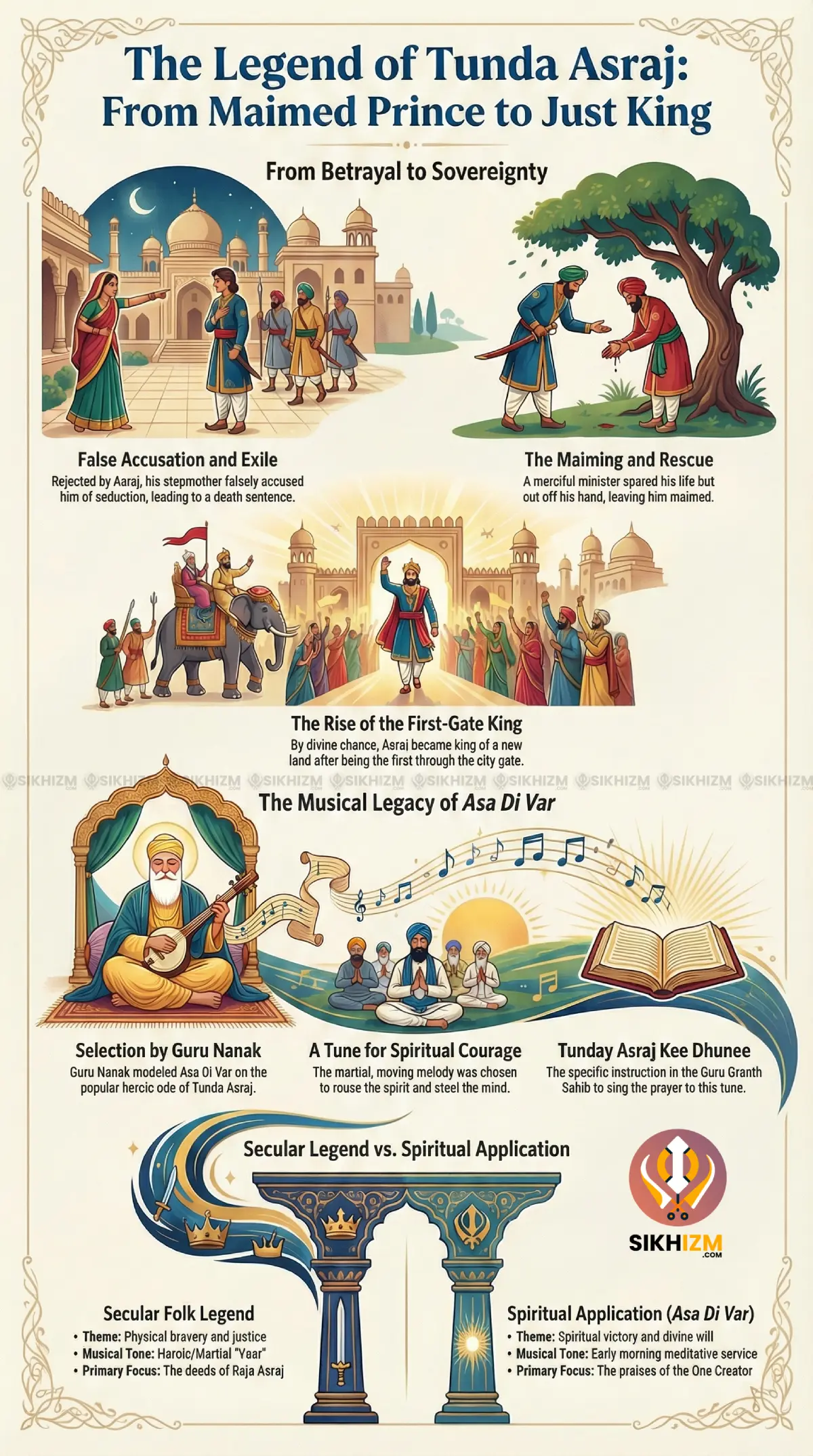
The biography of Tunda Asraj (or Asraaj) is a legendary story of virtue, resilience, and divine justice. It is of particular importance in Sikh tradition because Guru Arjan Dev Ji and Guru Hargobind Ji prescribed that Asa Di Vaar be sung to the specific heroic tune (dhunee) associated with the ballad of Asraj.
Royal Lineage and the Step-mother’s Malice
Asraj was the son of a powerful ruler named King Sarang. After the death of Asraj’s mother, the King married a younger woman in his old age. This new queen became infatuated with her stepson, Asraj, and attempted to seduce him. Asraj, being a man of high character and steadfast in his Dharma, rejected her advances. Spurned and seeking revenge, the queen falsely accused Asraj of attempting to violate her.
The Sentence and the Moniker
"Tunda" Infuriated by the false report, King Sarang sentenced his son to death. However, a compassionate Minister intervened to save the prince's life. Instead of executing him, the minister cut off Asraj’s hand and abandoned him in a remote wilderness or a well to spare his life while appearing to follow the King's orders. It is from this incident that he gained the name "Tunda," which means "maimed" or "handless."
Rescue and Humble Service
Asraj was eventually rescued by a passing caravan of merchants (peddlers), who took him to a neighbouring country and sold him to a washerman. Despite his royal birth, Asraj lived a life of humble service, often seen sitting on an ox laden with clothes as he travelled between his master’s house and the riverside.
Miraculous Rise to Power
The King of the country where Asraj lived died without leaving an heir. The ministers of that land decided that the first person to appear at the city gate the following morning would be crowned the new King. Asraj, performing his duties for the washerman, arrived at the gate at early dawn and was immediately crowned King of that kingdom.
Reconciliation and Prosperity
Sometime later, a severe famine struck King Sarang’s kingdom. King Sarang’s minister travelled to the neighbouring land to seek grain and was received by Asraj, whom he did not initially recognise. Asraj recognised the minister and, showing great generosity and compassion, provided the grain for his father’s subjects without any charge. Upon hearing of Asraj's noble character and survival, King Sarang repented for his cruelty and was reconciled with his son, eventually handing over his own empire to Asraj.
2 Story of Tunda Asraj in Punjabi PDF
ਰਾਜਾ ਸਾਰੰਗ ਦੇ ਘਰ ਅਸ ਦਾ ਜਨਮ ਹੋਇਆ। ਰਾਜੇ ਨੇ ਬੁਢੀ ਉਮਰ ਵਿਚ ਇਕ ਹੋਰ ਵਿਆਹ ਕਰਵਾ ਲਿਆ। ਨਵੀਂ ਵਿਆਹੀ ਰਾਣੀ ਆਪਣੇ ਮਤਰੇਏ ਪੁੱਤਰ ਦਾ ਸੁੰਦਰ ਰੂਪ ਵੇਖ ਕੇ ਉਸ ਤੇ ਮੋਹਿਤ ਹੋ ਗਈ ਅਤੇ ਉਸ ਅਗੇ ਆਪਣੀ ਮੰਦ-ਭਾਵਨਾ ਪ੍ਰਗਟ ਕੀਤੀ। ਪਰਮਾਤਮਾ ਨੇ ਅਸ ਉਤੇ ਆਪਣੀ ਕਿਰਪਾ ਦ੍ਰਿਸ਼ਟੀ ਕੀਤੀ ਅਤੇ ਉਸ ਨੂੰ ਇਸ ਖੋਟੇ ਕਰਮ ਤੋਂ ਬਚਾਅ ਲਿਆ। ਰਾਣੀ ਅੰਦਰ ਬਦਲੇ ਦੀ ਭਾਵਨਾ ਪੈਦਾ ਹੋਈ। ਉਸ ਨੇ ਅਸ ਉਤੇ ਝੂਠਾ ਕਲੰਕ ਲਾ ਕੇ ਰਾਜੇ ਨੂੰ ਭੜਕਾਇਆ। ਰਾਜ- ਮਦ ਵਿਚ ਅੰਨ੍ਹੇ ਹੋਏ ਰਾਜੇ ਨੇ ਬਿਨਾਂ ਪੁਛ ਪੜਤਾਲ ਦੇ ਆਪਣੇ ਪੁੱਤਰ ਨੂੰ ਕਤਲ ਕਰਨ ਦਾ ਹੁਕਮ ਦੇ ਦਿੱਤਾ। ਨਾਲ ਹੀ ਆਪਣੇ ਵਜ਼ੀਰ ਨੂੰ ਆਖਿਆ ਕਿ ਉਹ ਜਲਾਦਾਂ ਨੂੰ ਹੁਕਮ ਦੇਵੇ ਕਿ ਅਸ ਨੂੰ ਬਾਹਰ ਜੰਗਲ ਵਿਚ ਲੈ ਜਾਣ ਅਤੇ ਉਸ ਦੀ ਤਸੱਲੀ ਲਈ ਅਸ ਦੇ ਸਰੀਰ ਦਾ ਵੰਢਿਆ ਹੋਇਆ ਕੋਈ ਅੰਗ ਉਸ ਨੂੰ ਵਿਖਾਇਆ ਜਾਵੇ।....
To read full story in Punjabi language, please download the PDF File given below:
3 Info on Tunda Asraj from Mahan Kosh
In Mahan Kosha by Bhai Kahn Singh Nabha, entry on Tunda Asraj goes like,
" ਆਸਾ ਕੀ ਵਾਰ ਟੁੰਡੇ ਅਸਰਾਜੈ ਕੀ ਧੁਨੀ, ਸਾਰੰਗ ਦਾ ਪੁਤ੍ਰ ਅਸਰਾਜ ਸੀ. ਉਸ ਦੀ ਛੋਟੀ ਮਾਂ ਜੋ ਨਵਯੋਵਨਾ ਸੀ, ਅਸਰਾਜ ਤੇ ਮੋਹਿਤ ਹੋਗਈ, ਅਰ ਆਪਣੀ ਮੰਦਭਾਵਨਾ ਪ੍ਰਗਟ ਕੀਤੀ, ਪਰ ਧਰਮਾਤਮਾ ਅਸ ਨੇ ਦ੍ਰਿੜ੍ਹਤਾ ਨਾਲ ਧਰਮ ਪਾਲਿਆ. ਮਤੇਈ ਨੇ ਵਿਸ਼ਯਲੰਪਟ ਰਾਜੇ ਨੂੰ ਭੜਕਾਕੇ ਪੁਤ੍ਰ ਤੇ ਅਯੋਗ ਕਲੰਕ ਲਾਇਆ ਅਤੇ ਹੱਥ ਕਟਵਾਕੇ ਦੇਸੋਂ ਕਢਵਾ ਦਿੱਤਾ, ਦੈਵ ਯੋਗ ਨਾਲ ਟੁੰਡਾ ਅਸਰਾਜ ਵਿਦੇਸ਼ ਵਿੱਚ ਜਾਕੇ ਆਪਣੇ ਸ਼ੁਭ ਗੁਣਾਂ ਦ੍ਵਾਰਾ ਸਭ ਸੰਪਦਾ ਸਹਿਤ ਹੋਗਿਆ ਜਦ ਪਿਤਾ ਨੂੰ ਸਮਾਂ ਪਾਕੇ ਅਸਲ ਹਾਲ ਮਲੂਮ ਹੋਇਆ ਤਦ ਪੁਤ੍ਰ ਨੂੰ ਚਿੱਠੀ ਲਿਖਕੇ ਬੁਲਾਇਆ, ਪਰ ਅਸਰਾਜ ਦੀ ਮਤੇਈ ਦੇ ਪੁਤ੍ਰ ਖਾਨ ਅਤੇ ਸੁਲਤਾਨ ਨੇ ਫ਼ੌਜ਼ਾਂ ਲੈਕੇ ਵਡੇ ਭਾਈ ਦਾ ਮੁਕਾਬਲਾ ਕੀਤਾ. ਕਰਤਾਰ ਦੀ ਕ੍ਰਿਪਾ ਨਾਲ ਅਸਰਾਜ ਨੇ ਫਤੇ ਪਾਕੇ ਪਿਤਾ ਦੇ ਚਰਣਾਂ ਪੁਰ ਪ੍ਰਣਾਮ ਕੀਤਾ. ਸਾਰੰਗ ਨੇ ਪਿਛਲੀ ਆਪਣੀ ਕਰਤੂਤ ਪੁਰ ਲੱਜਿਤ ਹੋਕੇ ਅਸਰਾਜ ਨੂੰ ਰਾਜਸਿੰਘਾਸਨ ਤੇ ਬੈਠਾਕੇ ਆਪ ਏਕਾਂਤਾਸ ਅਖਤਿਆਰ ਕੀਤਾ. ਇਸ ਘਟਨਾ ਦੀ ਵਾਰ ਜੋ ਰਚੀ ਉਸ ਦੀ ਪੌੜੀ ਇਹ ਹੈ:-
ਭਬਕਿਆ ਸੇਰ ਸਰਦੂਲ ਰਾਇ ਰਣ ਮਾਰੂ ਬੱਜੇ,
ਸੁਲਤਾਨ ਖਾਨ ਬਡ ਸੂਰਮੇ ਵਿਚ ਰਣ ਦੇ ਗੱਜੇ,
ਖਤ ਲਿਖੇ ਟੁੰਡੇ ਅਸਰਾਜ ਨੂੰ ਪਤਸਾਹੀ ਅੱਜੇ,
ਟਿੱਕਾ ਸਾਰੰਗ ਬਾਪ ਨੇ ਦਿੱਤਾ ਭਰ ਲੱਜੇ,
ਫਤੇ ਪਾਇ ਅਸਰਾਜ ਜੀ ਸ਼ਾਹੀ ਪਰ ਸੱਜੇ. "
4 Significance in Asa Di Vaar
The story was originally recorded by bards in a heroic ballad (vaar). In Gurbani, the heading for Asa Di Vaar explicitly mentions this tune: ਵਾਰ ਸਲੋਕਾ ਨਾਲਿ ਸਲੋਕ ਭੀ ਮਹਲੇ ਪਹਿਲੇ ਕੇ ਲਿਖੇ ਟੁੰਡੇ ਅਸ ਰਾਜੈ ਕੀ ਧੁਨੀ ॥ (Vaar With Shaloks... To Be Sung To The Tune Of 'Tunda-Asraajaa').
The Gurus chose this tune because its heroic and thrilling sweep of music was best suited to rouse the martial spirit and inspire the soul to "battle" against the internal enemies of ego and falsehood. Just as Asraj overcame physical maiming and betrayal through his integrity, the seeker is encouraged to overcome spiritual obstacles through the Shabad